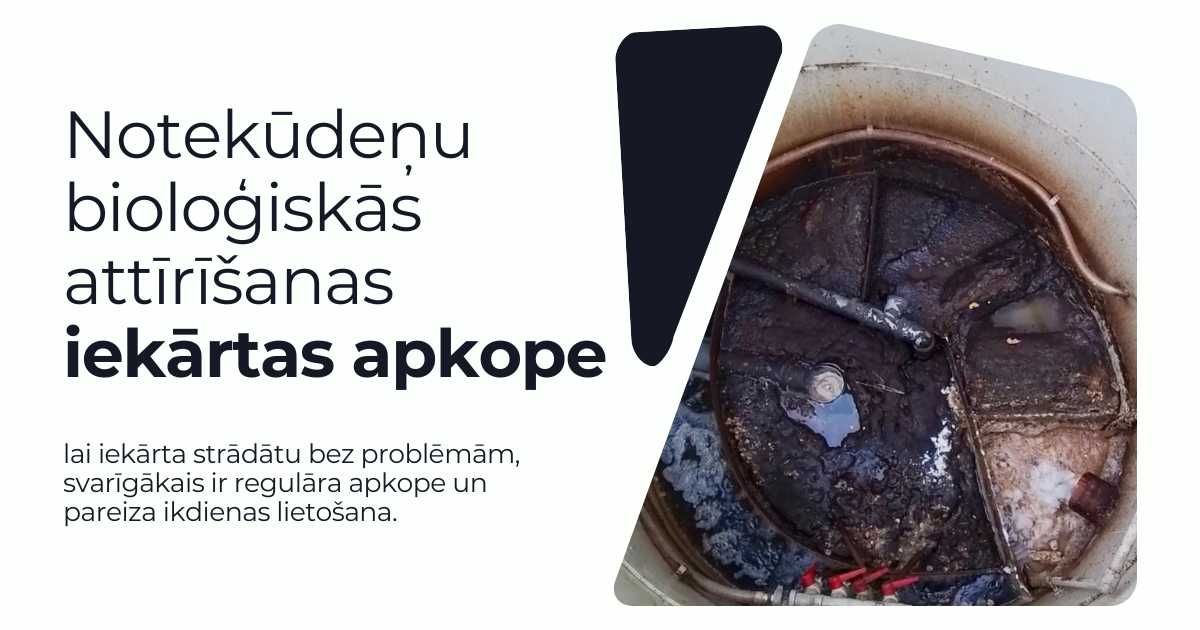
A biological wastewater treatment plant is a reliable and eco-friendly solution for a private house, but to keep it working smoothly, what matters most is regular maintenance and correct everyday use. In this article we explain briefly and clearly how often a biological wastewater treatment plant needs maintenance, what it includes and what must not go down the drain.
How often does a biological wastewater treatment plant need maintenance?
Biological treatment plant maintenance is usually planned once a year. The exact frequency may vary depending on the plant model and its load (how many people live in the house, whether the property is used seasonally, how intensive the use is).
Tip: if the property has “peak” loads (guests, parties, seasonal living), schedule maintenance in good time to avoid problems.
What does professional maintenance include?
To keep the plant working efficiently and extend its life, maintenance usually includes the following work:
- pumping out and disposing of excess sludge
- rinsing the plant
- refilling the plant with water
- adjusting the plant
- cleaning the air compressor filter
- if needed: rinsing the sewage pumping station (if there is one)
What you can check yourself (quick checklist)
It’s worth doing a simple visual check from time to time to spot problems early:
- is there an unpleasant odour (especially near the plant lid)?
- is water draining slowly in the house / “gurgling” in the traps?
- are there visible signs of clogging?
- if there is a control unit — are there any warnings or error indications?
- is the lid secure, with no debris or surface water getting in?
Signs that maintenance/service is needed sooner
Contact the service team if you notice any of these signs:
- a smell appears that wasn’t there before
- the drains start to empty more slowly or often back up
- the control unit shows repeated warnings
- the plant makes unusual noises or its operation visibly changes
- you suspect clogging or insufficient aeration
The sooner a problem is spotted, the easier and cheaper it usually is to fix.
What must not (and should not) go into a biological plant?
Biological treatment relies on the work of microorganisms, so some substances can disrupt the process and cause odours or faults.
Do not / avoid discharging:
- large amounts of aggressive chemicals (solvents, acids, paints, varnishes, etc.)
- wet wipes, hygiene products, plastic and other items that don’t dissolve in water
- large amounts of oil and fat, food waste
- construction waste, sand, dust and the like
- water used to wash a pet (best not poured into the sewer)
A simple rule: only household wastewater should go down the drain – not waste or strong chemicals.
How does correct use reduce the maintenance risks of a biological wastewater treatment plant?
To keep maintenance a “routine” rather than an emergency, three things are enough:
- don’t pour insoluble items or oils down the drain,
- don’t overdo aggressive chemicals,
- schedule professional maintenance once a year.
This helps keep the treatment quality stable and extends the life of the plant.