Biological treatment plant installation
Correct installation accounts for 50% of a plant’s longevity. Even the best plant will not work efficiently if it is installed at the wrong depth or without the right gradient. We offer professional installation adapted to the specifics of your site.
Why choose our
installation service?
Tailored solutions
We don’t just bury a tank – we choose the most suitable solution for the groundwater and soil conditions (infiltration, pumping stations or discharge to a ditch).
Workmanship warranty
When we do the installation, you get a 2-year installation warranty and a 10-year manufacturer warranty on your treatment plant.
Everything in one place
We provide the machinery, sand, pipes and a team of technicians. You don’t need to find extra workers or material suppliers.
Installation certificate
Confirmation that the system has been built according to the design and is ready for safe use.
Installation options
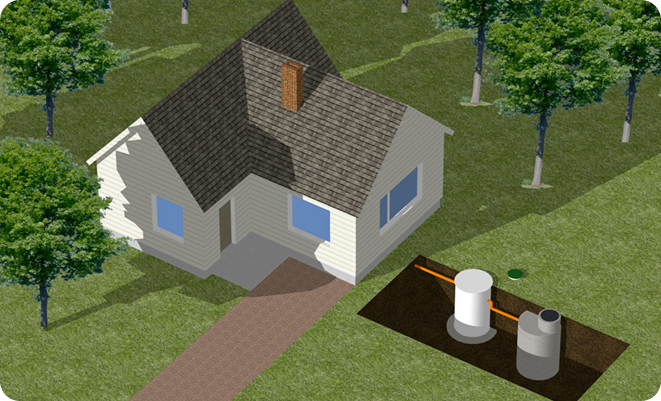
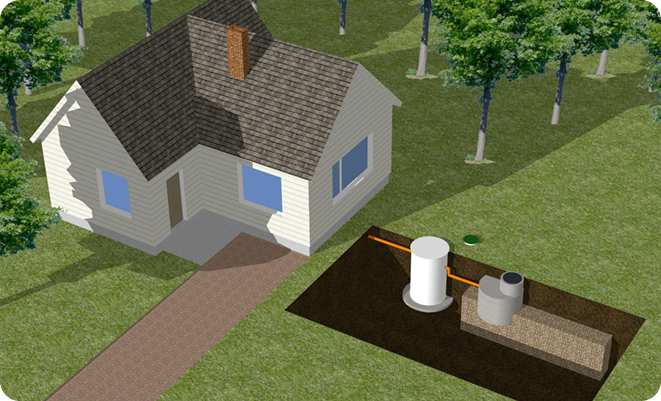
Storing treated water in a tank and discharging it to an infiltration field
Choose this installation option for a private house if, after installing the biological wastewater treatment plant, you want to store the treated water and reuse it (e.g. for watering or around the property). A safe overflow is also provided so the tank does not overfill.
How it works: Treated water flows into a storage tank (reservoir), from which it can be reused. When the tank fills up, the excess water is discharged to an infiltration field (or a permitted discharge point).
Benefit: Less water used for watering and around the property, plus stable system operation even at higher water volumes.
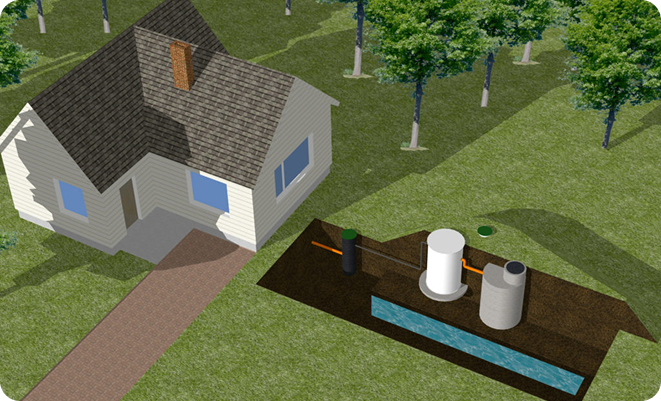
Infiltration field with an extra storage zone (for poor infiltration)
Choose this installation option if the groundwater level on site is low enough, but the soil infiltrates poorly (e.g. clay) and treated water cannot be discharged into the open environment (a ditch, water body, etc.).
How it works: After the biological wastewater treatment plant, the treated water is discharged to an infiltration field built with an extra storage zone and a larger area. This lets the water collect and soak into the ground gradually, even if the soil absorbs water slowly.
Benefit: Safe discharge of treated water when it cannot go into the open environment, plus stable system operation in poor-infiltration conditions (less risk of overloading and puddles).
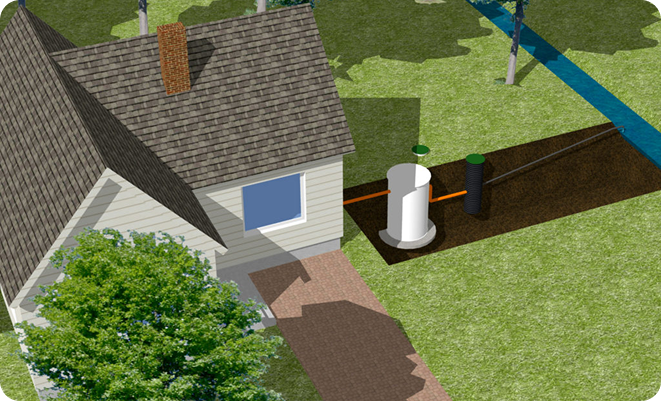
Pumping treated water to a ditch with a pumping station
This installation option is used when the groundwater level on site is high and building an infiltration field is unsafe or impossible, but treated water can be discharged into the open environment (e.g. a ditch).
How it works: A pumping station is installed after the biological wastewater treatment plant. It collects the treated water and pumps it to the ditch under pressure (through a pressure pipe).
Benefit: Works even where groundwater is high, and provides reliable discharge of treated water when there is no natural fall or gradient, or infiltration is impossible.
Pumping station + raised infiltration field (for high groundwater)
This installation option is used where the groundwater level is high, if treated water cannot be discharged into the open environment (e.g. a ditch) or the outlet from the house is too deep for water to flow by gravity.
How it works: A pumping station is installed before the biological wastewater treatment plant and pumps the wastewater up to the plant. After treatment, the water is discharged to a raised infiltration field, so that infiltration takes place above the maximum groundwater level.
Benefit: The solution works even in difficult conditions with high groundwater and a deep outlet, and ensures safe infiltration at the right height (less risk of flooding and system overload).
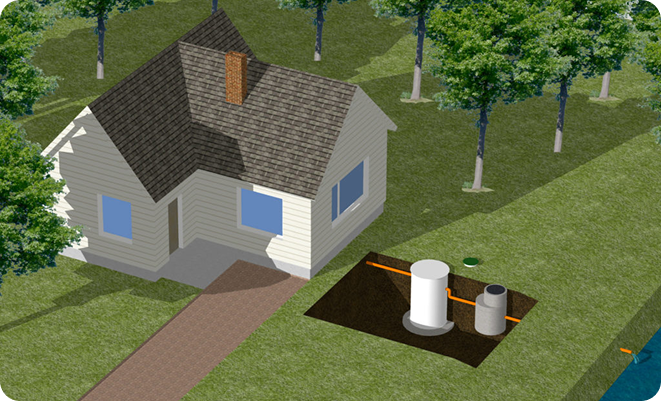
Discharging treated water to a ditch or water body (by gravity)
Choose this installation option if there is a drainage ditch or water body (e.g. a pond, lake or river) near the property and treated water can be discharged into the open environment without an infiltration field.
How it works: After the biological wastewater treatment plant, the treated water is discharged directly to the ditch or water body (usually by gravity, if there is enough gradient and a permitted discharge point).
Benefit: A simpler and more compact installation (no infiltration field needed), plus reliable discharge of treated water where conditions allow.
How we work together in 4 steps
Consultation
During the consultation we discuss the most suitable sewerage solution, which depends on the intended use, the soil, the number of people, and agree on your preferred installation date.
Site survey
We meet at your property to find the best location for the wastewater treatment plant, taking all constraints into account, assess the outlet from the house and find the best way to discharge the treated wastewater.
Plant installation
The plant is lowered into the pit and levelled. We backfill gradually while filling the tank with water to keep the structure stable, and lay the pipes at an accurate gravity gradient.
Commissioning the plant
The technician connects the compressor, adds activated sludge to the plant and adjusts the air supply for efficient operation. After a briefing on how to use it, an acceptance certificate is signed, which serves as your proof of quality and warranty.