Blog

Tips, explanations and practical information to help you make smart decisions about wastewater systems for your home, business and the environment.

  • Which sewerage system should you choose for a summer cottage?

    Which sewerage system should you choose for a summer cottage?

    A summer cottage is a place to relax, not to worry about household chores. Yet when it’s time to choose sewerage for a summer cottage, many owners face the question: a classic septic tank or a biological treatment plant? The answer is simpler than it seems.

    Septic tank: cheap at first, expensive and unpleasant in the long run

    A septic tank is cheap at first but expensive in the long run. It has to be pumped out regularly, and it doesn’t treat wastewater – it only stores it. And there is another aspect that people usually talk about more quietly: septic tanks smell.

    Especially in the summer heat, when organic matter ferments, the unpleasant sewage smell can spread across the whole plot. On a 600 m² summer cottage plot there aren’t many places to hide from it. And the neighbours next door will notice it just as much as you do. In summer cottage communities this is one of the most common causes of disputes between neighbours, and things can get very unpleasant.

    On top of that, environmental requirements are making it increasingly difficult to get a permit for a septic tank, because it doesn’t treat wastewater – it just moves the problem elsewhere.

    Why is the AUGUST AT-6K the ideal choice for a summer cottage?

    A biological treatment plant works completely differently. It treats wastewater to technically clean water that can be safely discharged into the ground or a ditch, or used for watering the garden. As a result, there’s no build-up, no odours and no unhappy neighbours.

    The AUGUST AT-6K is designed for up to 4 people, but in practice, if the cottage is mostly used by 2 people, it will work with a considerable margin. That means a longer service life and less need for maintenance.

    One of the biggest advantages: the AT-6K controller has a built-in WEEKEND HOUSE mode, designed specifically for summer cottages. Before heading back to the city, simply switch the mode and the plant goes into economy mode. It can run in economy mode for up to six months without any wastewater inflow, and the bacteria stay viable. When you return, a couple of button presses and everything restarts automatically.

    A small lid, a big advantage

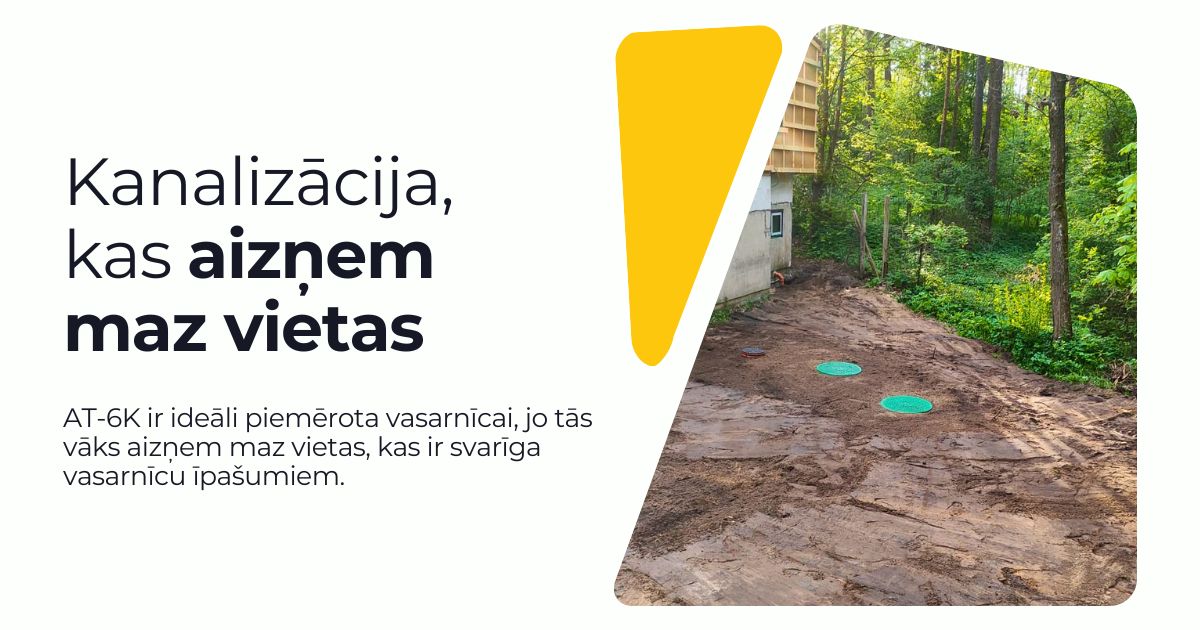
    A summer cottage plot is usually 600 m², so every square metre counts. The AT-6K is fitted with a low-profile cone lid installed at ground level. In practice this means the lawn over the plant looks perfect, a robotic mower drives over it without obstacles, and the look of the site is unaffected.

    Maintenance: simpler than you’d expect

    Many people fear complicated maintenance. In fact, the AT-6K needs no day-to-day maintenance. Once a year a specialist checks the plant and carries out a technical inspection. That’s it. No regular pumping out, no unpleasant smells, no bureaucratic headaches, because after each maintenance visit we issue a certificate to submit to the municipality for your managed wastewater.

    Conclusion

    If you’re looking for sewerage for a summer cottage that you install once and forget about, the AUGUST AT-6K with a cone lid is the most logical choice. It takes up minimal space, keeps working during long absences and doesn’t affect your garden’s landscape or your relationship with the neighbours.

    Get in touch to find out more or book a consultation.

    Completed project

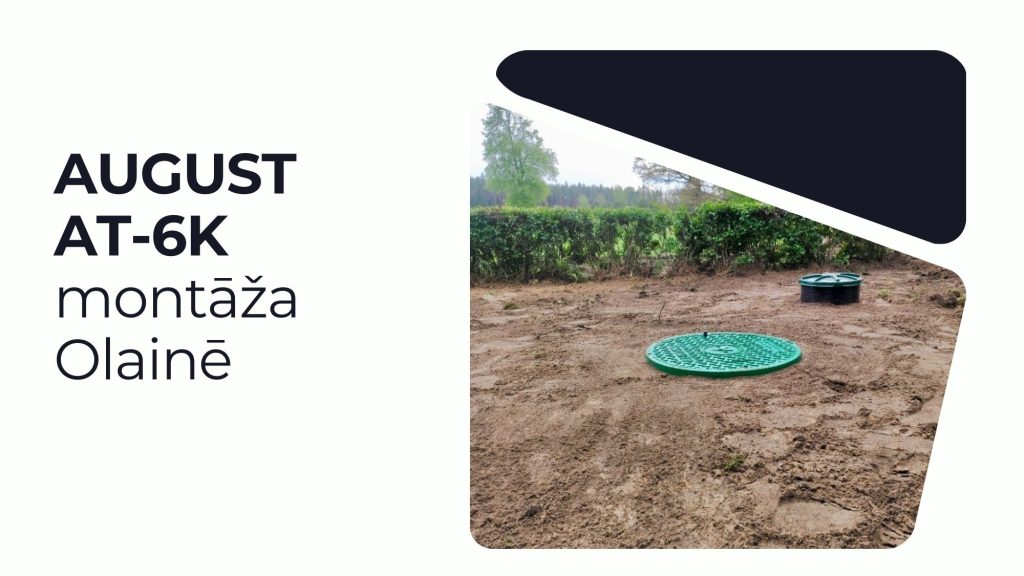
    AT-6K installation in Olaine

    In Olaine we installed a modern, compact AT6K biological wastewater treatment plant. This plant is designed for up to 4 residents and can treat up to 0.6 cubic metres of wastewater per day. The AT6K offers high treatment efficiency, simple…

    Read more…
    AT-6K installation in Olaine
  • AUGUST AT-6 biological wastewater treatment plant – the best choice of home sewerage for up to 4 people

    AUGUST AT-6 biological wastewater treatment plant – the best choice of home sewerage for up to 4 people

    The AUGUST AT-6 biological wastewater treatment plant is designed for private houses with up to 4 people – and it is changing how Latvians think about home sewerage. Common worries such as odours, frequent emptying and fragile bacteria simply don’t apply to the AT-6. Biological treatment plants are now the standard for private houses, and in this article we explain why the AUGUST AT-6 is the best choice for your family.

    Common problems and how the AUGUST AT-6 solves them

    1. Does biological sewerage smell? How the AUGUST AT-6 prevents it

    The biggest fear about a local sewerage system is the unpleasant smell. The AUGUST AT-6 uses a continuous aeration process in which microorganisms break down pollutants with the help of oxygen. As a result, the process is completely clean, and you can enjoy your coffee on the terrace without any unwanted smells.

    2. How often does a private house need a sewage tanker? The AUGUST AT-6 answer will surprise you

    Classic septic tanks need frequent emptying, which is expensive and inconvenient, as problems usually arise when the wastewater inflow is higher. The AT-6 system is so efficient (BOD5 removal up to 98.2%) that the plant only needs maintenance 1–2 times a year. That means less unnecessary spending and more free time.

    3. Do the AT-6 bacteria survive long periods without use? Yes – here’s why

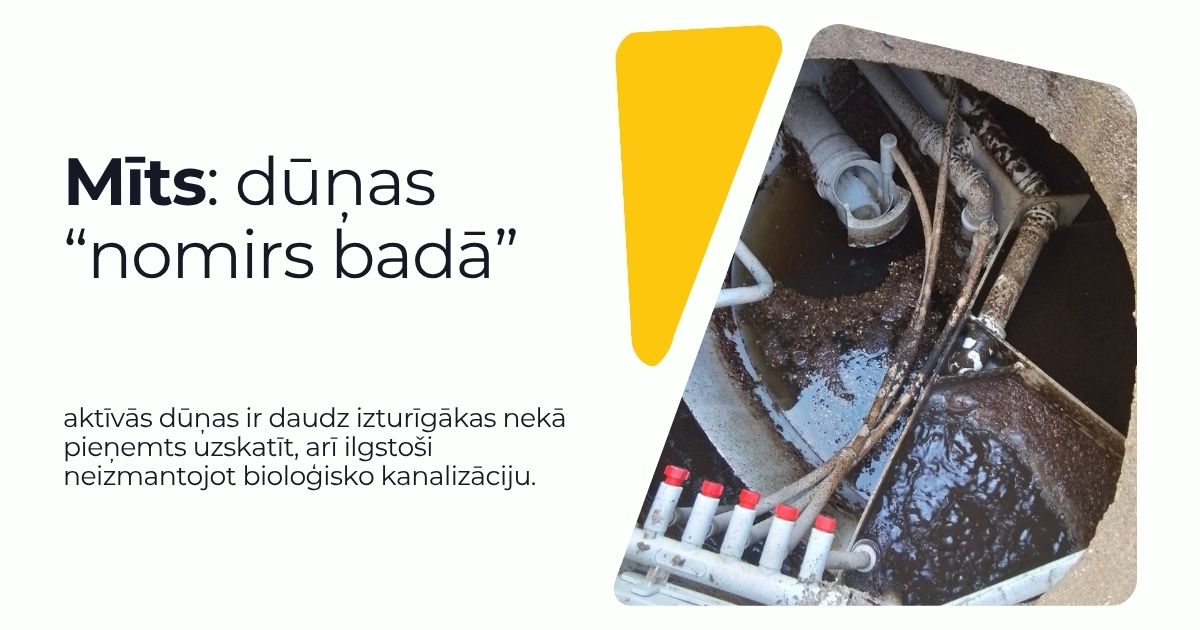
    In many plants the bacteria ā€œdieā€ if they don’t receive wastewater for a long time. The AUGUST smart controller offers a “HOLIDAY” mode. The plant adapts to the lack of nutrients, i.e. household wastewater, keeps the bacteria alive and saves electricity while you are away.

    4. Will a biological treatment plant spoil the garden?

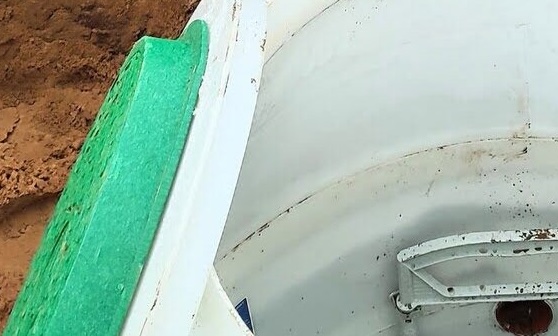
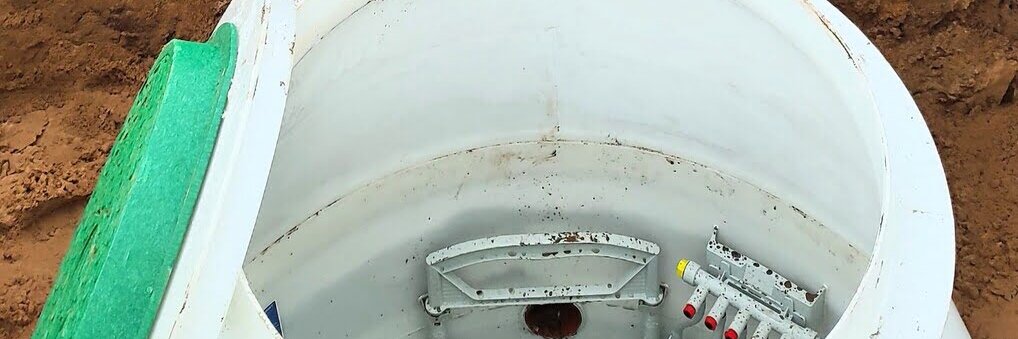
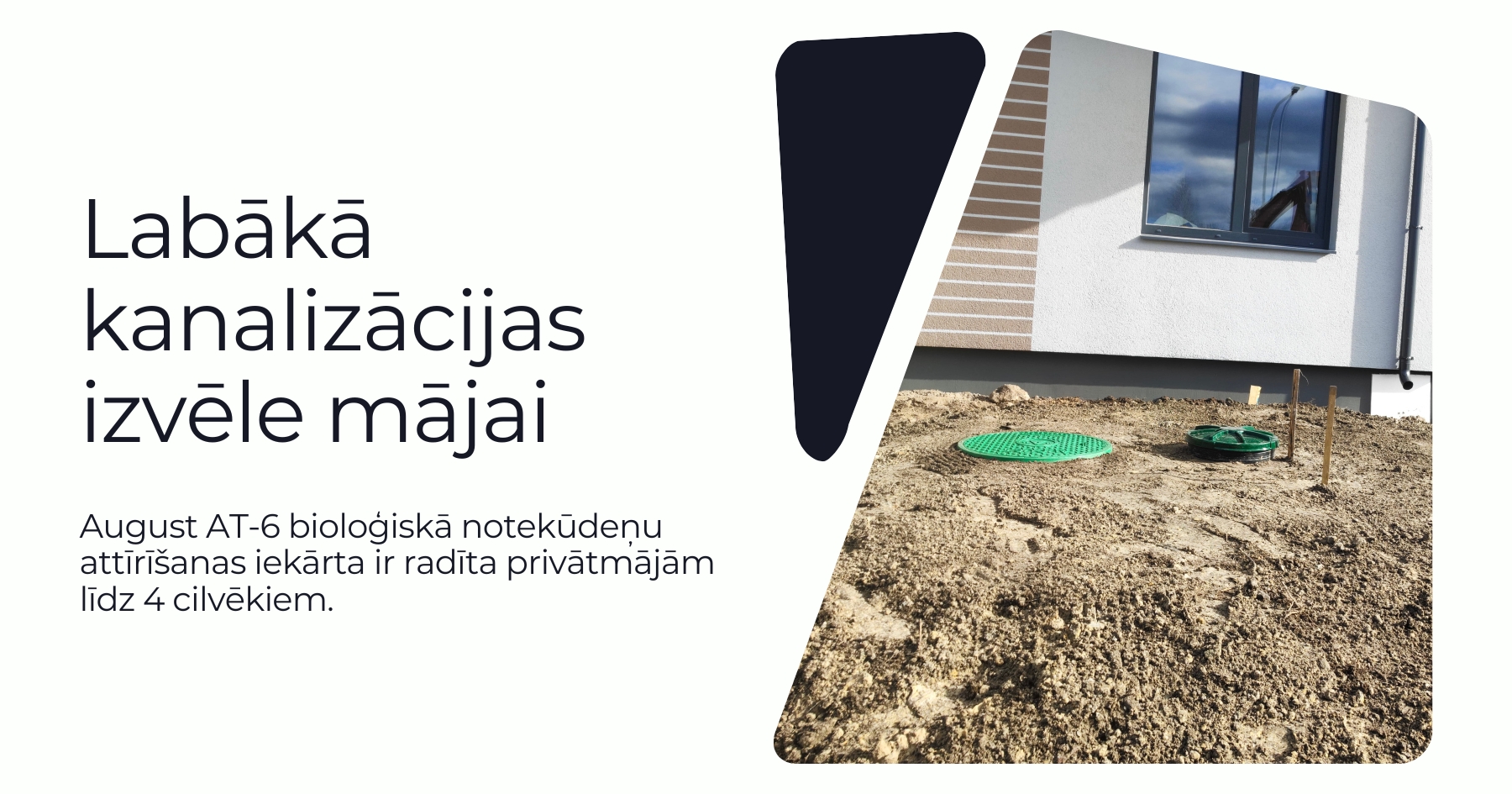
    Few people want – or have room for – a huge plastic lid in the middle of the lawn. The ATK version lets the lid be installed right at ground level. You can mow the lawn without a second thought and not even notice where the plant is – so aesthetics are not sacrificed for functionality.

    AUGUST AT-6 technical specifications: capacity, warranty and smart control

    • Treated wastewater volume: the capacity is 0.60 m³/d, which is optimal for a household of 4.
    • Smart control: the AUGUST AT controller offers “Holiday” and “Weekend House” modes, adapting to your lifestyle and saving energy while you are away.
    • Warranty: plants supplied by LZT Latvia come with a 10-year warranty on the tank and a 2-year warranty on the electrical components.

    Conclusion: an investment that pays off

    When looking at the price of a biological treatment plant, it’s important to consider not only the initial cost but also its longevity. The AUGUST AT-6 is an “install and forget” solution that protects your property’s ecology and your peace of mind.

    Want an exact estimate? Contact the LZT Latvia experts and we will prepare a solution tailored to your property and needs!

  • 5 myths about biological treatment plants – what do people still get wrong?

    5 myths about biological treatment plants – what do people still get wrong?

    The biological treatment plant from the manufacturer AUGUST has been known on the Latvian market for more than 15 years. In that time the technology has become remarkably advanced, yet various myths and worries still circulate. Some are a legacy from the days when cesspits were standard, while others are simply down to a lack of information.

    In this article we look at the 5 most popular myths, explain where they come from and reveal what the real situation is today.

    Myth 1: A biological treatment plant gives off an unpleasant smell

    This is the most common fear when planning a sewer near the house or terrace. People often draw parallels with an old-style settling pit or septic tank, where partial putrefaction takes place.

    In fact, a correctly installed, adjusted and regularly maintained biological treatment plant does not smell. Odours only arise in airless (anaerobic) conditions. In modern AUGUST systems, an air compressor continuously supplies oxygen to the plant, ensuring aerobic processes.

    Myth 2: The plant uses a lot of electricity

    Many people believe that an air compressor running non-stop will make a huge dent in the family’s monthly budget. The fear of electrical devices running around the clock is understandable, but it is not justified.

    In reality, the air blower draws 40 to 60 watts, comparable to a small LED TV. If you work out the cost at current tariffs, and the comfort an autonomous biological treatment plant provides, it costs about as much as a couple of cups of coffee a month.

    Myth 3: While you’re on holiday, the sludge will ā€œstarve to deathā€

    This is one of the most amusing myths we hear. Customers ask whether they really need to get a neighbour to use the toilet while they are away to ā€œfeedā€ the bacteria.

    We can reassure you: activated sludge is much hardier than people think. If nobody lives in the house for 2 or 3 weeks, or even a couple of months, the bacteria simply switch to standby mode. As soon as you return and start using water again, the system fully restores its operation within a couple of days, without any outside help.

    Myth 4: In winter frost, the system freezes and breaks

    Latvian winters can be unpredictable, so people worry whether the water inside the plant will turn to ice. They fear frost could damage the expensive technology or stop the sewerage from working.

    This is where physics and biology come to the rescue. First, a biological treatment plant is buried deep enough that the ground doesn’t freeze. Second, the treatment process itself gives off heat. On top of that, we use warm water every day for showers and washing up, which keeps the temperature inside the system stable even in the harshest frost.

    Myth 5: Household chemicals must not go down the drain

    There is a belief that the biology is so fragile that a single wash with ordinary detergent will destroy all the microflora. This suggests homeowners will have to change their habits completely and buy only special, expensive eco products.

    In fact, AUGUST plants are designed for real life. They cope perfectly well with normal amounts of laundry detergent, shampoo and dishwashing liquid. The only restriction is excessive use of chlorine or aggressive acids in large quantities – sensible housekeeping does not affect the plant.

    As you can see, most fears are based on outdated information or assumptions. A quality biological treatment plant is not a burden, but a modern, unobtrusive helper that looks after clean nature and your comfort.

    If you are planning a sewerage system and have other concerns, we will be happy to put your mind at rest and help you choose the most suitable solution for your property!

  • Correct operation of a biological treatment plant

    Correct operation of a biological treatment plant

    Biological wastewater treatment plants come with a manufacturer warranty, but we would like to remind you that how long a plant keeps working depends to a large extent on its owner. The more carefully the owner follows all the operating rules set by the manufacturer, the longer the plant will serve without hitches or repairs, so we encourage everyone to read the information in the plant’s manual. Also, if the customer chooses to install the plant themselves, it is very important to carry out the work according to the installation instructions; otherwise the manufacturer will not be able to provide warranty repairs.

    Tips for a longer-lasting, more efficient plant
    Although biological treatment plants are automated and don’t need constant supervision, they must not be forgotten altogether – the owner must ensure the plant is maintained periodically. Whether to maintain the plant yourself or leave it to professionals is up to the owner, but experience shows that in today’s busy lives time flies, and customers only remember maintenance when they run into problems with wastewater treatment.

    A simpler and much more convenient solution is to leave the maintenance to professionals. Ideally, once a month the owner inspects the wastewater treatment plant, checks that no sludge or foam is forming on the water surface, makes sure the aeration and flow regulator are working, and checks the solids.

    If the customer notices that the compressor isn’t working, there is an unpleasant smell coming from the tank or a high concentration of foam or sludge, they should contact the manufacturer immediately and arrange the earliest possible maintenance visit. But if the plant is working as it should and nothing out of the ordinary is observed, an annual visit from a technician, during which all the necessary maintenance is carried out, will be enough. So that you can be sure maintenance is carried out regularly enough, all technical maintenance work must be recorded in the plant’s maintenance documents.

    What can harm the operation of a biological wastewater treatment plant?

    How the plant works depends directly on what goes into it. Since wastewater is treated by bacteria, which are living organisms, remember that chemicals such as solvents, paints, acids and varnishes cause the sludge to die off irreversibly. Likewise, plastic, hygiene products, wet wipes and other items that don’t dissolve in water should not be flushed down the drain. Take particular care if there are children in the house, as children like to experiment and see what can be flushed down the toilet.

    It’s a misconception that food waste can go down the drain – many of us think it’s perfectly normal to flush food scraps down the toilet, because what harm could it do? In fact, food waste can pose a serious threat to the whole sewerage system. Oil hardens on the pipe walls and causes blockages in the pipes and also hampers the treatment plant. Foods such as flour, rice, pasta and coffee grounds swell in water and can both clog pipes and hamper the biological treatment plant, so we recommend keeping food waste out of the sewer.

    LZT Latvia is one of Latvia’s leading wastewater treatment companies, with more than ten years of experience. If you have any questions about operating biological treatment plants and how they work – give us a call!

  • Standing water in the yard after rain? Stormwater drainage will help!

    Standing water in the yard after rain? Stormwater drainage will help!

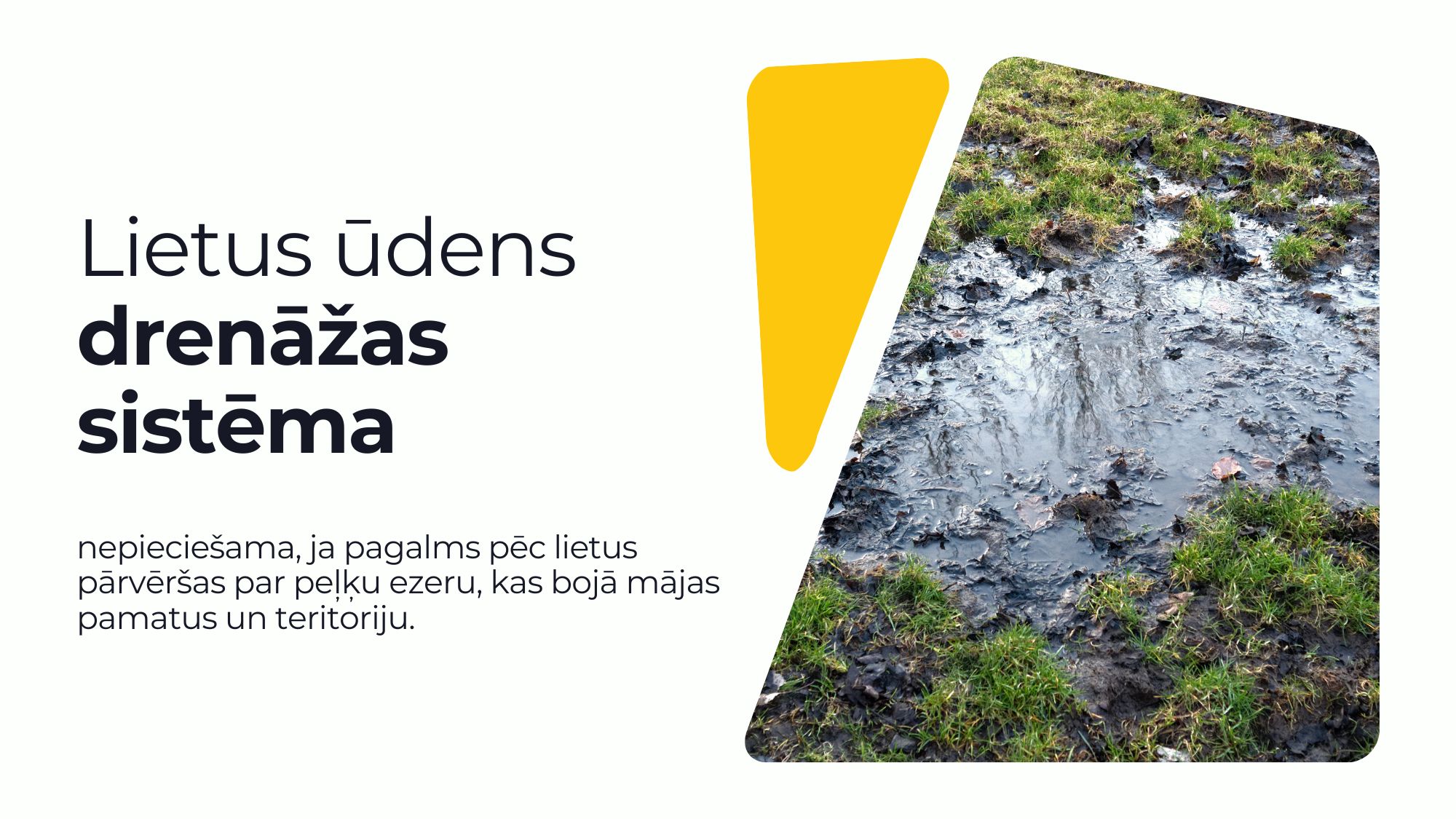
    Does your yard turn into a lake of puddles after rain? Standing water isn’t just a nuisance – it also threatens your home’s foundations and landscaping. Effective stormwater drainage is the solution that stops water damaging your property and makes the yard safe and pleasant to use.

    Why does a private house need stormwater drainage?

    1. Foundation protection
    Correctly draining water from the roof and the ground around the house protects the foundations from moisture and cracks. A drainage system keeps the foundations dry, extending the life of the house.

    2. Landscaping
    Standing water damages lawns, garden plants and paved surfaces. Proper drainage prevents puddles and keeps the yard looking tidy and working all year round.

    3. Longer-lasting paving
    Incorrectly drained water can lift paving stones or wash out their base, especially in winter when frost makes water expand. A drainage system ensures paved surfaces keep their shape and last for years.

    How can LZT help?
    We offer complete drainage system construction for private houses – from design and choice of materials to full installation. Our specialists will assess the specifics of your yard and offer the best solution to fix water problems effectively and for the long term.

    Don’t let standing water damage your home! Book a free consultation with our experts today and find out how to keep your yard dry.

    Frequently asked questions

    Can rainwater be discharged into a ditch?
    Discharging rainwater into a ditch is only allowed in certain cases. If the ditch belongs to the municipality or the state, approval from the relevant authority is needed. You must also make sure no harm is done to neighbouring properties or the environment. Infiltrating rainwater on your own plot is often a safer and more sustainable solution than discharging it directly into a ditch.
    What should I do if water stands in the yard after every rain?
    If water regularly stands in the yard, the drainage is insufficient or incorrect. In that case we recommend: assessing the terrain and soil composition; checking whether the existing drainage works at all; installing drainage; if needed, building an infiltration well or rainwater collection system. Solving the problem in time protects not only the yard but also the house foundations.
    Will drainage help the foundations?
    Yes – drainage is one of the most important elements in protecting foundations. It carries excess moisture away from the building, reducing the risk of foundation cracks, moisture build-up and heat loss. A properly built drainage system significantly extends the life of a building and reduces future repair costs.
  • Sewerage solutions for businesses: what to know before choosing?

    Sewerage solutions for businesses: what to know before choosing?

    For a business, the sewerage system is not just a ā€œtechnical detailā€ – it affects day-to-day work, hygiene, customer experience and costs. That’s why a sewerage solution for a business should be chosen with the load, reliability and easy maintenance in mind. This is especially relevant for cafĆ©s, production plants, warehouses, offices, car services and sites in places without a central sewer connection.

    How do a business’s needs differ from a private house?

    In private houses the load is usually similar every day, but in businesses it can vary a lot. One day there are many visitors, the next few. On some sites the main load is only during working hours, while on others the volume of wastewater rises sharply in certain seasons. So the capacity should be chosen not ā€œby eyeā€, but based on a realistic usage scenario.

    How to choose the capacity and type of system?

    To find the most suitable solution, first answer a few questions:

    • how many people are on site on a normal day and at peak times
    • whether there is a flow of customers and peak hours
    • which processes produce wastewater (only domestic, or also from production)
    • whether fats, oils or other specific contaminants go into the sewer

    For example, catering businesses often need additional solutions that help control the amount of fat entering the system, so that treatment works more reliably.

    Discharge and maintenance matter as much as the plant

    A common mistake is to focus only on the plant model and not plan the discharge. The treated-water discharge solution may be infiltration, discharge to a ditch or a solution with a pumping station. The choice depends on the soil, terrain and distances.

    Maintenance is also critically important for a business. If the system stops, it can mean downtime or problems serving customers. So it’s best to choose a solution with a predictable maintenance schedule and clear availability of service.

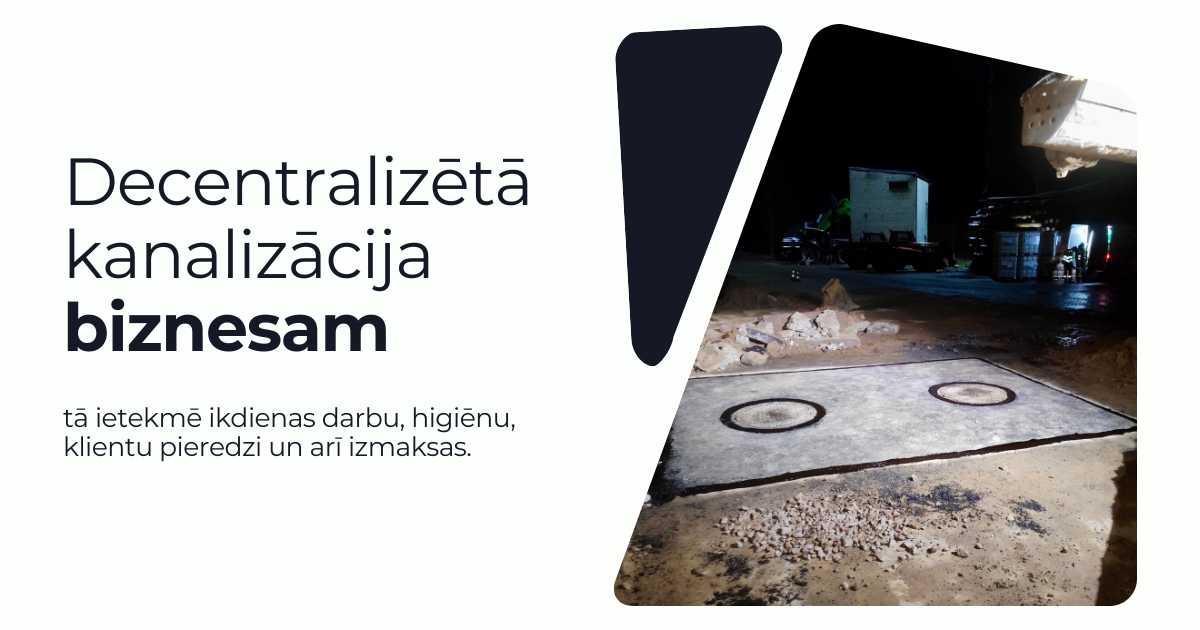
    How we installed an AT-12 under a roadway in Suntaži

    The site is in an active production area with regular lorry traffic. This meant the new biological treatment plant not only had to provide high-quality wastewater treatment for up to 10 people, but also withstand heavy mechanical loads from traffic.

    First we assessed the connection options, the existing sewer, the layout of the building and the traffic flow in the yard. The ideal location for the plant turned out to be right under the roadway, between the building and the yard where vehicles stop every day.

    Next came the excavation and building the concrete ring shaft. The AT-12 plant was installed inside a concrete ring shaft, which provides extra mechanical strength and safety when lorries drive over it. We filled the plant with water, connected the inlets and the treated-wastewater outlet, and prepared the air supply and power connection for the AUGUST control unit.

    Once all the technical connections were ready, we used machinery to lay heavy concrete cover slabs. This step is essential so that the traffic load is distributed evenly and the treatment plant does not settle or get damaged in the long term.

    Frequently asked questions

    Can a business use a biological treatment plant?
    Yes, if the capacity is chosen correctly and the specific load pattern is taken into account.
    Does a variable load disrupt the biological process?
    If the solution is chosen correctly and the system is maintained, it's not a problem. An incorrectly chosen capacity, however, can cause problems.
    Does a business need to register a decentralised sewerage system?
    If the site is not connected to the central sewer, in many places the system must be recorded according to the municipality's procedure.

    If you want to find out which sewerage solution will be safest and most cost-effective for your business, get in touch. We will assess the site and the load and prepare a specific quote.

  • Biological sewerage compressor: what is it for?

    Biological sewerage compressor: what is it for?

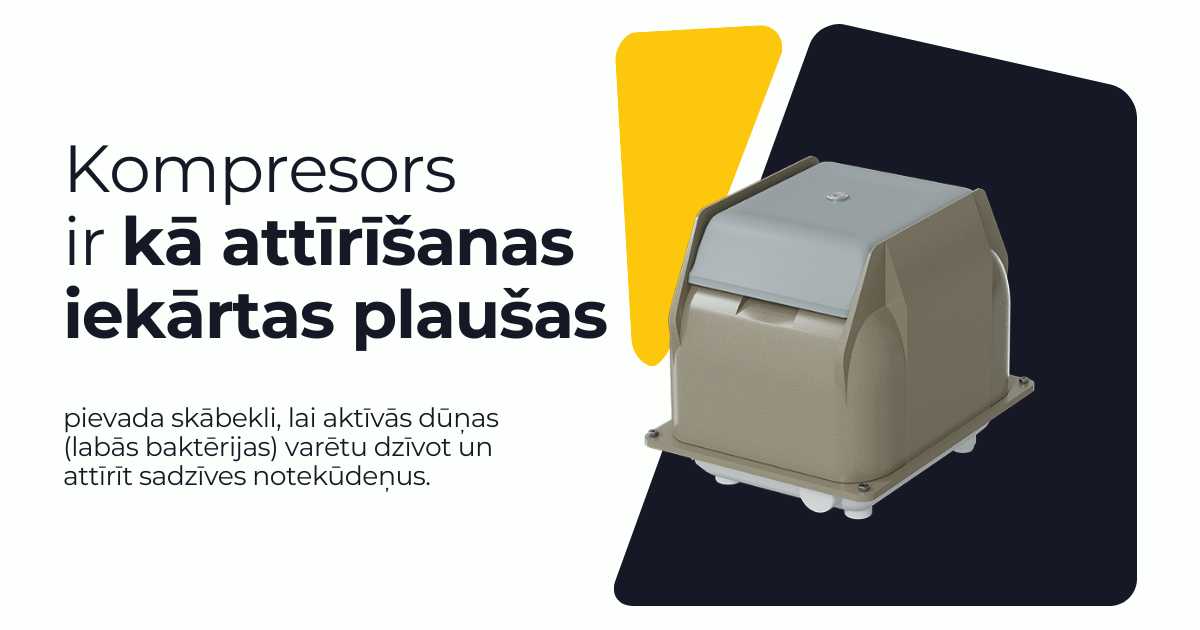
    A biological wastewater treatment plant works thanks to a natural process carried out by microorganisms. For these microorganisms to break down organic matter efficiently and for treatment to be stable, the plant often needs one important component: a biological sewerage compressor.

    Simply put, the compressor supplies air. This air is used in the plant for aeration, which helps keep the active microorganisms working. Without aeration the biological process weakens, and the plant can start working erratically: odours appear, treatment quality drops and the risk of problems increases.

    What exactly does the compressor do?

    The compressor’s main job is to supply air to the aeration zone. In practice this means maintaining an environment in the plant in which the ā€œgood bacteriaā€ can work efficiently. This is especially important if the house has a regular load, uses a washing machine and dishwasher, and the daily volume of wastewater varies.

    The compressor may run continuously or in cycles, depending on the plant’s design and controls. This is normal operation, not a fault. What matters more is that the compressor runs evenly and has a sufficient air supply.

    How can you tell the compressor needs maintenance?

    The compressor is a mechanical device and over time it may need maintenance. The most common signs are:

    • the compressor is louder than usual
    • the air flow decreases (for example, the filter is clogged)
    • the compressor stops working or works intermittently

    Sometimes cleaning or replacing the filter is enough; other times a service check is needed.

    What not to do, so you don’t damage the compressor and treatment

    • don’t disconnect the compressor for long periods if the plant is in daily use
    • don’t use large amounts of aggressive chemicals, as they damage the biological process
    • don’t leave the compressor where it can get wet or flooded

    Frequently asked questions

    Does the compressor use a lot of electricity?
    Consumption is usually low, but the exact figure depends on the model and operating mode.
    Will the sludge survive if the compressor stops?
    The plant needs a compressor to supply it with oxygen. If the compressor has been off for more than 72 hours, the sludge may die off.

    If you suspect the compressor isn’t working as it should, the safest option is to book maintenance in good time. This often costs less than a situation where the problem has been left too long and the whole system has to be restored.

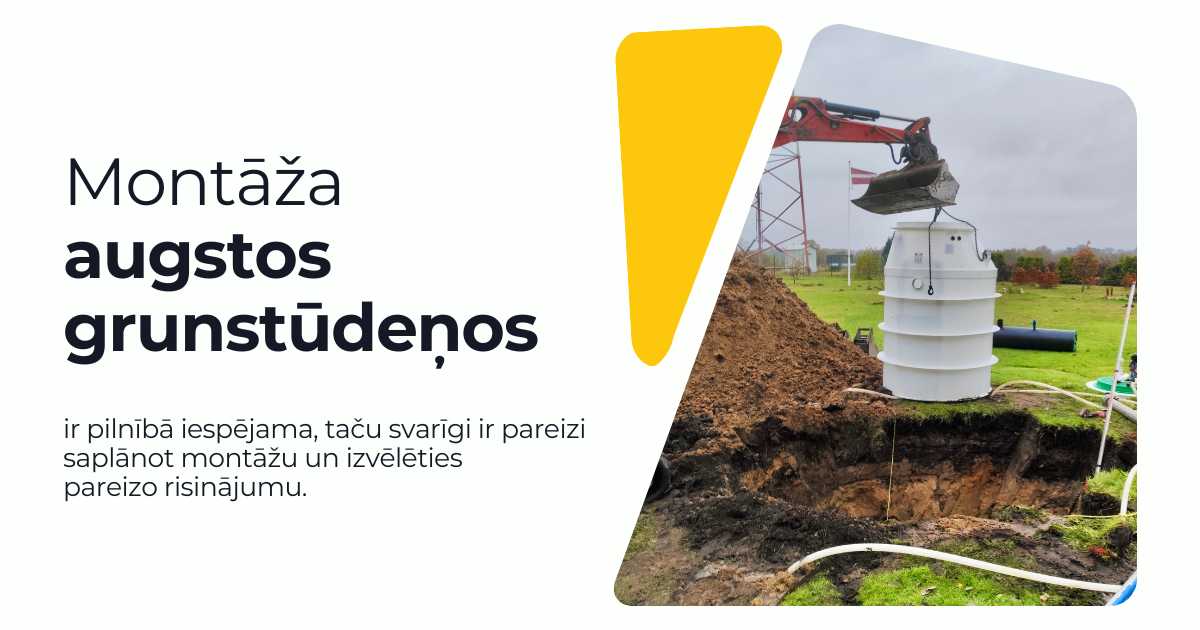
  • Installing biological treatment plants off-season: why it can pay off

    Installing biological treatment plants off-season: why it can pay off

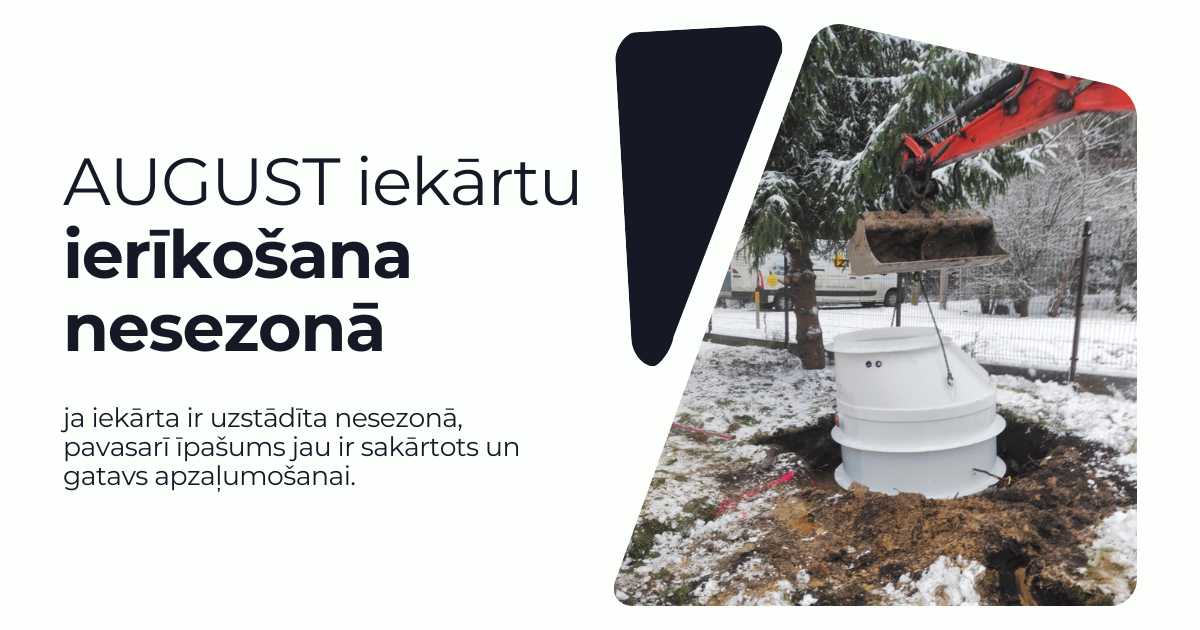
    Many homeowners put off building their sewerage until spring or summer, thinking ā€œit’ll be easier thenā€. In practice, though, installing a biological treatment plant off-season is often not only possible but also worthwhile. If the work is planned properly and the weather and soil conditions are taken into account, the system can be installed in autumn or early winter too.

    Shorter lead times and more flexible scheduling

    Off-season it is usually easier to agree on an installation date, because demand is not as high as in spring. This means the work can be scheduled sooner and fitted more flexibly around the customer’s plans. As a result, there’s no waiting list and no rush to ā€œget it done before summerā€, when many people are trying to sort out their properties at the same time.

    Ready for spring and less stress

    Another benefit is simple: if the plant is installed off-season, the property is already sorted by spring. This is especially relevant if you are planning to have the house officially commissioned, carry out construction on the site, or simply want to avoid water, odours or overflows appearing in spring and having to ā€œdeal with it urgentlyā€.

    When is off-season installation a particularly good choice?

    Off-season installation is often chosen if:

    • you want to sort out the sewerage quickly before spring
    • you plan to pave or landscape the site in spring
    • the discharge solution is clear and there is access for machinery
    • you want to avoid spring ā€œpeakā€ prices and busy schedules

    What must you consider in autumn and winter?

    For a quality installation, it’s important to assess the soil and site conditions. If the groundwater is high, a secure base and, if needed, anchoring must be planned. Access for machinery also matters, as does whether correct discharge can be ensured during periods of heavy rainfall.

    Frequently asked questions

    Can the plant work normally in winter?
    Yes, if it is installed correctly and used properly. The key is correct installation and the right discharge solution.
    Is off-season installation cheaper?
    In some cases lead times may be better or schedules more flexible, but the final price is usually influenced more by soil conditions and the discharge solution.
    Does such a solution need to be registered?
    If the property is not connected to the central sewer, in many places the decentralised system must be recorded according to the municipality's procedure.

    If you want to know whether off-season installation is possible on your property, get in touch. We will assess the conditions and recommend the safest solution.

  • AUGUST biological wastewater treatment plants – a reliable solution even after 10 years

    AUGUST biological wastewater treatment plants – a reliable solution even after 10 years

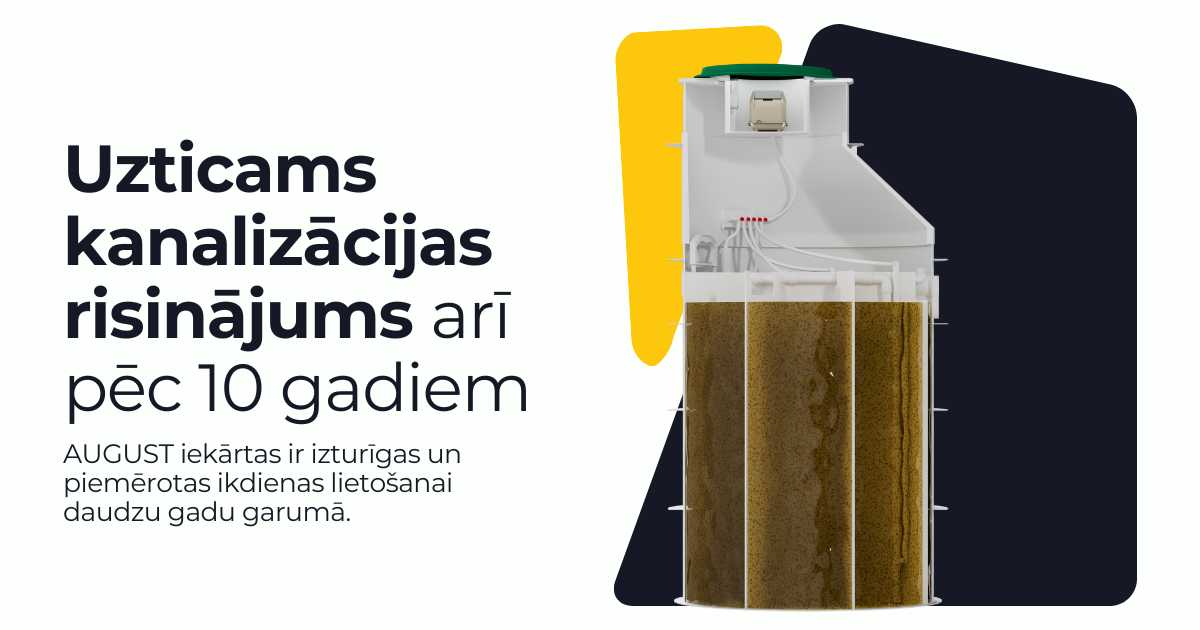
    When choosing a sewerage solution for a private house, people are usually looking for one thing: a system that works reliably, doesn’t smell and doesn’t need constant fiddling. That’s exactly why AUGUST biological wastewater treatment plants are a popular choice: they are built for the long term and designed for real everyday loads.

    What makes a plant reliable in the long term?

    Reliability is not just ā€œa good brandā€. It is made up of several practical things the owner notices every day. For example, the material and construction matter: they must not be affected by moisture, temperature fluctuations or soil pressure. Just as important is simple, understandable technology that can be maintained and checked without unnecessary costs.

    For a plant to keep working after 10 years, it also matters how easy it is to maintain and whether service is available. If maintenance is straightforward and service is available, the system keeps its treatment quality stable for a long time.

    Why do owners choose AUGUST?

    AUGUST plants are often chosen because they combine several advantages in one solution:

    • stable day-to-day operation and less risk of odours
    • predictable running costs compared with solutions that need frequent pumping out
    • the discharge solution can be adapted to the specific property
    • suitable for both permanent living and seasonal loads (with the right choice and use)

    What should you keep in mind for the plant to really last?

    Even the best plant is only as good as its installation and use. That’s why three basics are especially important:

    • the right capacity for the number of people
    • a properly planned treated-water discharge solution
    • regular maintenance and sensible everyday use

    In everyday life this also means simple things: no wet wipes, oils or large amounts of aggressive chemicals in the sewer. These are the factors that most often cause problems for any biological system.

    Frequently asked questions

    Can the plant really last 10 years or more?
    Yes, if it is installed correctly, the right capacity is chosen and it is maintained regularly.
    Will spare parts and service still be available years from now?
    Yes. That's one of the reasons people choose a reliable brand like ours, with service options and clear technical support.
    Does such a system need to be registered?
    If the property is not connected to the central sewer, in many cases the decentralised system must be registered according to the municipality's procedure.

    If you want to find out which AUGUST model suits your property, get in touch. We will recommend a solution, plan the discharge and prepare a clear quote for installation and service.

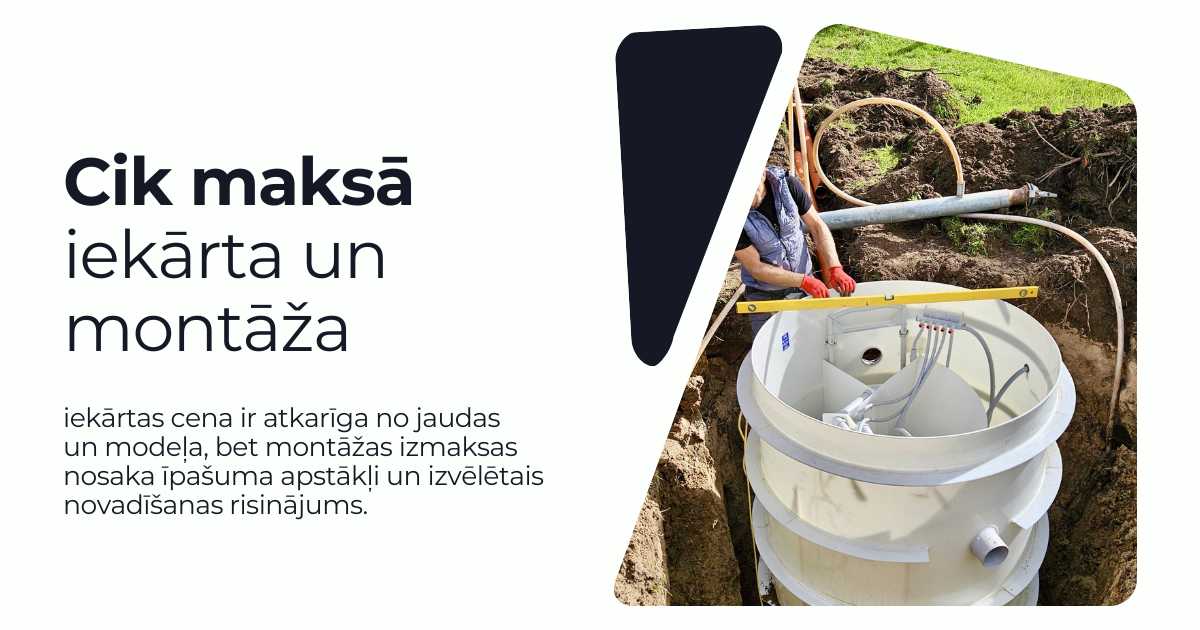
  • How much does a biological treatment plant and its installation cost? A full cost guide for 2026

    How much does a biological treatment plant and its installation cost? A full cost guide for 2026

    When planning to build or renovate a private house, dealing with wastewater is a priority. When looking into the cost of biological treatment, it’s important to understand that the total investment includes not only the plant itself, but also its installation and long-term upkeep.

    In this article we give a detailed overview of the cost items so you can plan your budget accurately and without unpleasant surprises.

    What makes up the cost of a biological treatment plant?

    The total estimate is usually divided into three main stages. Understanding each of them helps you make an informed decision that will save money in the future.

    1. Buying the plant (technology)

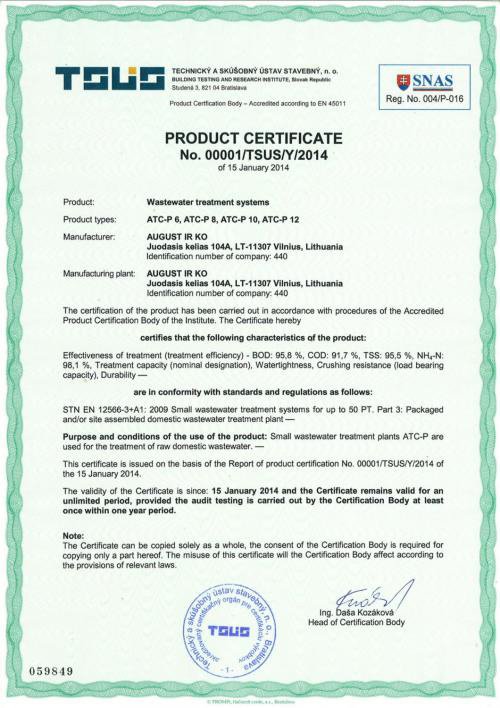
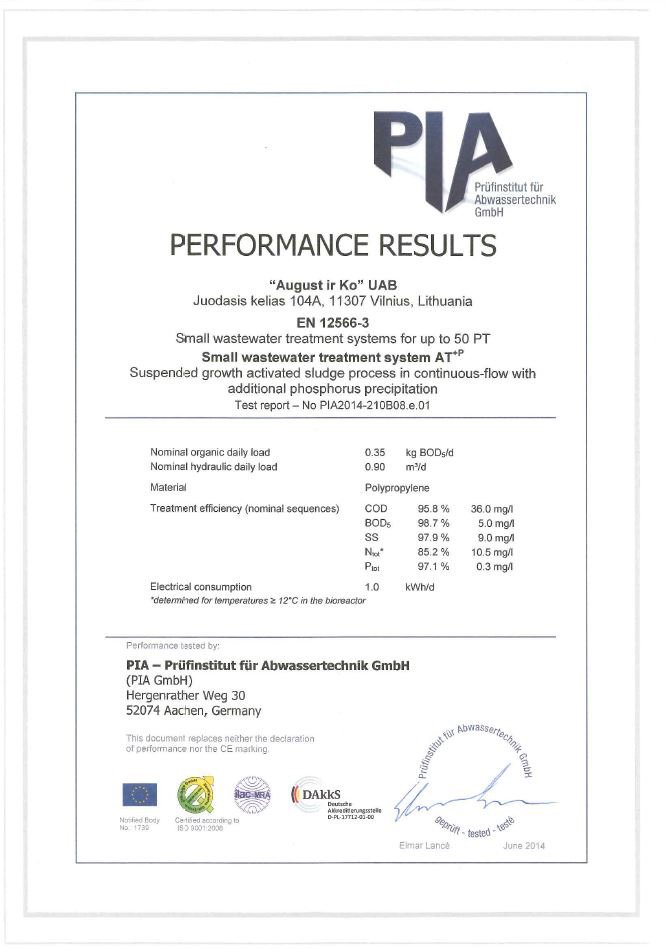
    The price is mainly determined by the plant’s capacity (number of people in the household) and the volume of wastewater treated. The AUGUST AT series plants offered by LZT Latvia stand out with 98.2% treatment efficiency, one of the highest figures on the Latvian market.

    • For small households and summer cottages (1–4 people): the most popular model is the AT-6.
    • For larger families or several houses: more powerful models are used (AT-8K, AT-10, etc.).

    2. Installation and materials

    Installation costs are the variable part, affected by your property’s terrain and soil composition. They include:

    • Earthworks (digging with an excavator).
    • Materials (concrete base, pipes, power cables).
    • Groundwater lowering works.

    3. Design and documentation

    For the system to be legal, you need a design approved by the building authority and proof that the plant complies with EU standards (EN 12566-3).

    Approximate costs: a standard family solution (AT-8K model)

    To give a realistic picture, we have compiled average market prices in 2026 for a standard private-house project:

    ItemApproximate price (EUR)What’s included?
    Plant (AUGUST AT-8K)2030Tank, compressor, control unit, small lid
    Installation work850 – 1 400Machinery, labour, installation
    Materials450 – 750Pipes, cables, concrete base
    Design500Preparing documents and approvals
    TOTAL3 500 – 4 800A complete system, ready to run

    Note: Prices are indicative and may vary depending on the season and the complexity of the site.

    Factors that can increase or reduce costs

    When choosing the cheapest offer, specific situations that make the process more expensive later are often overlooked:

    1. High groundwater level: groundwater lowering, anchoring or a raised tank design is needed to stop the tank ā€œfloatingā€ out of the ground.
    2. Soil type: building an infiltration field in clay soil is more expensive than in sandy soil, because wastewater has a harder time soaking into the ground.
    3. Distance: the further the plant is from the house, the higher the pipe and excavation costs.

    Why should the cost of biological treatment be judged over the long term?

    When buying a cheaper unit (such as an ordinary septic tank), the initial saving may seem attractive. But over 5–10 years:

    • Maintenance frequency: quality plants need sludge removed less often.
    • Electricity: an energy-efficient compressor pays for itself within a couple of years.
    • Environmental pollution: poorly treated water can contaminate your own or your neighbours’ well water, causing huge losses and odours in the yard.

    We also offer Inbank deferred payment, which lets you install a top-class AUGUST plant today and spread the payment into instalments.

    Frequently asked questions

    Does high groundwater mean it will be very expensive?
    Not always, but in such conditions additional work is more often needed, so the cost may rise.
    Can I buy a biological sewerage system on lease?
    Yes, in many cases the plant can be bought on lease, spreading the cost over monthly payments.
    How much does plant maintenance cost?
    On average, an annual service costs from 150 EUR. Maintenance is mandatory once a year and is regulated by Latvian law to prevent environmental pollution. After maintenance you receive a certificate of the work done, which you submit to your municipality.

    Every site is unique, so the best way to find out the exact cost is a consultation with our project manager. We will help you choose the most suitable solution and calculate all the installation costs.

  • Biological wastewater treatment where groundwater is high: what to know before installing?

    Biological wastewater treatment where groundwater is high: what to know before installing?

    Biological wastewater treatment with high groundwater is entirely possible, but it’s important to plan the installation correctly and choose solutions that protect the system in the long term. High groundwater often makes people think installing a biological plant will be difficult or even impossible, but in practice everything can be solved if the right steps are followed.

    The main challenge in high-groundwater areas is upward pressure and waterlogged soil. If the plant is not secured properly, there is a risk that over time it may shift or even ā€œfloat upā€. So on such sites you can’t rely on a standard approach – additional safety measures must be planned.

    Biological wastewater treatment with high groundwater: the 3 key prerequisites

    These are the three things that most often decide the outcome:

    1. Lowering the groundwater during installation
    To prepare a stable base, the groundwater is usually pumped out during installation. This allows a good base to be built and the soil around the plant to be compacted properly.

    2. Anchoring
    With high groundwater, the plant needs anchoring so that it stays firmly in place after rain, in spring or during sudden groundwater fluctuations. This is one of the most important points for safe operation.

    3. Pumping station
    Wastewater can’t always flow into the plant by gravity alone. If the terrain or soil conditions require it, a pumping station ensures a steady wastewater supply and safer system operation.

    Extra tips that help avoid problems

    For the system to work reliably, the following also often help:

    • a well-chosen plant location with access for maintenance
    • a properly planned treated-water discharge solution
    • good soil compaction and suitable backfill materials
    • sensible use, so the biological process stays stable

    Frequently asked questions

    Does high groundwater mean a biological plant won't work?
    No, it can work very well if the installation is planned correctly and the plant is anchored.
    Will I always need a pumping station?
    Not always. It depends on the terrain, the pipe routes and whether gravity flow is possible.
    What happens if the plant is not anchored?
    There is a risk that over time the plant may shift, which can cause damage and unstable operation.

    If your property also has high groundwater, that is no obstacle to a modern sewerage solution. Get in touch and we will find the safest installation and discharge solution for your situation.

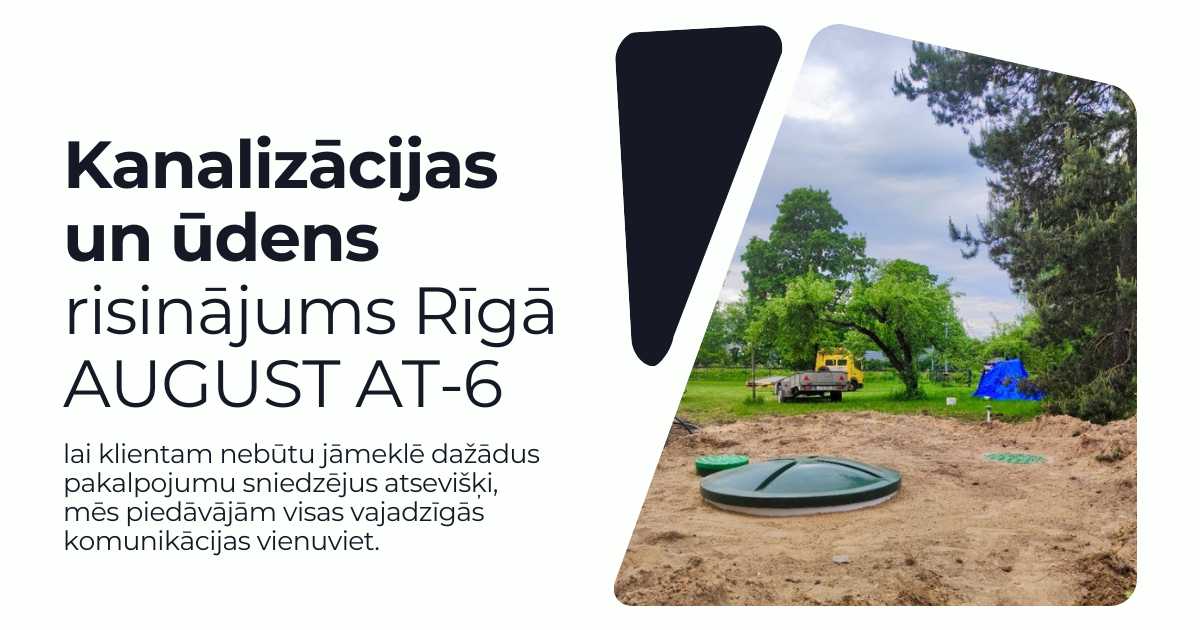
  • A complete sewerage and water solution with an AUGUST AT-6 in Riga

    A complete sewerage and water solution with an AUGUST AT-6 in Riga

    A customer in Riga wanted to sort out all their utilities in one project: build a sewer, set up stormwater drainage and connect the property to the central water main. Our task was to do it so that the customer didn’t have to get involved in the technical approvals and the work went smoothly: with a clear plan, timelines and commissioning.

    Three systems in one project

    We started with the water supply connection. We connected the property to the central water main, prepared the route, carried out the connection work and sorted out the paperwork. As a result, the customer has a stable, safe water supply that needs no extra attention day to day.

    The next step was the sewerage. For this property we installed an AUGUST AT-6 biological treatment plant, designed for up to four permanent residents. This solution suits an urban setting, where you want a tidy system without odours and with clear maintenance requirements. For the plant to work reliably in the long term, a well-planned discharge solution and properly made connections are also essential.

    The third part was the stormwater sewer. We built a system that collects rainwater from the roof and grounds and drains it away in a controlled manner, so the yard doesn’t turn into a puddle zone and the building’s foundations don’t suffer from excess moisture. In practice this means less risk of flooding after heavy downpours and a tidier site all year round.

    Stress-free, with approvals and handover

    The biggest benefit of a project like this is that all the systems are coordinated with each other during design and construction. This reduces the risk of later having to break up paving, move chambers or change gradients. For the customer it also means clear costs and one contact person to turn to both during construction and afterwards, if service is needed.

    What the customer got

    • one responsible team for all utilities
    • approvals and paperwork handled by us
    • full construction and a properly commissioned site
    • a solution that remains clear and manageable after the work is done

    Frequently asked questions

    Can water, sewerage and a stormwater sewer be built at the same time?
    Yes, and it is often better value, because the work is planned together and the pipe runs don't have to be redone several times.
    Why choose a biological plant in the city?
    If a central sewer is not available or a connection is not practical, a biological plant gives you a modern solution with predictable maintenance costs.
    Is getting approval from Rīgas ūdens complicated?
    The main thing is correctly prepared documents and proper execution.