Stormwater drainage construction
Standing water and rainwater collecting on a property pose immediate and long-term threats to the safety of the building and the landscaping. Uncontrolled moisture leads to structural damage, foundation erosion, soil slippage and landscape deformation. A professionally built drainage system is an essential step towards a durable property, dry foundations and a comfortable environment.
Why is stormwater
drainage needed?
Foundation protection
All wastewater from the house flows through a pipe into the first chamber of the septic tank, where the slow flow rate starts the mechanical treatment process.
Landscaping
Prevents puddles forming on the lawn, in the garden or on paved surfaces.
Longer-lasting paving
Correct water drainage stops frost from lifting paving stones or washing out their base.
Legal
compliance
Many municipalities prohibit discharging rainwater into the household sewer network – we build a separate system that complies with the rules.
Standing water in the yard after rain? Stormwater drainage will help!
Does your yard turn into a lake of puddles after rain? Standing water isn’t just a nuisance – it also threatens your home’s foundations and landscaping. Effective stormwater drainage is the solution that stops water damaging your property and makes…
Read more…
How stormwater drainage is built
Site survey
We assess the terrain, soil, connection points and wastewater discharge options.
Choosing the solution
We choose the most suitable rainwater drainage system for the specifics of the site.
Construction and connections
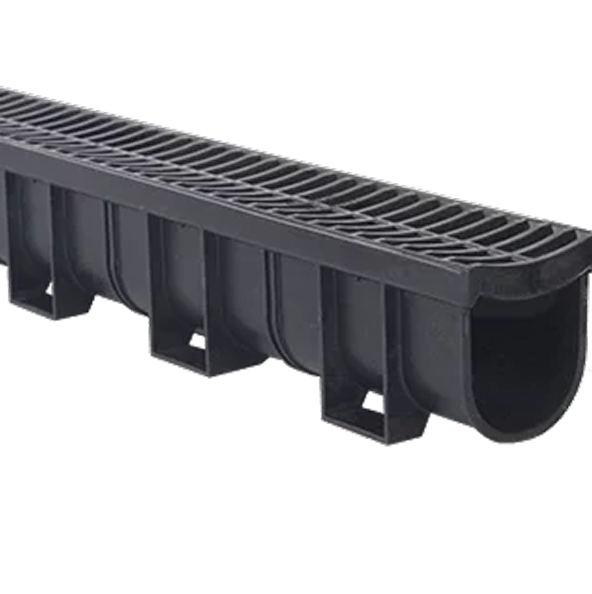
We build the lines (trenches, crushed stone), pipes, inspection/collection chambers and sand traps, and connect the roof gutters and linear drains.
Testing and site restoration
We test the system and restore the site.