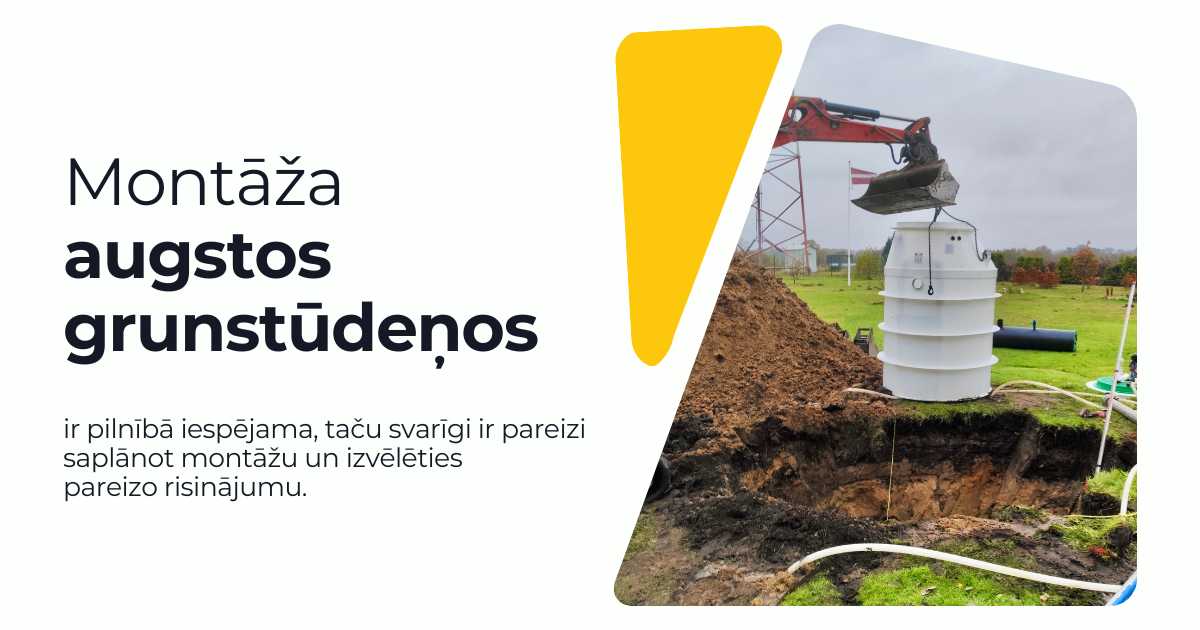
Biological wastewater treatment with high groundwater is entirely possible, but it’s important to plan the installation correctly and choose solutions that protect the system in the long term. High groundwater often makes people think installing a biological plant will be difficult or even impossible, but in practice everything can be solved if the right steps are followed.
The main challenge in high-groundwater areas is upward pressure and waterlogged soil. If the plant is not secured properly, there is a risk that over time it may shift or even “float up”. So on such sites you can’t rely on a standard approach – additional safety measures must be planned.
Biological wastewater treatment with high groundwater: the 3 key prerequisites
These are the three things that most often decide the outcome:
1. Lowering the groundwater during installation
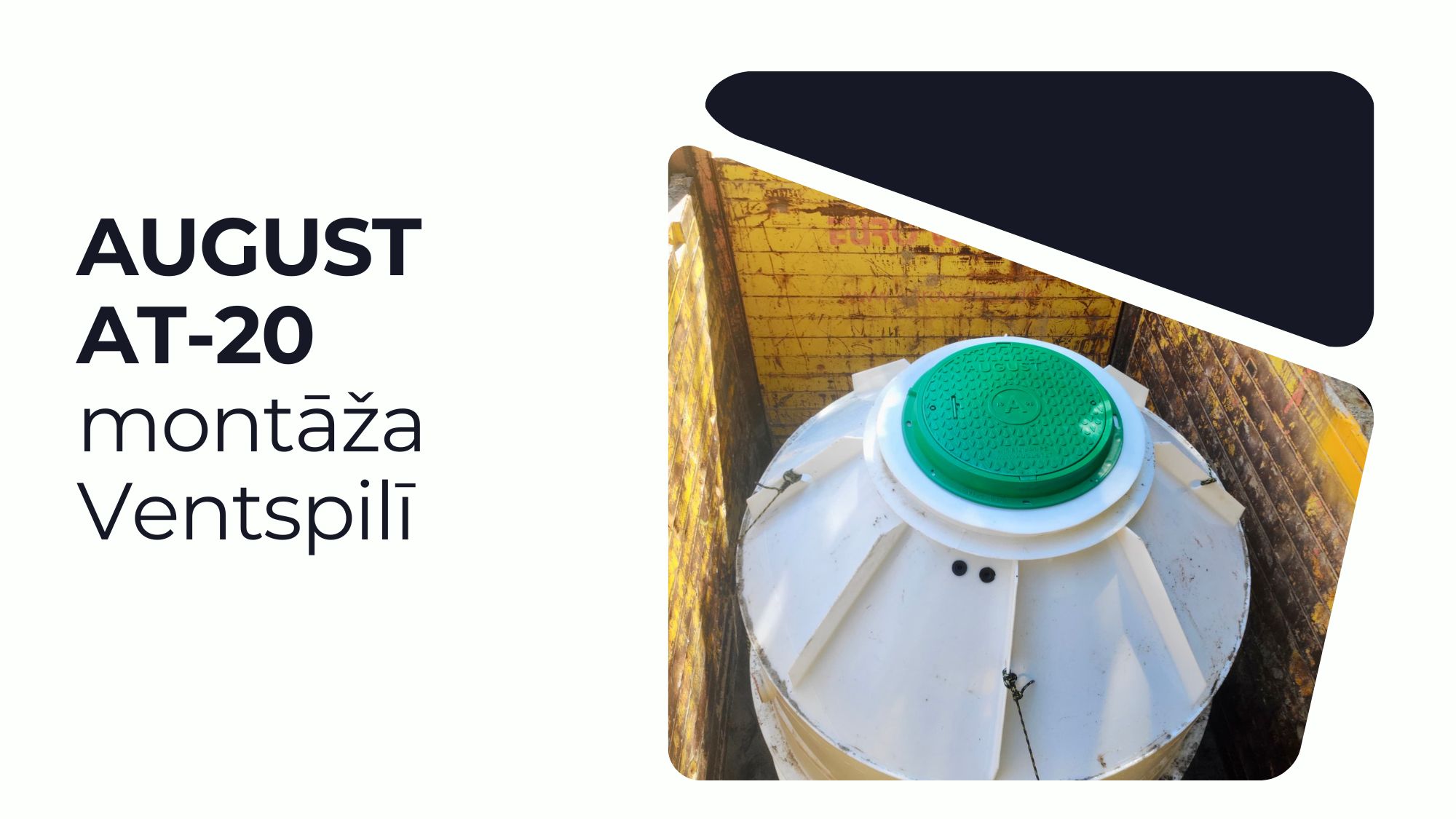
To prepare a stable base, the groundwater is usually pumped out during installation. This allows a good base to be built and the soil around the plant to be compacted properly.
2. Anchoring
With high groundwater, the plant needs anchoring so that it stays firmly in place after rain, in spring or during sudden groundwater fluctuations. This is one of the most important points for safe operation.
3. Pumping station
Wastewater can’t always flow into the plant by gravity alone. If the terrain or soil conditions require it, a pumping station ensures a steady wastewater supply and safer system operation.
Extra tips that help avoid problems
For the system to work reliably, the following also often help:
• a well-chosen plant location with access for maintenance
• a properly planned treated-water discharge solution
• good soil compaction and suitable backfill materials
• sensible use, so the biological process stays stable
Frequently asked questions
If your property also has high groundwater, that is no obstacle to a modern sewerage solution. Get in touch and we will find the safest installation and discharge solution for your situation.