Holding tank
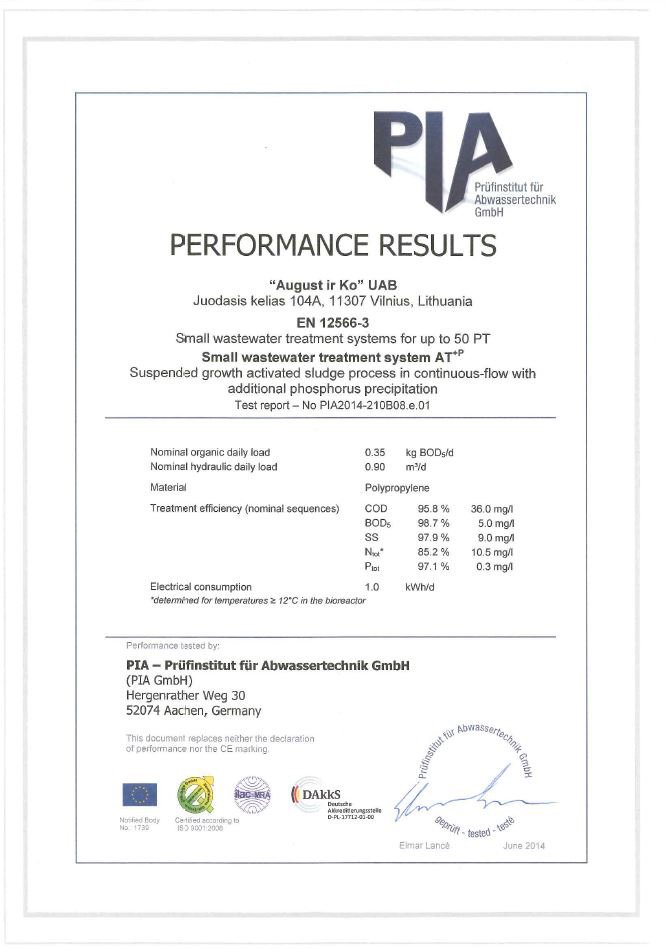
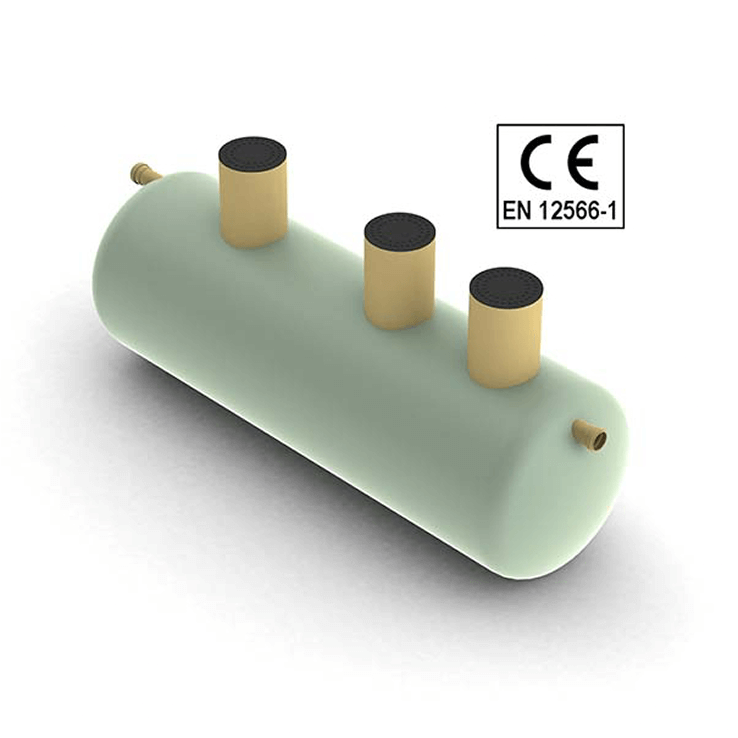
Safe and durable fibreglass holding tanks for places where connecting to central networks or building infiltration fields is not possible. Our tanks guarantee 100% watertightness and environmental protection, meeting the requirements of EN 12566-1.
How does a holding tank work?
Inflow
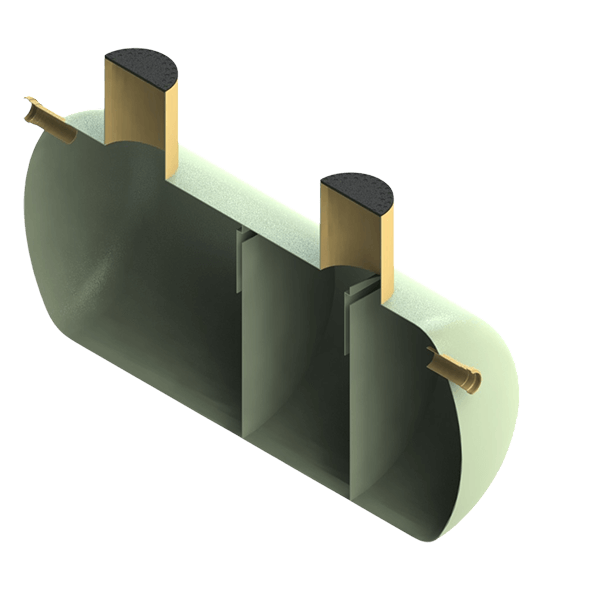
All wastewater from the house flows by gravity through a pipe into a sealed tank.
Storage
The tank completely isolates the liquid from the surrounding environment and groundwater.
Level monitoring
The tank is fitted with an alarm system that warns when it is getting full.
Emptying
Once the tank is full, the wastewater is pumped out by a tanker truck and taken to a treatment plant.
How to determine the right tank size?
1. Determine the number of residents
The first criterion is the number of people who will use the sewerage system every day.
- 3–4 people: a 2 m³ holding tank is suitable.
- 4–6 people: a 3 m³ holding tank is suitable.
- 6–8 people: a 4 m³ holding tank is suitable.
- 8–10 people: a 5 m³ holding tank is suitable.
- 10 or more people: larger volumes are suitable (6–12 m³).
Calculations assume an average water consumption of 150–200 litres per person per day. The number of users shown in the table corresponds to weekly emptying.
2. Calculate water consumption
The holding tank volume should match the household’s actual water consumption, taking into account how often you are prepared to order emptying.
3. Assess how often the house is used
If the house is lived in permanently, choose a larger volume to reduce how often it needs emptying. If the house is only used seasonally (e.g. a summer cottage), a smaller volume may be enough.
4. Plan the emptying frequency
A larger holding tank means less frequent emptying. Choosing a slightly larger tank than the minimum gives you an extra “safety cushion” when you have guests or use more water than usual.
| Volume | Length | Width | Users | Price (incl. VAT) |
|---|---|---|---|---|
| 2 m³ | 2000 mm | 1200 mm | 3-4 | 835 € |
| 3 m³ | 2900 mm | 1200 mm | 4-6 | 970 € |
| 4 m³ | 3750 mm | 1200 mm | 6-8 | 1148 € |
| 5 m³ | 4650 mm | 1600 mm | 8-10 | 1300 € |
| 6 m³ | 2800 mm | 1600 mm | 10-12 | 1165 € |
| 7 m³ | 3300 mm | 1600 mm | 12-15 | 1625 € |
| 8 m³ | 4300 mm | 1600 mm | 14-17 | 1860 € |
| 10 m³ | 4750 mm | 1600 mm | 16-20 | 2237 € |
| 12 m³ | 6300 mm | 1600 mm | 16-22 | 2600 € |
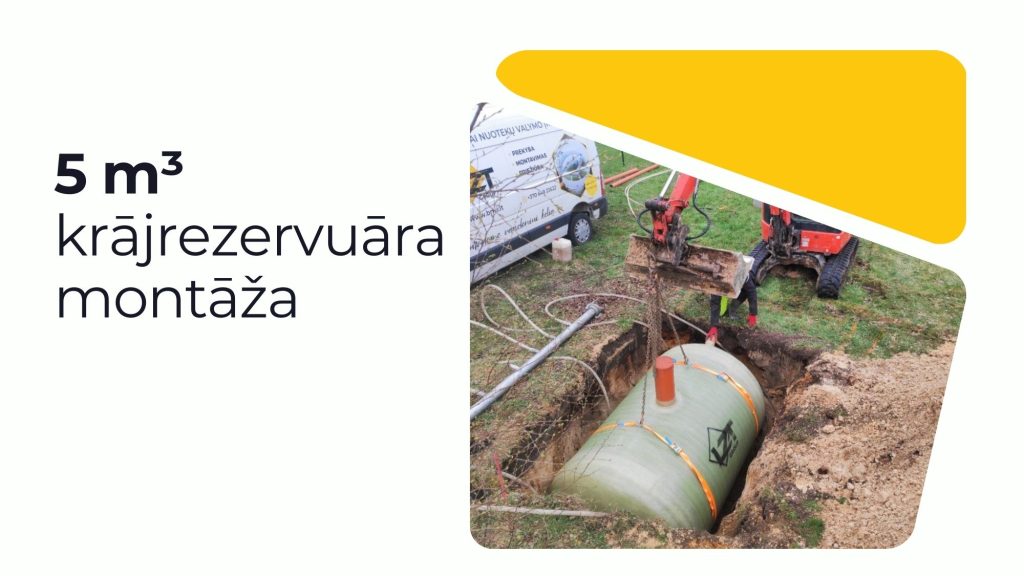
5 m³ holding tank installation
A full biological wastewater treatment plant is not always possible on a property. In such situations, a sealed holding tank is a suitable solution. This time we installed a 5 cubic metre holding tank, which provides safe and eco-friendly storage…
Read more…