Pumping stations
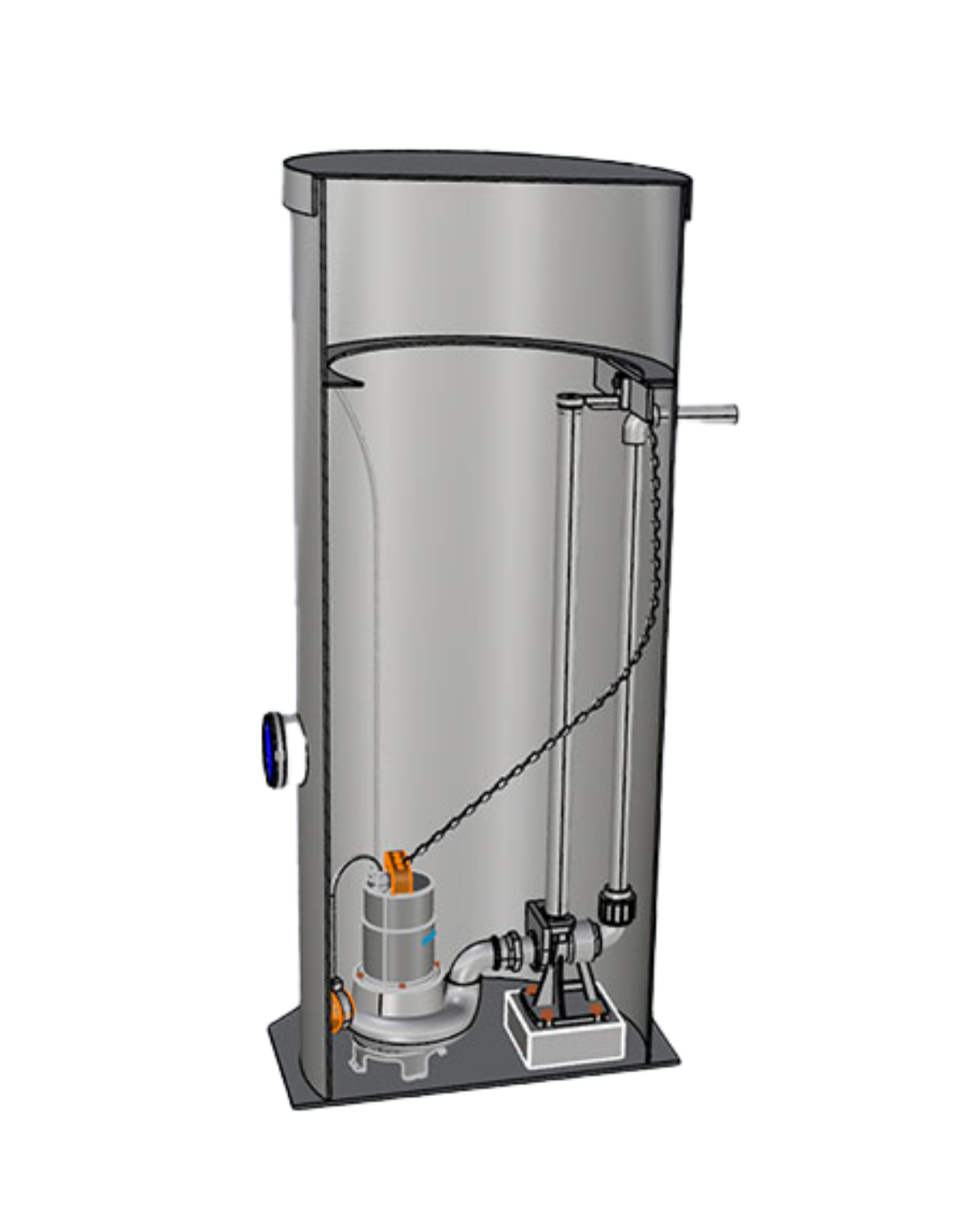
Pumping stations are an essential engineering system wherever wastewater or rainwater cannot be drained by gravity. They pump liquids safely and efficiently from lower points to a higher level.
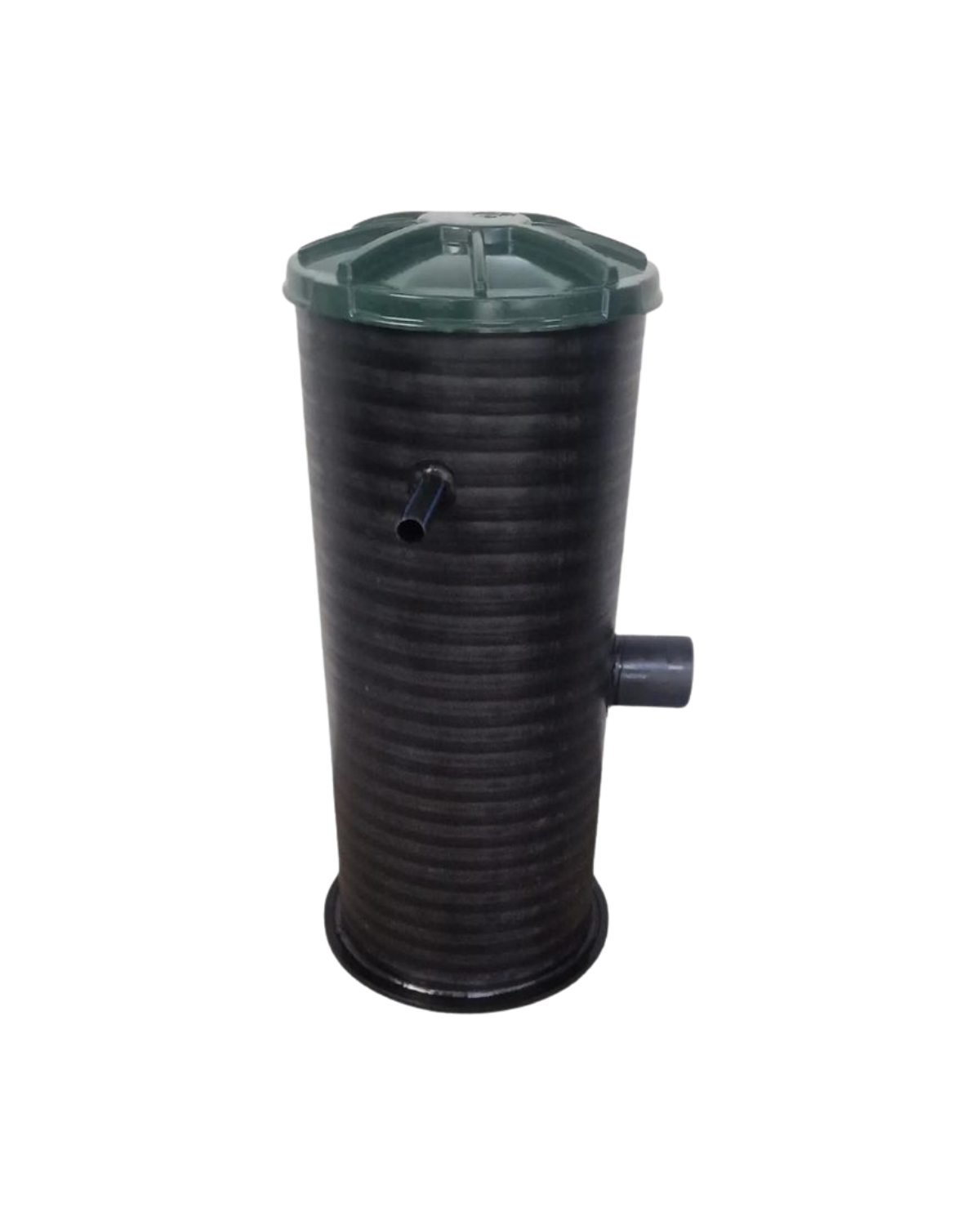
Main advantages of pumping stations
Works on any terrain
A pumping station moves wastewater even where a gravity sewer is not possible – on slopes, in low-lying areas and basements.
Wide range of uses
Suitable for household wastewater, sewage and rainwater, making it a universal solution for private and commercial sites.
Durable materials
Made of durable PVC or polypropylene, which resists corrosion, moisture and aggressive environments, ensuring a long service life.
Quick installation
Pumping stations are quick and easy to install, reducing installation time and extra costs.
Choosing a pumping station
A pumping station is needed when wastewater or rainwater cannot be drained by gravity (natural gradient). This most often happens when the sewer pipe is laid deeper than 1 m below ground, when the terrain of the plot does not allow sufficient fall, or when water needs to be lifted to a higher level (for example, up to a treatment plant).
1. Determine the type of water
Pumping stations are classified by the type of water they pump:
For clean water – suitable for pumping rainwater or drainage water.
For dirty water – suitable for pumping household wastewater containing solids and contaminants.
2. Assess the required diameter
The diameter depends on the type of water and the flow volume:
A smaller diameter is usually enough for pumping clean water.
Pumping dirty water needs a larger diameter to let solids pass freely and reduce the risk of clogging.
3. Determine the installation depth
The height of the pumping station and the position of the inlet/outlet connections must match the actual depth of the sewer pipe on your property.
4. Choose the right pump
The pump is added as an optional extra, according to the distance and height needed to deliver the water to its destination (a treatment plant, holding tank or the central network).
| Material | Type | Diameter | Height | Inflow | Outlet | Pump | Price with Pedrollo pump (incl. VAT) |
|---|---|---|---|---|---|---|---|
| PVC | For clean water | 400 mm | 2000 mm | 110 mm | As needed | Optional extra | 500 € |
| PVC | For dirty water | 600 mm | 2000 mm | 110 mm | As needed | Optional extra | 600 € |
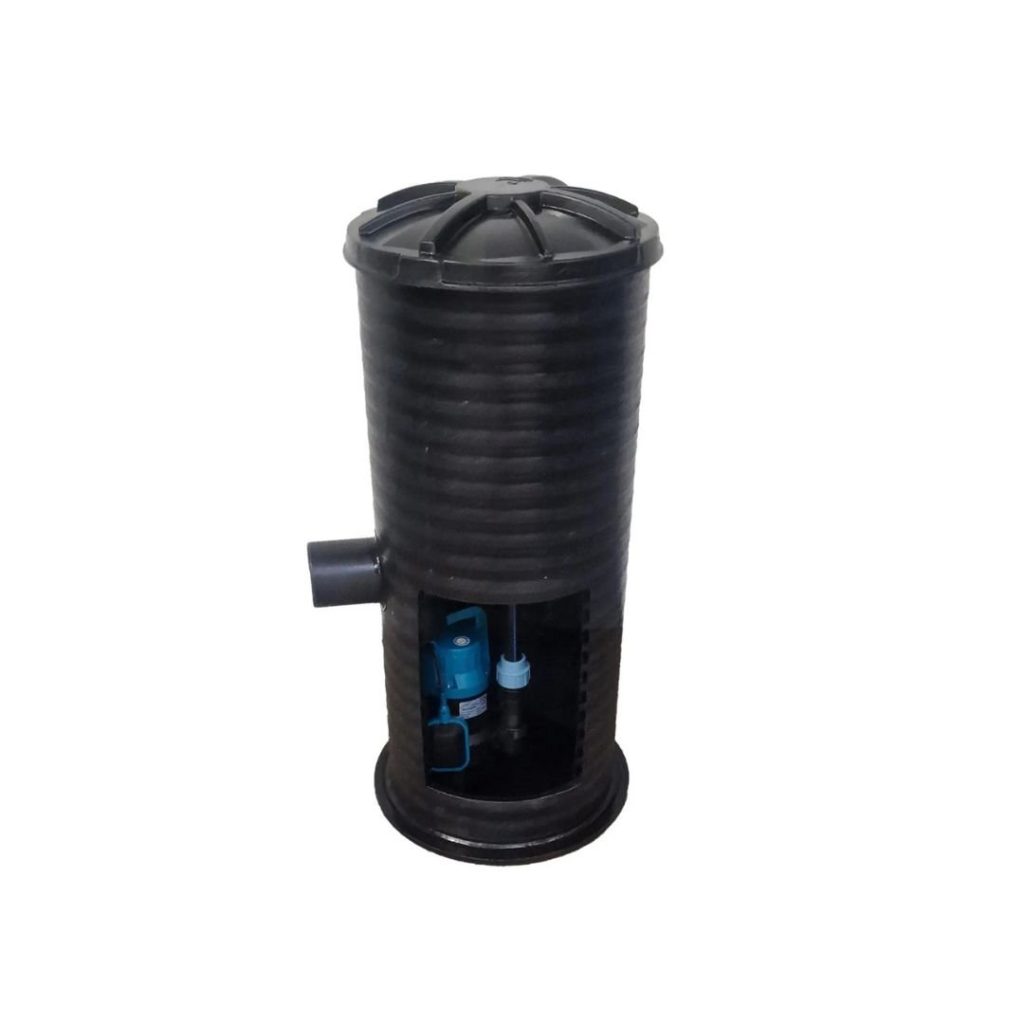
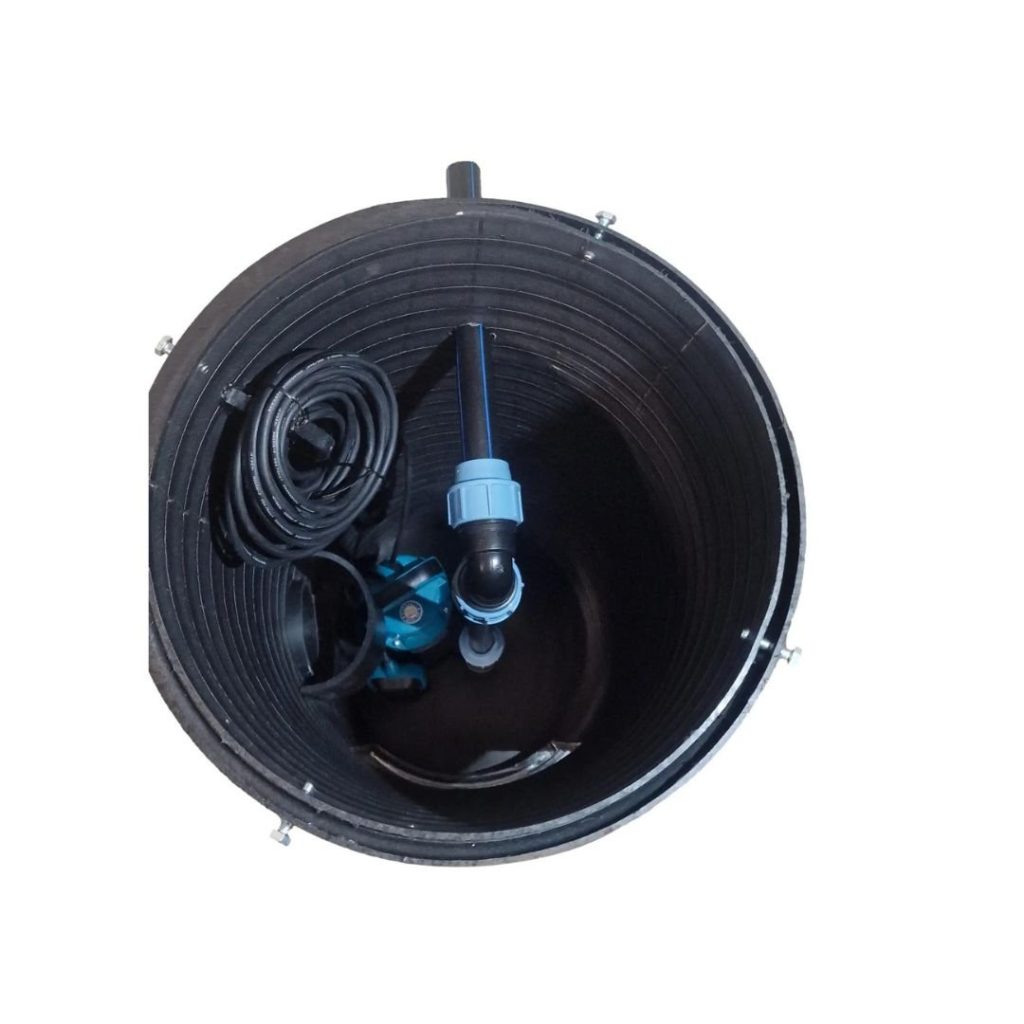
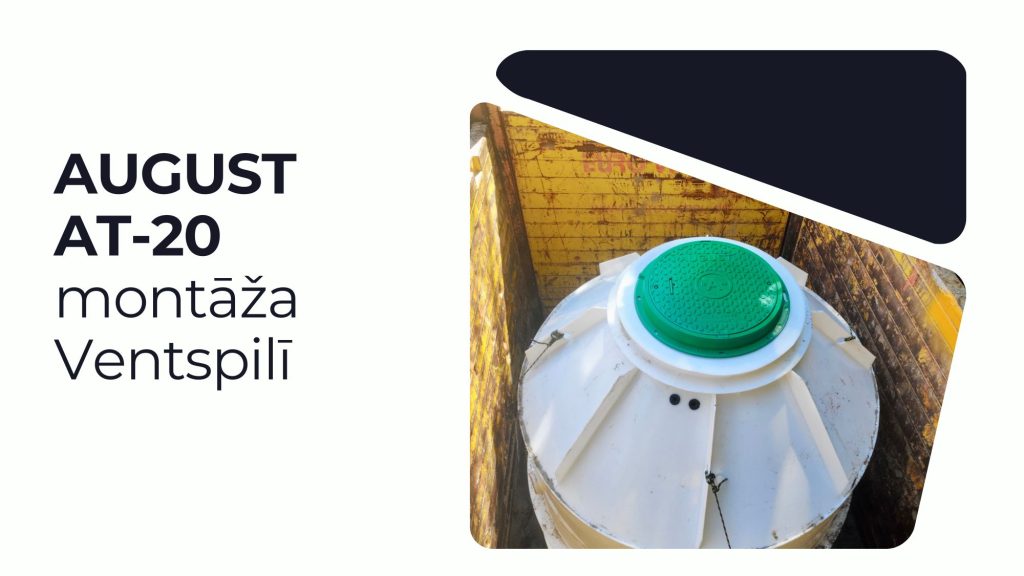
AUGUST AT-20 for a future guesthouse in Ventspils municipality: when an old inn comes back to life.
History meets modern technology It’s not every day we get to take part in a project where new technology gives a second life to a historic building. An interesting project is under way in Ventspils municipality – an old inn…
Read more…