The biological treatment plant from the manufacturer AUGUST has been known on the Latvian market for more than 15 years. In that time the technology has become remarkably advanced, yet various myths and worries still circulate. Some are a legacy from the days when cesspits were standard, while others are simply down to a lack of information.
In this article we look at the 5 most popular myths, explain where they come from and reveal what the real situation is today.
Myth 1: A biological treatment plant gives off an unpleasant smell
This is the most common fear when planning a sewer near the house or terrace. People often draw parallels with an old-style settling pit or septic tank, where partial putrefaction takes place.
In fact, a correctly installed, adjusted and regularly maintained biological treatment plant does not smell. Odours only arise in airless (anaerobic) conditions. In modern AUGUST systems, an air compressor continuously supplies oxygen to the plant, ensuring aerobic processes.
Myth 2: The plant uses a lot of electricity
Many people believe that an air compressor running non-stop will make a huge dent in the family’s monthly budget. The fear of electrical devices running around the clock is understandable, but it is not justified.
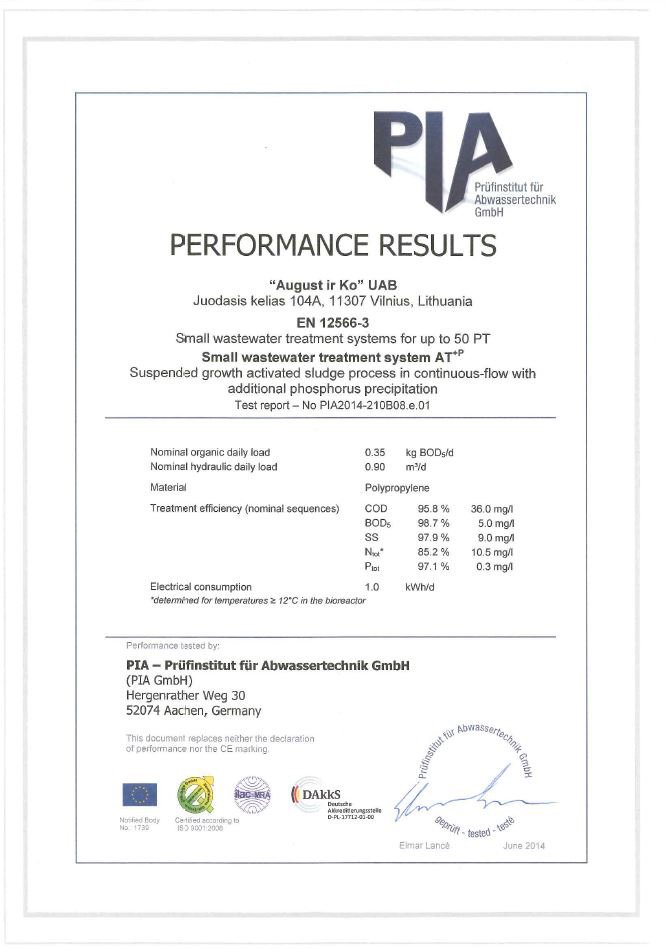
In reality, the air blower draws 40 to 60 watts, comparable to a small LED TV. If you work out the cost at current tariffs, and the comfort an autonomous biological treatment plant provides, it costs about as much as a couple of cups of coffee a month.
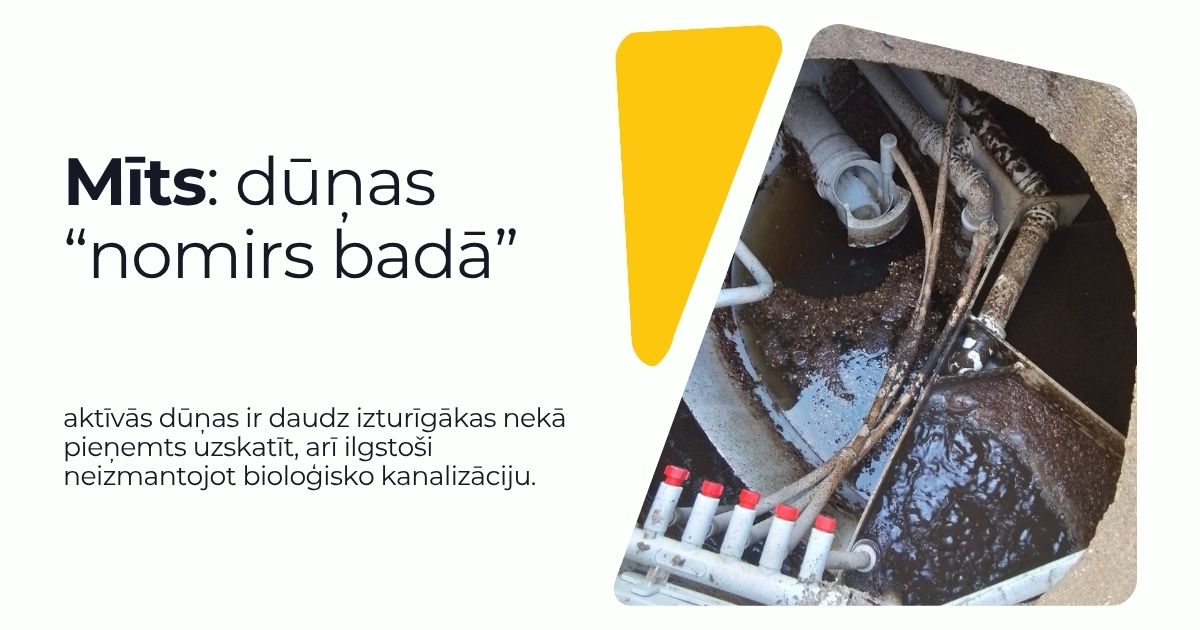
Myth 3: While you’re on holiday, the sludge will “starve to death”
This is one of the most amusing myths we hear. Customers ask whether they really need to get a neighbour to use the toilet while they are away to “feed” the bacteria.
We can reassure you: activated sludge is much hardier than people think. If nobody lives in the house for 2 or 3 weeks, or even a couple of months, the bacteria simply switch to standby mode. As soon as you return and start using water again, the system fully restores its operation within a couple of days, without any outside help.
Myth 4: In winter frost, the system freezes and breaks
Latvian winters can be unpredictable, so people worry whether the water inside the plant will turn to ice. They fear frost could damage the expensive technology or stop the sewerage from working.
This is where physics and biology come to the rescue. First, a biological treatment plant is buried deep enough that the ground doesn’t freeze. Second, the treatment process itself gives off heat. On top of that, we use warm water every day for showers and washing up, which keeps the temperature inside the system stable even in the harshest frost.
Myth 5: Household chemicals must not go down the drain
There is a belief that the biology is so fragile that a single wash with ordinary detergent will destroy all the microflora. This suggests homeowners will have to change their habits completely and buy only special, expensive eco products.
In fact, AUGUST plants are designed for real life. They cope perfectly well with normal amounts of laundry detergent, shampoo and dishwashing liquid. The only restriction is excessive use of chlorine or aggressive acids in large quantities – sensible housekeeping does not affect the plant.
As you can see, most fears are based on outdated information or assumptions. A quality biological treatment plant is not a burden, but a modern, unobtrusive helper that looks after clean nature and your comfort.
If you are planning a sewerage system and have other concerns, we will be happy to put your mind at rest and help you choose the most suitable solution for your property!