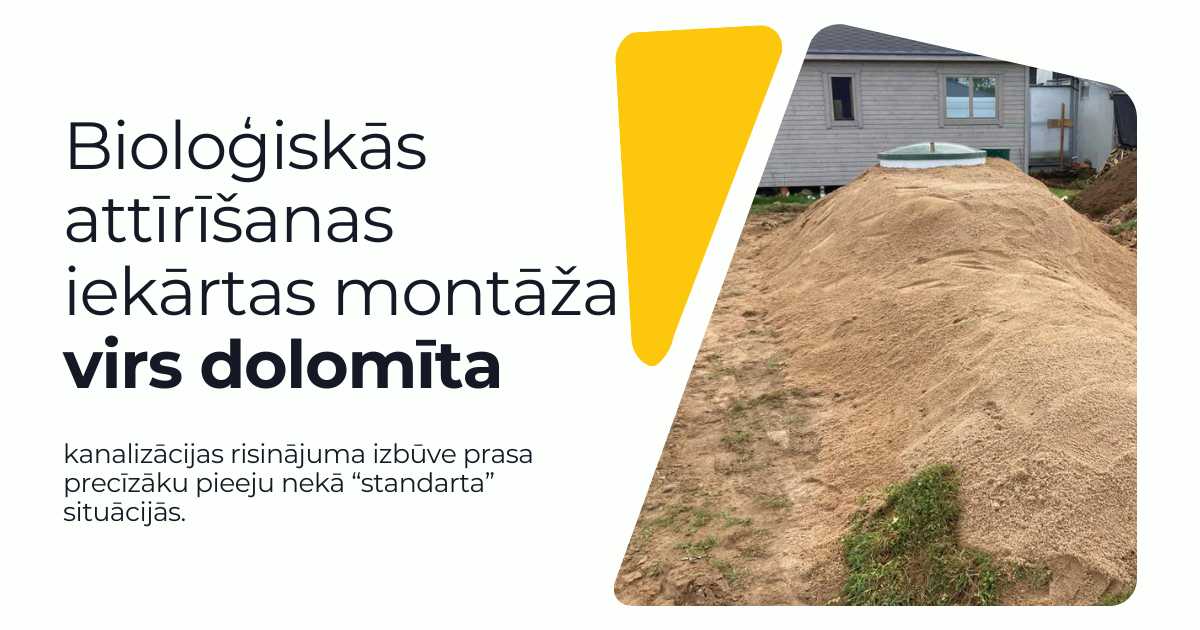
If there is dolomite (or another dense rock layer) under the soil on your property, building a sewerage solution needs a more precise approach than in “standard” situations. Not because a biological plant can’t be installed over dolomite – usually it can. The main question is how to discharge the treated wastewater correctly and safely when the ground doesn’t absorb water like sand or gravel.
In this article you will learn:
- why dolomite affects discharge,
- which solutions usually work,
- which mistakes to avoid,
- and you will see a real example from one of our installations, where the dolomite was only ~70 cm deep.
Treatment plant over dolomite: the 3 main risks
Dolomite is a dense rock layer that in some places lies close to the surface. A treatment plant over dolomite needs a slightly different approach than in “normal” soil, because dolomite affects both the excavation and the discharge of treated water.
The practical challenges:
- limited infiltration – water doesn’t disappear into the ground as easily;
- an infiltration field may not work as intended if there isn’t a sufficient filtering layer;
- there is a greater risk that water will collect or run over the surface if the discharge is not built correctly.
So when planning a biological wastewater treatment plant over dolomite, it is important to assess not only the plant model but also the discharge solution and site conditions.
Which solutions usually work over dolomite?
The specific solution depends on the terrain, groundwater, dolomite depth and whether there is a ditch/land drainage on site. Most often the choice is between these options:
1) Discharge to a ditch or an existing drainage system (if permitted)
On some sites, treated water can be discharged to a ditch or drainage system. The specific municipality and project conditions always have to be taken into account.
2) Infiltration with a prepared filtering layer (mound / “cushion”)
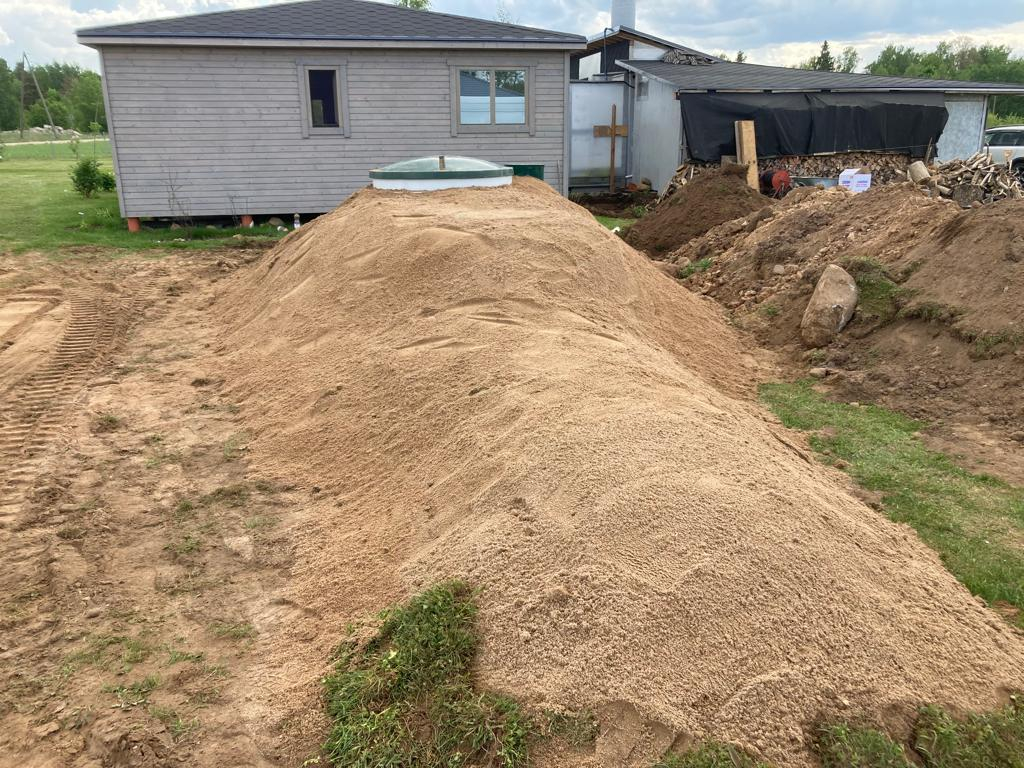
If the dolomite is close to the surface, infiltration is often solved with a mound and a suitable filtering layer (e.g. sand), so that the water can disperse in the intended zone.
3) A pumping station / pumped solution (if the terrain requires it)
If there is no natural fall or the discharge point is higher, pumped solutions are used to ensure a steady flow and correct discharge.
In practice: dolomite is not a “stop sign”. It simply means choosing the right way to discharge the wastewater.
A real installation example: dolomite only ~70 cm deep
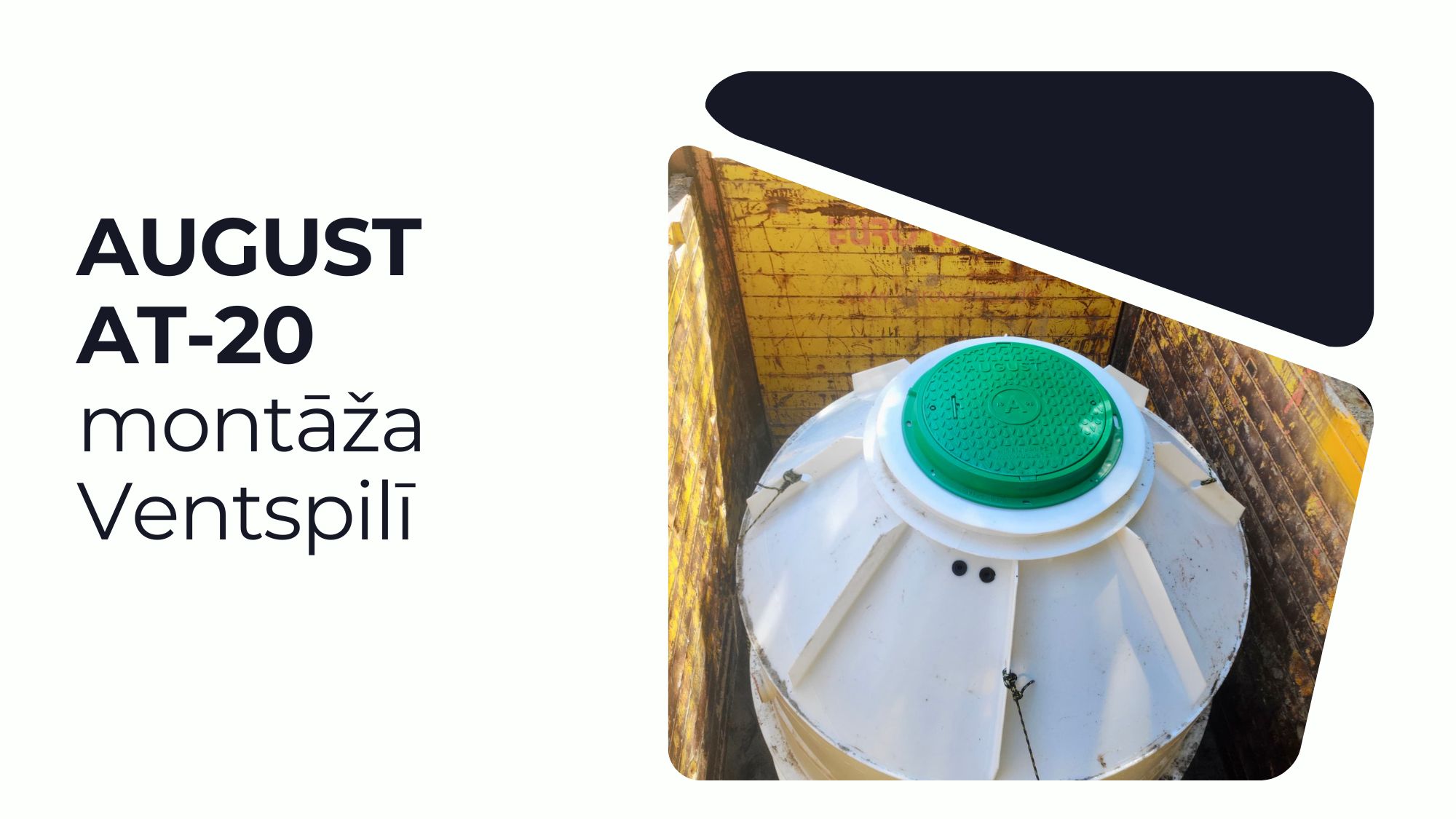
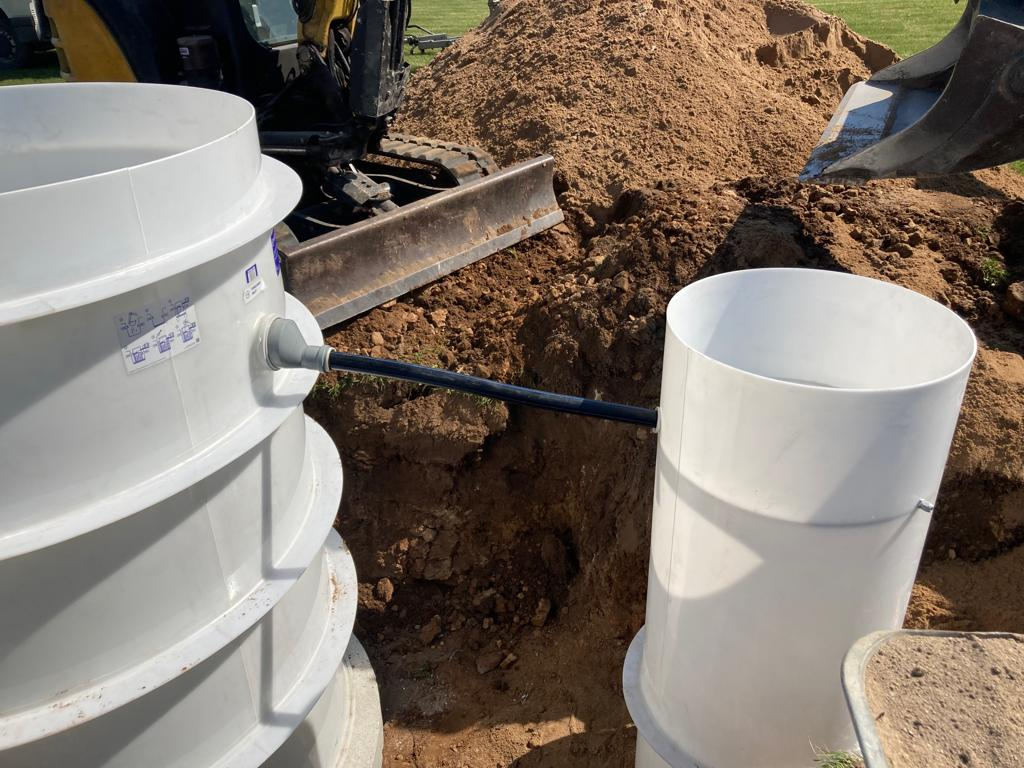
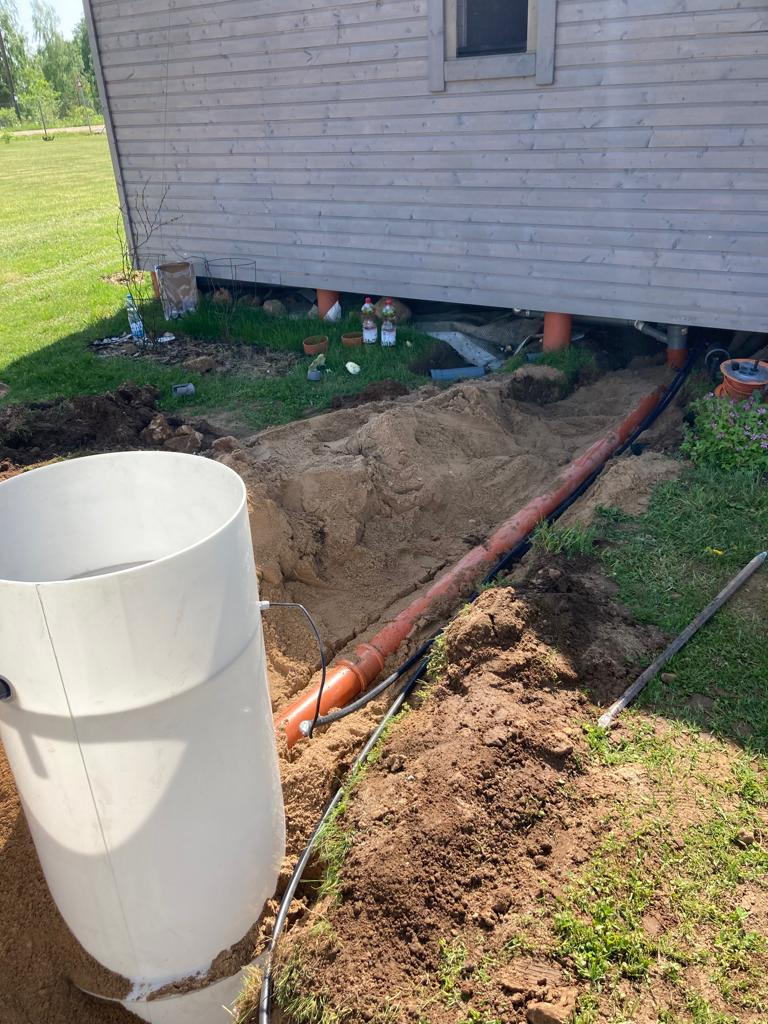
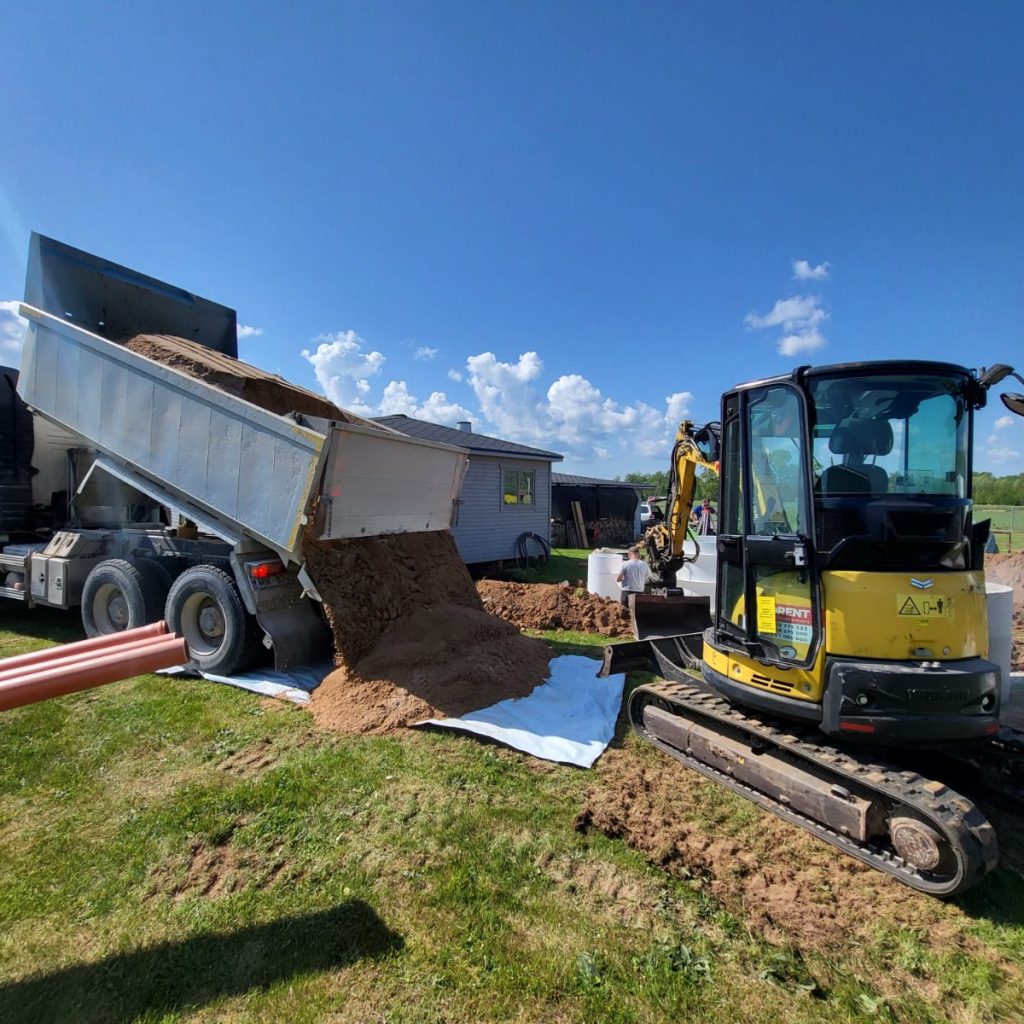
On one site, the earthworks revealed dolomite at a depth of about 70 cm. We needed to install a biological wastewater treatment plant over dolomite. In such a case a standard infiltration field may not be the safest solution without additional construction, because the filtering layer may be too thin.
What we did:
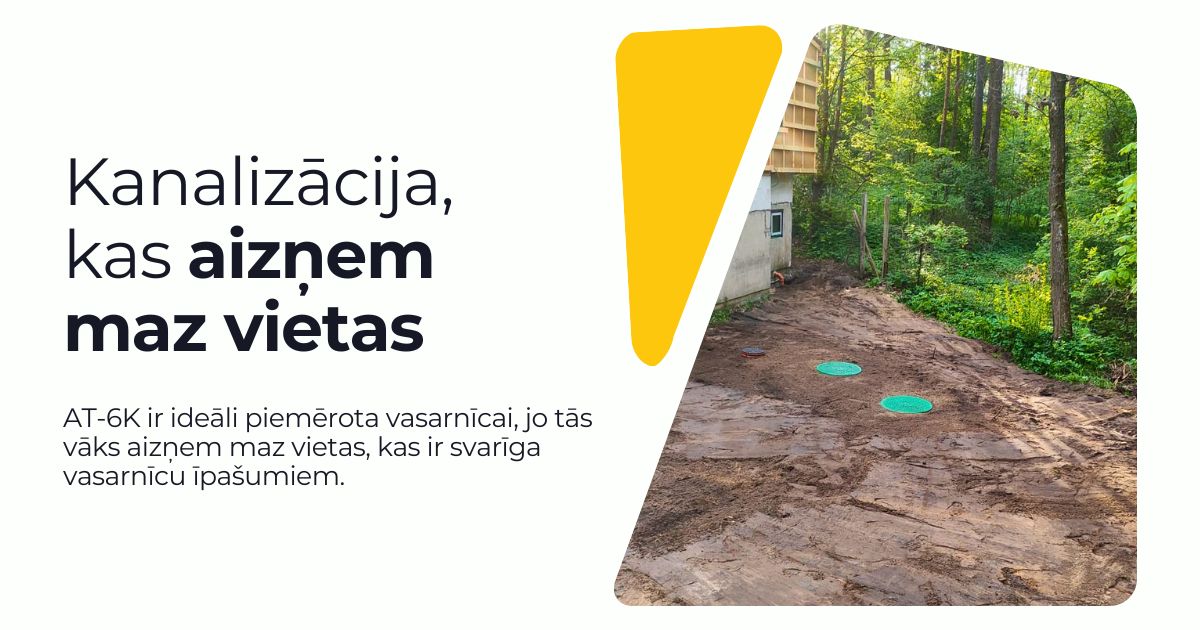
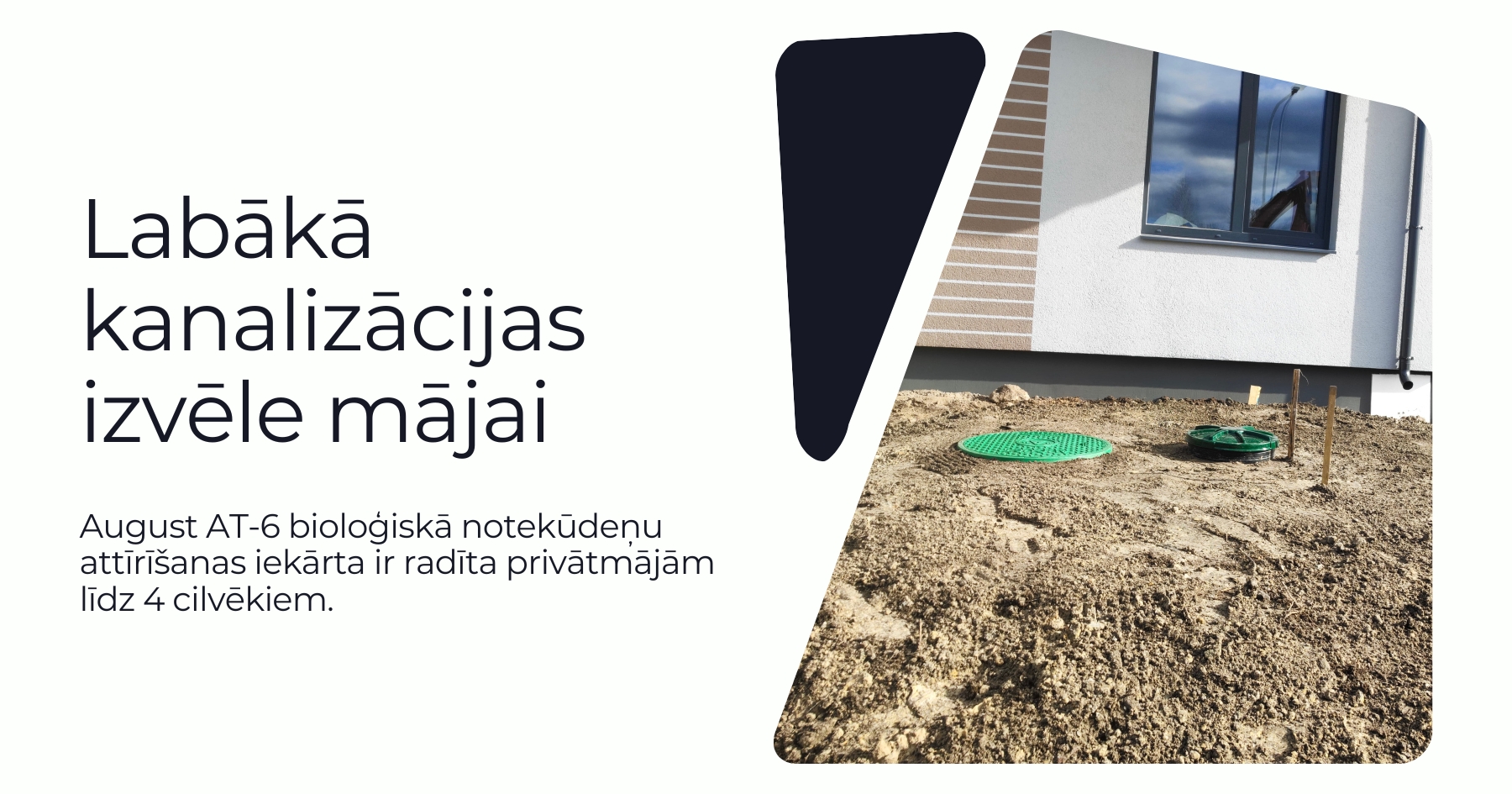
- built a mound to provide a suitable filtering zone;
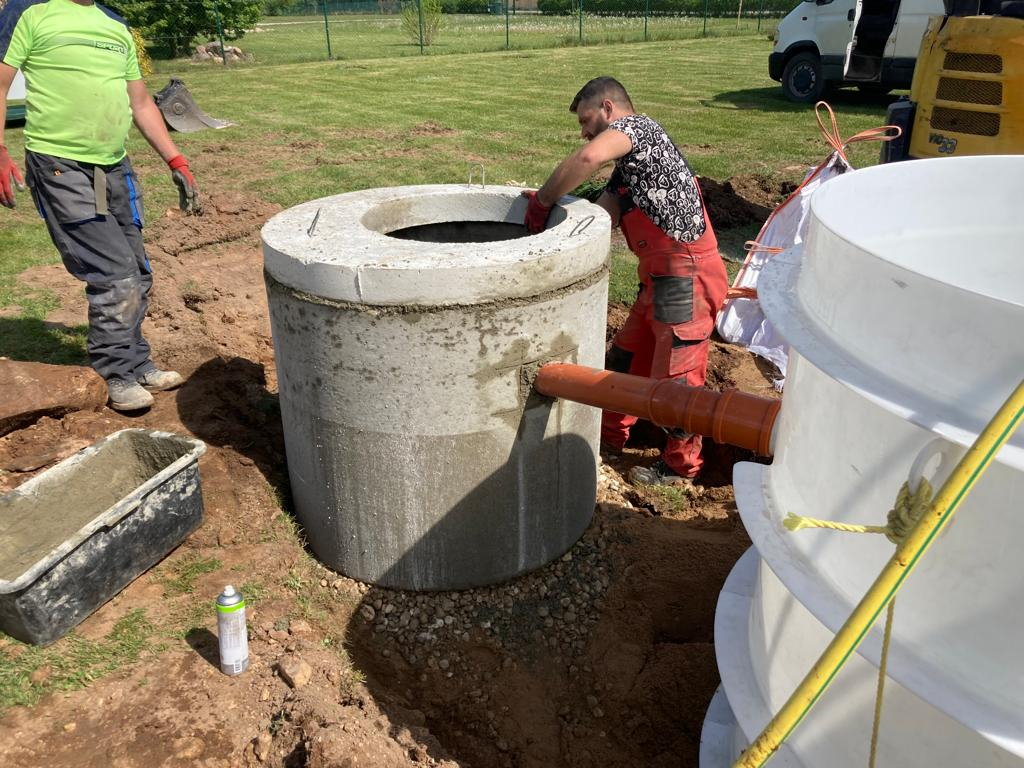
- installed a pumping station before the treatment plant to ensure correct flow control and operation in these conditions;
- backfilled the treatment plant with sand, which helps create a more stable and predictable environment around the plant.
When choosing a solution, it is important to assess the soil layers and plan the discharge so that the treatment plant over dolomite works reliably after rain and in spring too.
The 5 most common mistakes on sites over dolomite
- Choosing a “standard” infiltration field without assessing the dolomite depth.
- Not taking into account the terrain and water movement in spring / after rain.
- Not being clear where the treated water ends up in the long term (not just “everything is fine today”).
- Saving on construction quality and materials, and then paying twice.
- Planning the plant but not the maintenance/service (which later causes odours and erratic operation).
Frequently asked questions
If dolomite is close to the surface on your property, that doesn’t mean a biological wastewater treatment plant over dolomite is impossible – the safest start is a short assessment and a discharge plan. We will help you choose the most suitable solution and provide installation and service across Latvia.