Biological wastewater treatment is one of the most effective ways to manage household sewage safely in a private house and reduce the impact on the environment. It is based on a natural process: microorganisms break down the organic matter in wastewater so that the treated water can be discharged safely (in line with the chosen solution and local conditions).
In this article we explain simply, step by step, how biological wastewater treatment works, what the owner can check, and why correct use + maintenance determine whether the system works without odours or surprises.
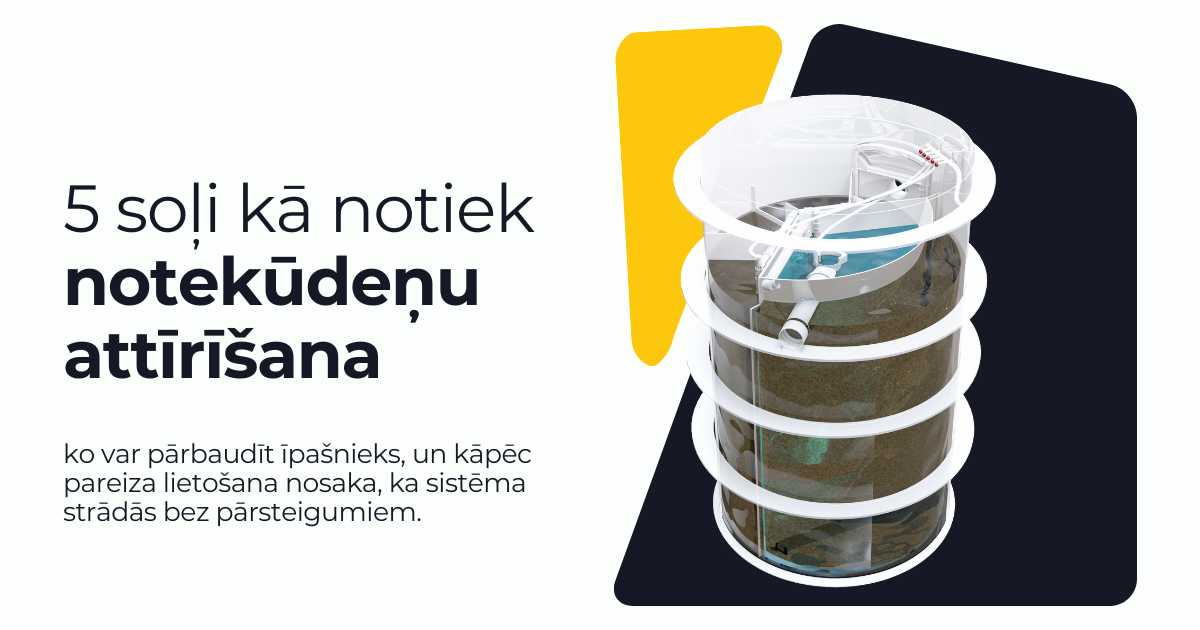
In short: the 5 stages of treatment
- Wastewater collection
- Mechanical treatment
- Biological treatment (microorganisms)
- Settling (sedimentation)
- Discharge of treated water / use for technical purposes
1) Wastewater collection
It all starts with household wastewater from the house (toilet, sinks, shower/bath, washing machine and dishwasher) flowing through pipes into the treatment plant. At this stage, the most important thing is a correctly built connection and gradients, so that the flow is even and blockages don’t occur.
2) Mechanical treatment (removing larger impurities)
Before the biological process, the wastewater passes through a mechanical stage, where larger impurities that don’t biodegrade are separated out (e.g. some fibres, pieces of plastic, etc.).
This stage is important because it protects the system from mechanical faults and helps the next stages work more reliably.
3) Biological treatment (microorganisms do the main work)
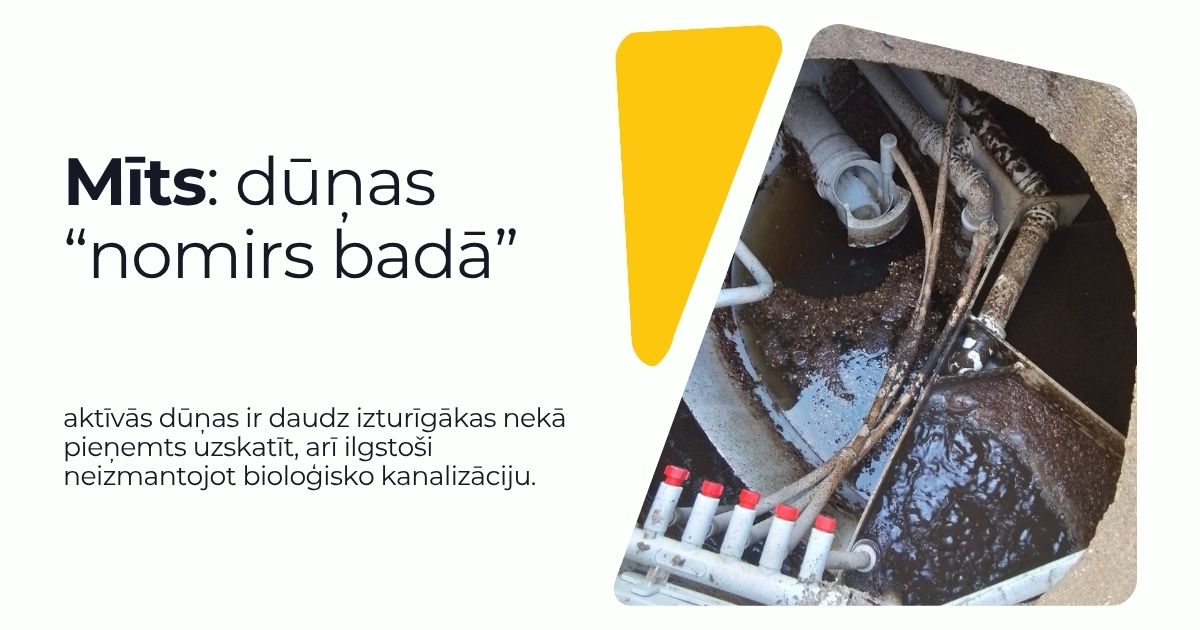
This is the most important stage. In the biological zone, microorganisms (activated sludge) break down the organic matter in the wastewater. To make the process efficient, the system usually provides conditions that help the microorganisms work steadily (e.g. aeration/oxygen supply, the right flow regime).
What does this mean for the owner?
If large amounts of aggressive chemicals or insoluble waste regularly go down the drain, the biological process weakens, and then odours, poorer treatment or faults appear.
4) Settling (sedimentation)
After the biological stage comes settling, where the heavier particles settle out and the treated water separates and moves towards the outlet. This stage helps produce a clearer flow of treated water and reduces the amount of solids entering the discharge system.
5) Discharge and use of treated water
The last stage is discharging the treated water. Practical solutions vary by site:
- infiltration / drainage (if soil conditions allow),
- open water bodies,
- stormwater systems.
In some cases treated water is used for technical purposes (e.g. for watering the garden), but the safety of the specific solution and local conditions must always be assessed. (It is not drinking water.)
What can and can’t go into a biological plant?
Biological treatment is stable when only “household wastewater” goes down the drain, not waste.
Not allowed / not recommended:
- wet wipes, hygiene products, plastic, textiles,
- oils and large amounts of fat (from the kitchen),
- solvents, paints, varnishes, large amounts of aggressive chemicals,
- sand, construction debris, ash, etc.
Everyday tip:
If in doubt, don’t put it down the drain. That’s the quickest way to avoid blockages and odours.
Maintaining a biological treatment plant: what does the owner need to know?
To keep the system working reliably:
- have it maintained regularly (frequency depends on the plant and its load),
- watch for signs: odours, slow drainage, warnings on the control unit (if there is one),
- don’t “shock” the system (e.g. a very large amount of chemicals or fat in one day).
Signs that service is needed sooner:
- a persistent odour appears,
- there is frequent “gurgling” or slow drainage in the house,
- the system works erratically after rain or in spring.
Why is biological treatment popular for private houses?
- Comfort: a correctly built system works reliably and without odours
- Environment: less risk to the surroundings if the discharge is chosen correctly
- Long term: with regular maintenance and correct use, the system lasts a long time
- Fewer “surprises”: compared with solutions that need frequent emptying