Today a sewerage system is not just a “pit” where all household wastewater goes. If you are a new homeowner or planning to build, sewerage for a private house is one of those things it pays to get right the first time. The wrong choice can lead to unpleasant odours, groundwater pollution and heavy fines from state authorities.
Choosing the right sewerage system for your property means:
- lower day-to-day costs,
- stable operation without odours or overflows,
- compliance with requirements and safety for the environment.
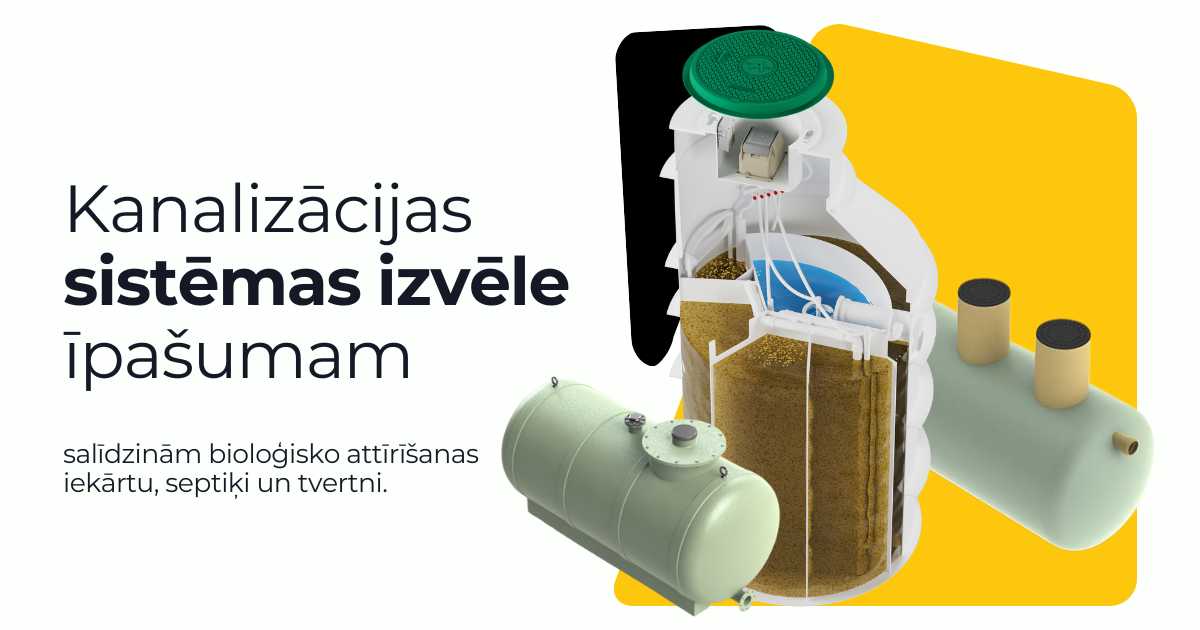
In this article we compare the 3 most popular solutions to help you decide which sewerage solution to choose for your property: a biological wastewater treatment plant, a septic tank and a holding tank.
1) Biological wastewater treatment plant
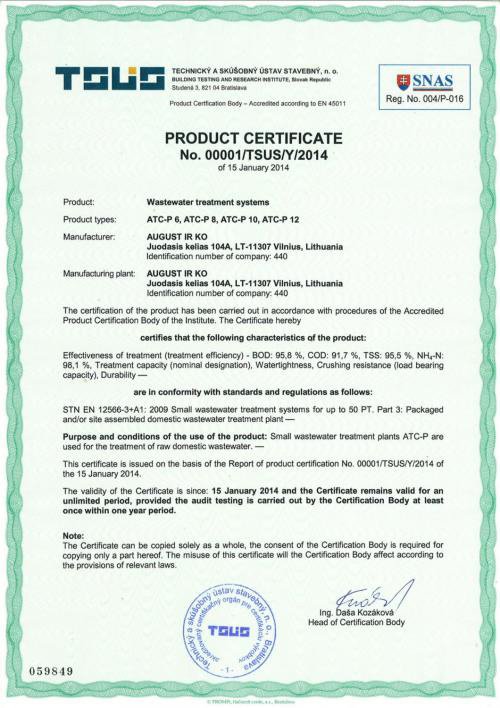
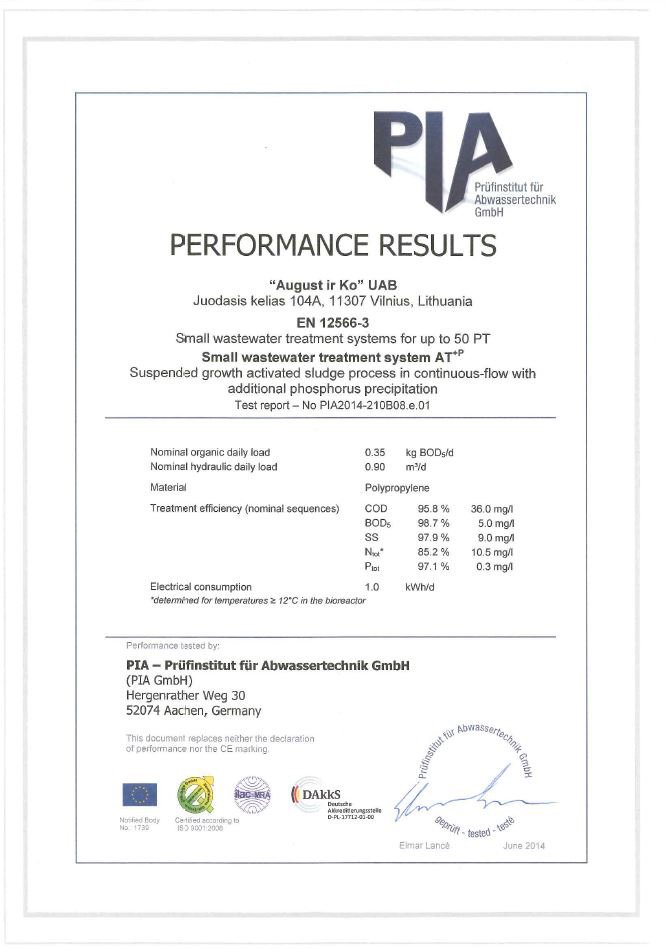
A biological treatment plant is one of the most efficient and eco-friendly solutions. It combines mechanical and biological treatment and handles household wastewater from the toilet, bath/shower, sinks, washing machine and dishwasher.
As a result, the treated water may be suitable for safe discharge or (depending on the solution) for use, e.g. for landscaping/watering.
Pros:
- high treatment quality and lower risk to the environment
- less need for frequent pumping out
- good everyday comfort (if correctly installed and maintained)
Cons:
- needs electricity and regular maintenance (service)
- the right discharge solution for treated water must be chosen
2) Holding tank
A holding tank is the simplest solution: it stores wastewater but does not treat it.
To avoid the risk of overflows and odours, it needs regular emptying, which depending on the tank volume and the region you live in can cost as much as 100 EUR a month.
Pros:
- a simple system (fewer components)
- can be suitable where discharge/infiltration is not possible
Cons:
- regular emptying costs (frequency depends on the volume and number of residents)
- a higher risk of “surprises” if emptying is delayed
3) Septic tank
A septic tank is a common solution for private houses. It stores wastewater and partially treats it by separating the fractions (liquid/solids).
For safe discharge, a septic tank usually needs additional post-treatment/filtration (e.g. infiltration in suitable conditions).
Pros:
- a simpler system than a biological plant (usually no electricity)
- can be a good solution if the soil conditions suit post-treatment
Cons:
- treatment quality is usually lower than with a biological plant
- often needs a filtration/infiltration solution, which doesn’t work equally well everywhere
To work out which sewerage system to choose, it’s important to compare not only the price but also maintenance, discharge and long-term costs.
Which sewerage system to choose: 6 questions that point you in the right direction
Answer these questions for yourself:
- How many people will use the system? (2, 4, 6+; permanently or seasonally)
- Is there high groundwater / poor infiltration / dolomite?
- Is there a ditch/land drainage nearby, and can a discharge be built?
- Do you want minimal day-to-day hassle (risk of odours/pumping out)?
- Is electricity available, and are you ready for annual maintenance?
- What is your long-term budget (not just for installation but also upkeep)?
Simple rules of thumb:
- If you want the best quality and comfort → a biological plant often wins.
- If you want simply to store and empty regularly → a holding tank.
- If conditions allow post-treatment and you want a system without electricity → a septic tank.
The most common mistakes that cost the most later
- choosing a solution “on price” without considering the soil conditions
- not planning the discharge (or post-treatment) of treated water from the start
- not planning access for emptying (holding tank/septic tank)
- putting off maintenance (of a biological plant) until odours or errors appear
Frequently asked questions
If you are still not sure which sewerage system to choose for your property, fill in a request and we will recommend the safest solution for your property based on the soil and how you use it.