Decentralised sewerage is a private wastewater collection and/or treatment system that is not connected to the central sewer. Such solutions are common in private houses, summer cottages and places where a network connection is unavailable or too expensive.
Since 31 December 2021, registering a decentralised sewerage system has become an obligation for many properties. In some cases (for example, in rural areas and on farmsteads) there may be exceptions or nuances – always check your municipality’s binding regulations.
In this article, briefly and clearly:
- what must be registered,
- how registration works,
- where to find your municipality’s form,
- and what can happen if you don’t register.
What must be registered?
The simple rule: any private sewerage system must be registered, regardless of its type or size. This applies to:
| System | Must be registered? | Example |
|---|---|---|
| Holding tank / wastewater tank | Yes | Stores wastewater for collection |
| Septic tank | Yes | Settling + post-treatment/discharge |
| Biological treatment plant | Yes | Treats wastewater with a biological process |
| Free-standing / portable toilet | Yes | In a garden, on a building site, allotment, etc. |
Important: if there are several systems on one property, each must be registered separately (a separate application for each).
Step by step: how to register a decentralised sewerage system
- Identify the type of system (holding tank, septic tank, biological plant, etc.).
- Prepare the property details (address, cadastral number – if the municipality requires it).
- Find your municipality’s application procedure (links below).
- Submit the application (usually by email, via an e-service or in person – depending on the municipality).
- Keep a copy of the application and the documents relating to the system (in case clarification is requested later).
Tip: if you are not sure exactly what you have installed (a septic tank or a biological plant), it is better to find out before applying.
What you usually need to prepare (to speed up registration)
The specific requirements differ, but these are most often useful:
- the property address (and/or cadastral number),
- the system type (holding tank/septic tank/biological plant),
- its location on the property,
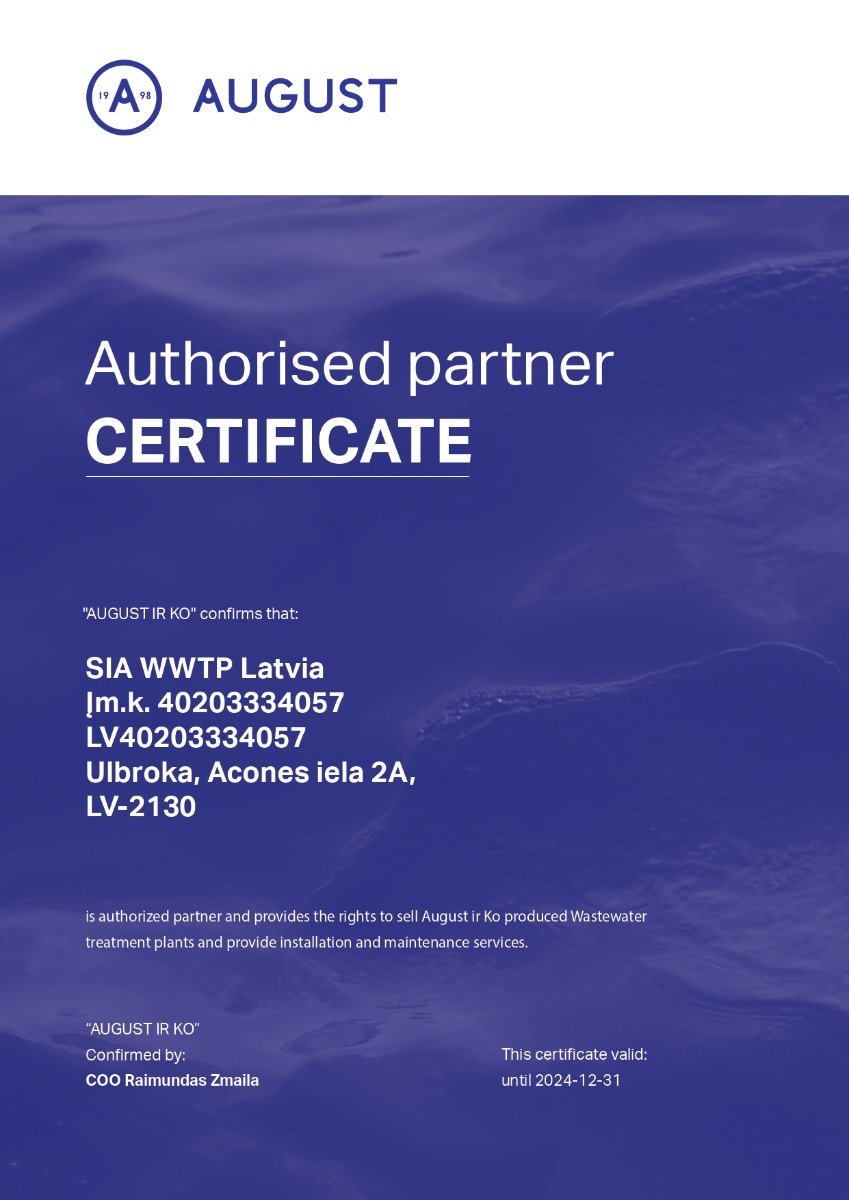
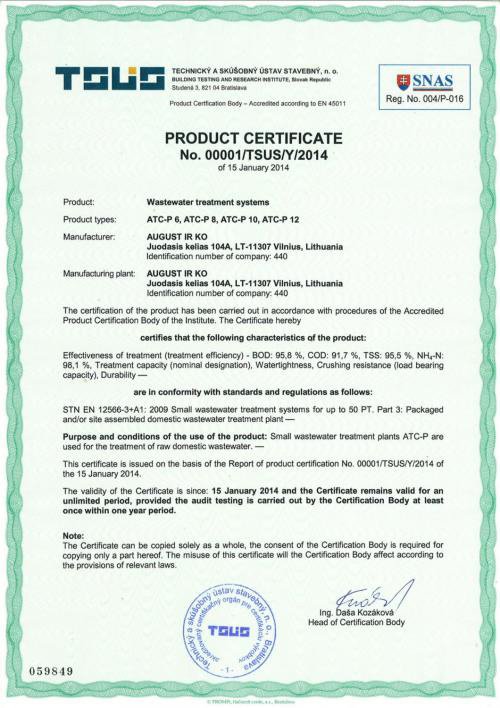
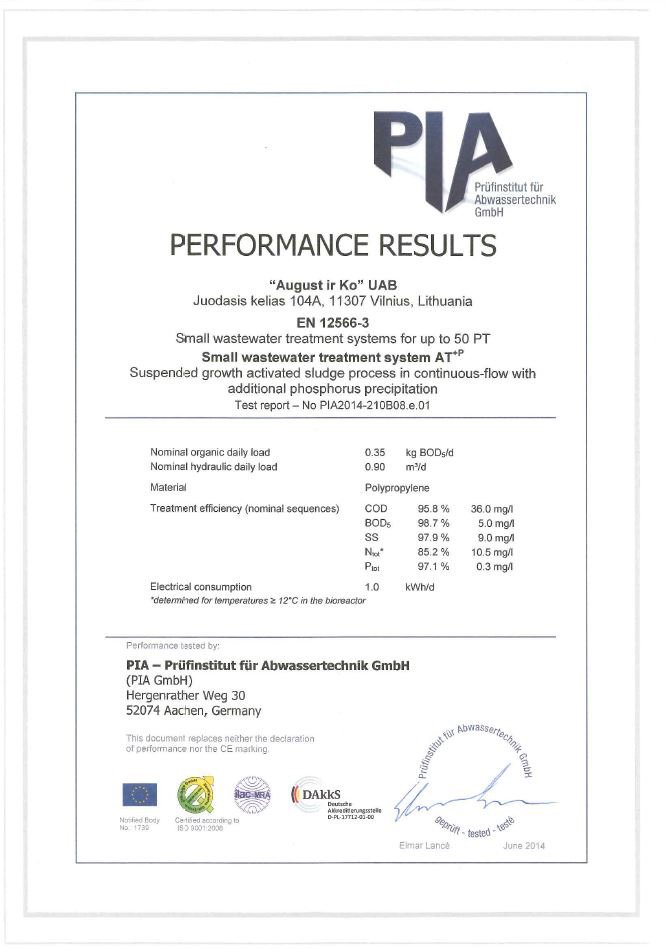
- installation documents / technical information (certification),
- inspection or maintenance information.
Where and how do you register?
Registration is done with the municipality where the property is located. The municipality keeps the register of decentralised sewerage systems and handles their records and inspection.
VARAM has reported that registers of decentralised sewerage systems have been set up in all municipalities, so if you can’t find the form straight away, search your municipality’s website for the keywords:
“decentralizētā kanalizācija reģistrācija” (decentralised sewerage registration) or “DKS reģistrs” (DKS register).
Municipality links (where to start looking)
- Riga
- Ropaži
- Mārupe
- Salaspils
- Ikšķile
- Ogre / Lielvārde
- Aizkraukle
- Jēkabpils
- Preiļi
- Daugavpils
- Līvāni
- Jūrmala
- Olaine
- Tukums
- Ķekava
- Ādaži
- Saulkrasti
- Jelgava
- Kandava
- Sigulda
- Cēsis
- Valmiera
- Kuldīga
- Carnikava
- Madona
- Smiltene
- Ventspils
- Liepāja
What happens if the system is not registered?
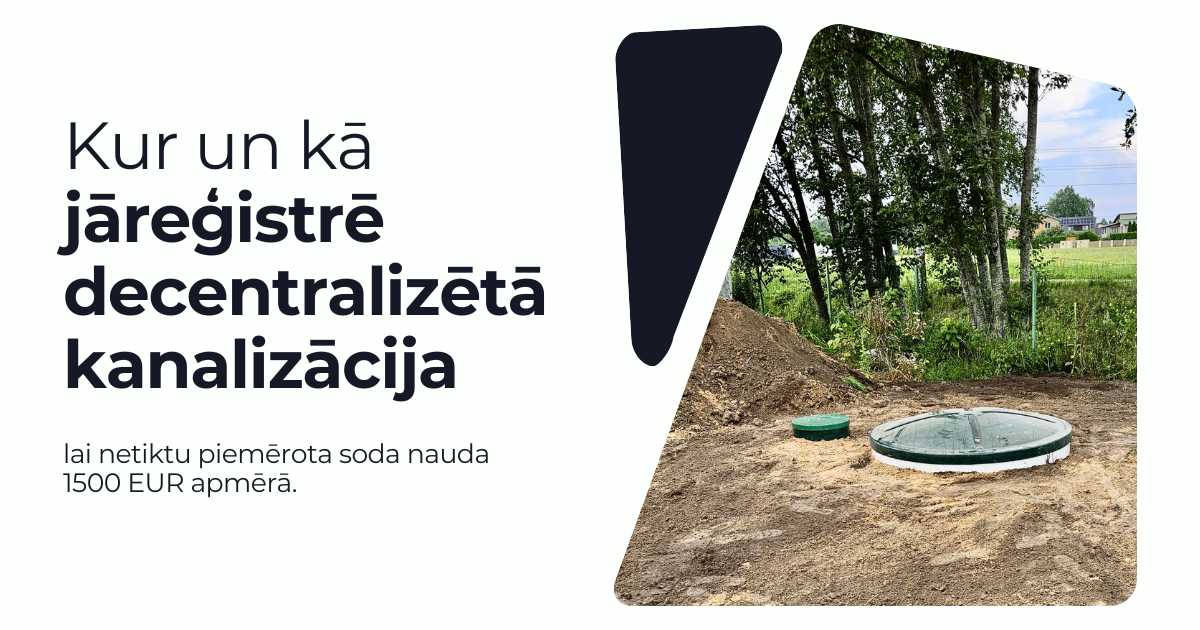
From 1 January 2022, the municipality may impose an administrative fine for not registering (in line with municipal regulations). The maximum fine can reach:
- up to €500 for individuals,
- up to €1500 for legal entities.