
Mon–Fri 8:00–17:00 Consultations: +371 20 010 699 Maintenance: +371 29 997 166

admin

  • Eco-friendly wastewater treatment | AUGUST

    Eco-friendly wastewater treatment | AUGUST

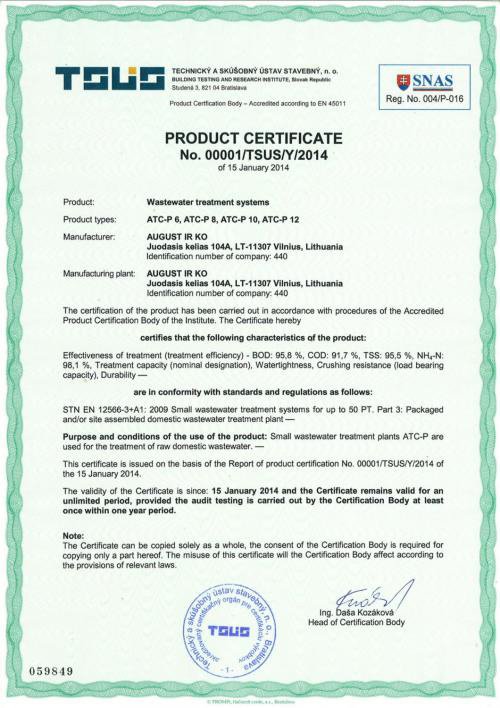
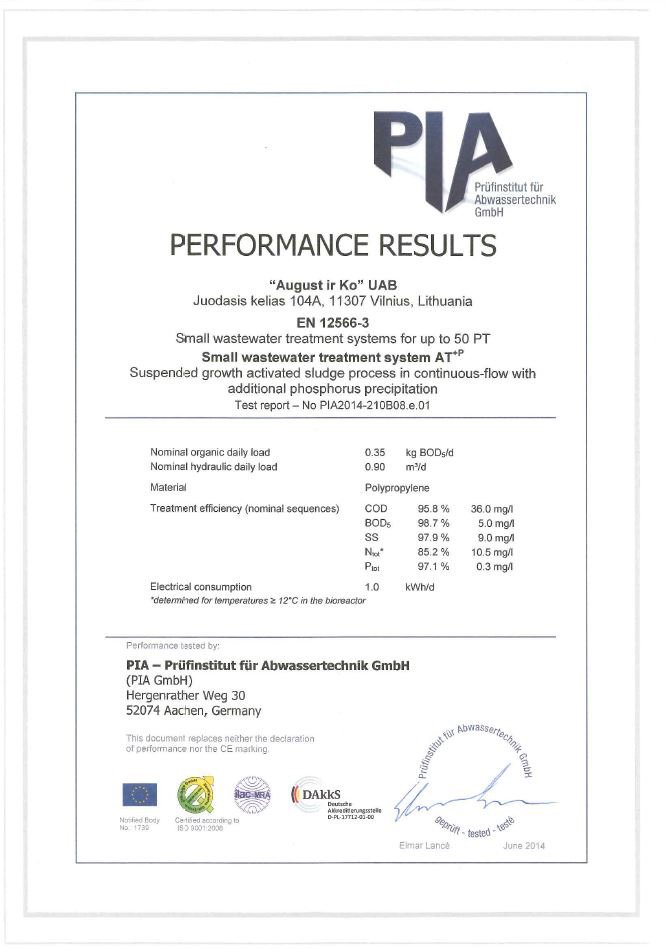
    Eco-friendly wastewater treatment is not a compromise between comfort and responsibility towards nature – it is a modern, safe and cost-effective long-term choice for a private house, summer cottage or business property. AUGUST biological wastewater treatment plants can achieve up to 98% wastewater treatment, significantly reducing the risk to groundwater and the environment.

    Biological wastewater treatment – why is it eco-friendly?

    Biological treatment uses a natural process: microorganisms break down pollutants, turning them into a safer form. As a result:

    • pollution of the environment is reduced,
    • there are no unpleasant odours,
    • treated water can be discharged in line with requirements or reused (e.g. for watering the garden, if the specific solution allows it).

    What does a biological wastewater treatment plant treat?

    The plant is designed to treat household wastewater, for example from:

    • the toilet,
    • shower and bath,
    • sinks,
    • washing machine,
    • dishwasher.

    This means all everyday sewage is treated in one place, and the property doesn’t need complicated or outdated alternatives.

    Advantages of AUGUST plants (valued by homeowners)

    Low power consumption

    The AUGUST system runs economically, on average about ~0.8 kWh per day (depending on the model and load). That means lower monthly running costs.

    High treatment efficiency

    With correct installation and operation, a treatment level of up to 98% can be achieved.

    Price and long-term value

    Plant prices start at ~€1650 (the exact price depends on the model and project conditions). In the long run this is often better value than solutions with higher risk, more frequent emptying and extra construction.

    Full service in one place

    We cover the whole cycle:

    • consultation and model selection,
    • installation,
    • commissioning,
    • regular maintenance and service.

    How does a biological wastewater treatment plant work?

    In simple terms, the process looks like this:

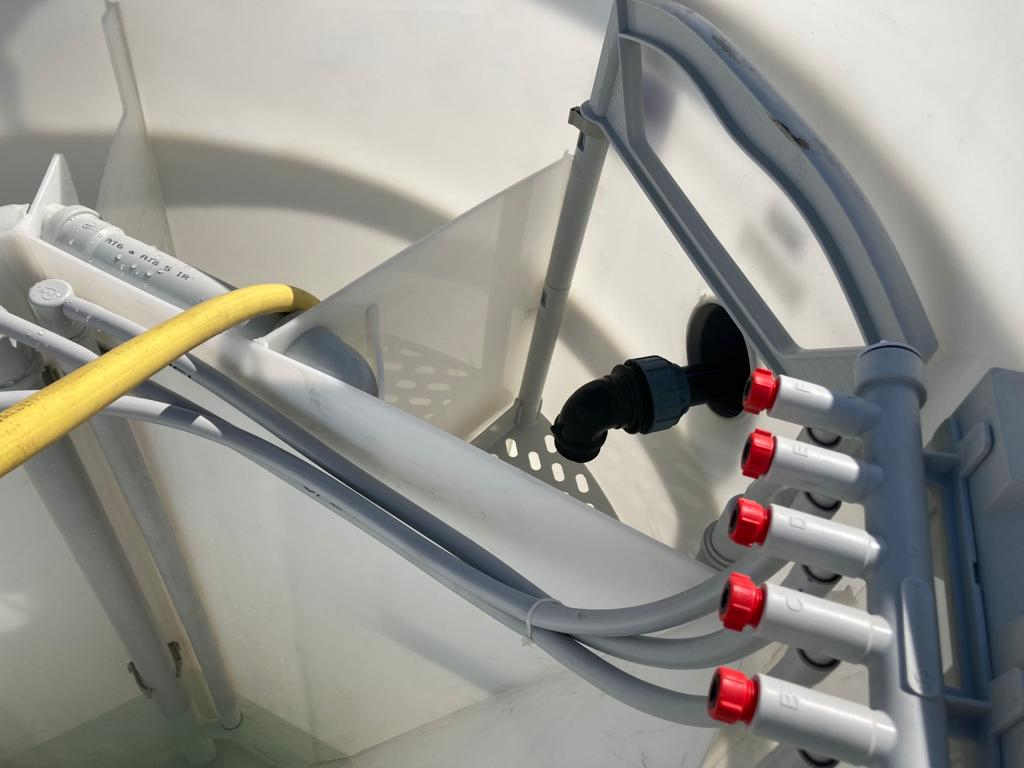
    1. Wastewater enters the plant, where heavy particles are separated and the flow is equalised.
    2. In the aeration zone, with oxygen supplied, microorganisms actively break down the pollutants.
    3. Settling takes place, where the biological mass separates from the water.
    4. The treated water is discharged safely, according to the chosen solution.

    Where can treated wastewater be discharged?

    Treated water can be:

    • discharged to infiltration / drainage (depending on soil conditions),
    • discharged to a ditch / drainage system, if this can be approved and is permitted,
    • in certain cases used for landscaping (depending on the solution and requirements).

    Important: the right discharge method depends on the soil, the groundwater level and the specific situation, so we choose it together with the customer after an assessment.

    Who is this solution suitable for?

    Eco-friendly wastewater treatment with an AUGUST plant is suitable for:

    • private houses and new builds,
    • summer cottages,
    • houses lived in permanently or seasonally,
    • properties where ecology and lower running costs matter,
    • places where the safety of groundwater and the environment must be considered.

    Installation: how does the process work?

    The process usually looks like this:

    1. Consultation and choice of a suitable model
    2. Assessment of site conditions (soil, terrain, access, discharge)
    3. Installation and connections
    4. Commissioning and basic training on use
    5. Scheduled maintenance (so the system works reliably for years)

    Maintenance and correct operation

    To keep the plant working efficiently in the long term:

    • have it maintained according to the recommended schedule,
    • avoid large amounts of aggressive chemicals,
    • don’t put things in the sewer that don’t belong there (wet wipes, oils, construction debris, etc.).

    We can also provide regular maintenance, so you don’t have to think about it.
    Frequently asked questions

    How much does a biological wastewater treatment plant cost?
    AUGUST plant prices start at **~€1650**, but the final price depends on the model, the complexity of installation and the discharge solution.
    How much electricity does a biological treatment plant use?
    On average about ~0.8 kWh per day (depending on the model and intensity of use).
    Does a biological sewerage system smell?
    A correctly installed and operated biological plant usually does not cause unpleasant odours.
    How often is maintenance needed?
    It depends on the plant and its load, but maintenance is usually planned regularly, 1–2 times a year, to keep the treatment quality stable.
  • Which sewerage system should you choose for your property?

    Which sewerage system should you choose for your property?

    Today a sewerage system is not just a ā€œpitā€ where all household wastewater goes. If you are a new homeowner or planning to build, sewerage for a private house is one of those things it pays to get right the first time. The wrong choice can lead to unpleasant odours, groundwater pollution and heavy fines from state authorities.
    Choosing the right sewerage system for your property means:

    • lower day-to-day costs,
    • stable operation without odours or overflows,
    • compliance with requirements and safety for the environment.

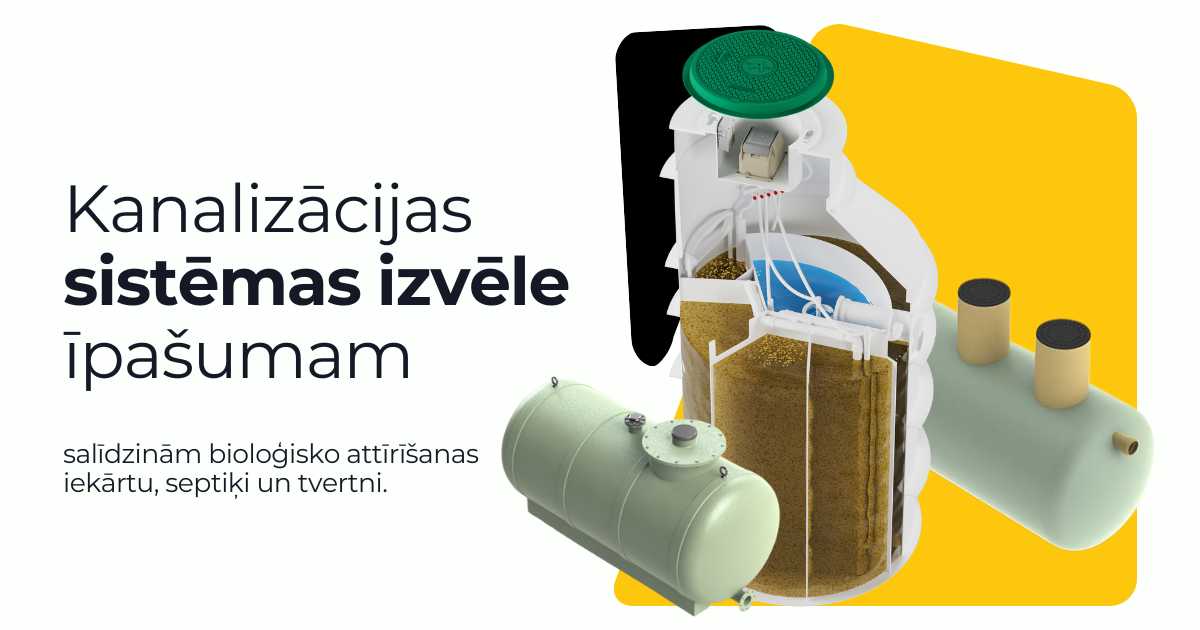
    In this article we compare the 3 most popular solutions to help you decide which sewerage solution to choose for your property: a biological wastewater treatment plant, a septic tank and a holding tank.

    1) Biological wastewater treatment plant

    A biological treatment plant is one of the most efficient and eco-friendly solutions. It combines mechanical and biological treatment and handles household wastewater from the toilet, bath/shower, sinks, washing machine and dishwasher.

    As a result, the treated water may be suitable for safe discharge or (depending on the solution) for use, e.g. for landscaping/watering.

    Pros:

    • high treatment quality and lower risk to the environment
    • less need for frequent pumping out
    • good everyday comfort (if correctly installed and maintained)

    Cons:

    • needs electricity and regular maintenance (service)
    • the right discharge solution for treated water must be chosen

    2) Holding tank

    A holding tank is the simplest solution: it stores wastewater but does not treat it.

    To avoid the risk of overflows and odours, it needs regular emptying, which depending on the tank volume and the region you live in can cost as much as 100 EUR a month.

    Pros:

    • a simple system (fewer components)
    • can be suitable where discharge/infiltration is not possible

    Cons:

    • regular emptying costs (frequency depends on the volume and number of residents)
    • a higher risk of ā€œsurprisesā€ if emptying is delayed

    3) Septic tank

    A septic tank is a common solution for private houses. It stores wastewater and partially treats it by separating the fractions (liquid/solids).

    For safe discharge, a septic tank usually needs additional post-treatment/filtration (e.g. infiltration in suitable conditions).

    Pros:

    • a simpler system than a biological plant (usually no electricity)
    • can be a good solution if the soil conditions suit post-treatment

    Cons:

    • treatment quality is usually lower than with a biological plant
    • often needs a filtration/infiltration solution, which doesn’t work equally well everywhere

    To work out which sewerage system to choose, it’s important to compare not only the price but also maintenance, discharge and long-term costs.

    Which sewerage system to choose: 6 questions that point you in the right direction

    Answer these questions for yourself:

    1. How many people will use the system? (2, 4, 6+; permanently or seasonally)
    2. Is there high groundwater / poor infiltration / dolomite?
    3. Is there a ditch/land drainage nearby, and can a discharge be built?
    4. Do you want minimal day-to-day hassle (risk of odours/pumping out)?
    5. Is electricity available, and are you ready for annual maintenance?
    6. What is your long-term budget (not just for installation but also upkeep)?

    Simple rules of thumb:

    • If you want the best quality and comfort → a biological plant often wins.
    • If you want simply to store and empty regularly → a holding tank.
    • If conditions allow post-treatment and you want a system without electricity → a septic tank.

    The most common mistakes that cost the most later

    • choosing a solution ā€œon priceā€ without considering the soil conditions
    • not planning the discharge (or post-treatment) of treated water from the start
    • not planning access for emptying (holding tank/septic tank)
    • putting off maintenance (of a biological plant) until odours or errors appear

    Frequently asked questions

    Which system is the best value for a private house in the long run?
    You usually need to look at the total cost over 5–10 years: installation + maintenance/emptying + repairs + comfort. ā€œCheapest at the startā€ is not always cheapest in the long run.
    Does a holding tank always mean frequent pumping out?
    Yes, because a holding tank doesn't treat wastewater, it only stores it. How often depends on the volume and intensity of use.
    Is a biological plant complicated to live with?
    Not day to day, if the system is correctly installed and regularly maintained/serviced.

    If you are still not sure which sewerage system to choose for your property, fill in a request and we will recommend the safest solution for your property based on the soil and how you use it.

  • Biological wastewater treatment plant over dolomite: what to consider?

    Biological wastewater treatment plant over dolomite: what to consider?

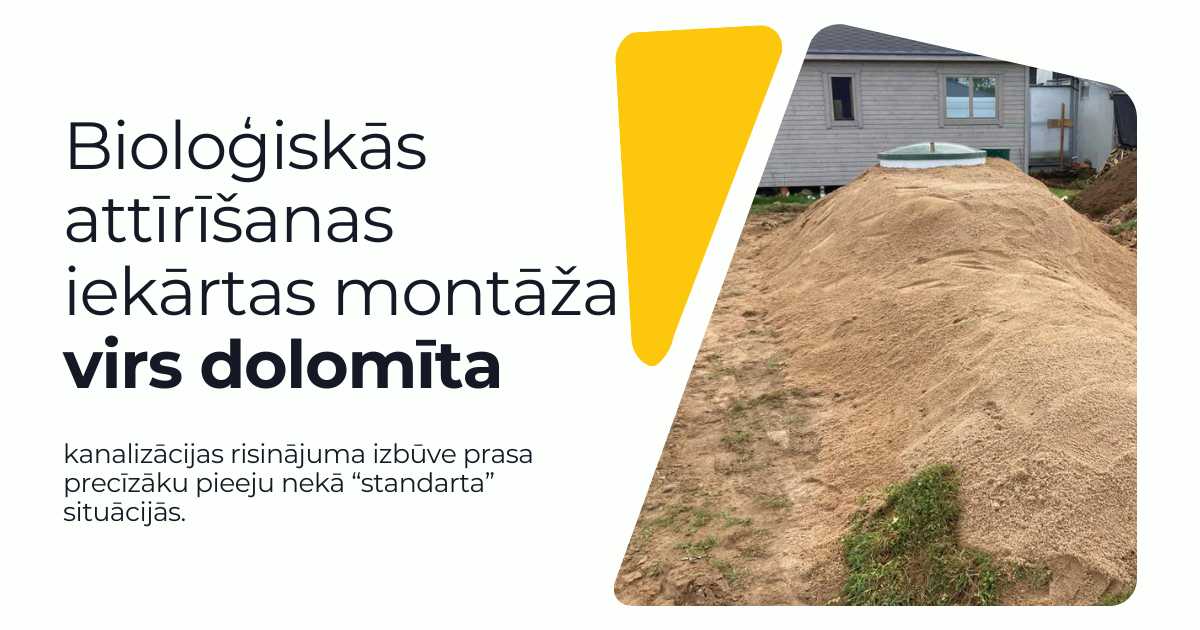
    If there is dolomite (or another dense rock layer) under the soil on your property, building a sewerage solution needs a more precise approach than in ā€œstandardā€ situations. Not because a biological plant can’t be installed over dolomite – usually it can. The main question is how to discharge the treated wastewater correctly and safely when the ground doesn’t absorb water like sand or gravel.

    In this article you will learn:

    • why dolomite affects discharge,
    • which solutions usually work,
    • which mistakes to avoid,
    • and you will see a real example from one of our installations, where the dolomite was only ~70 cm deep.

    Treatment plant over dolomite: the 3 main risks

    Dolomite is a dense rock layer that in some places lies close to the surface. A treatment plant over dolomite needs a slightly different approach than in ā€œnormalā€ soil, because dolomite affects both the excavation and the discharge of treated water.

    The practical challenges:

    • limited infiltration – water doesn’t disappear into the ground as easily;
    • an infiltration field may not work as intended if there isn’t a sufficient filtering layer;
    • there is a greater risk that water will collect or run over the surface if the discharge is not built correctly.

    So when planning a biological wastewater treatment plant over dolomite, it is important to assess not only the plant model but also the discharge solution and site conditions.

    Which solutions usually work over dolomite?

    The specific solution depends on the terrain, groundwater, dolomite depth and whether there is a ditch/land drainage on site. Most often the choice is between these options:

    1) Discharge to a ditch or an existing drainage system (if permitted)

    On some sites, treated water can be discharged to a ditch or drainage system. The specific municipality and project conditions always have to be taken into account.

    2) Infiltration with a prepared filtering layer (mound / ā€œcushionā€)

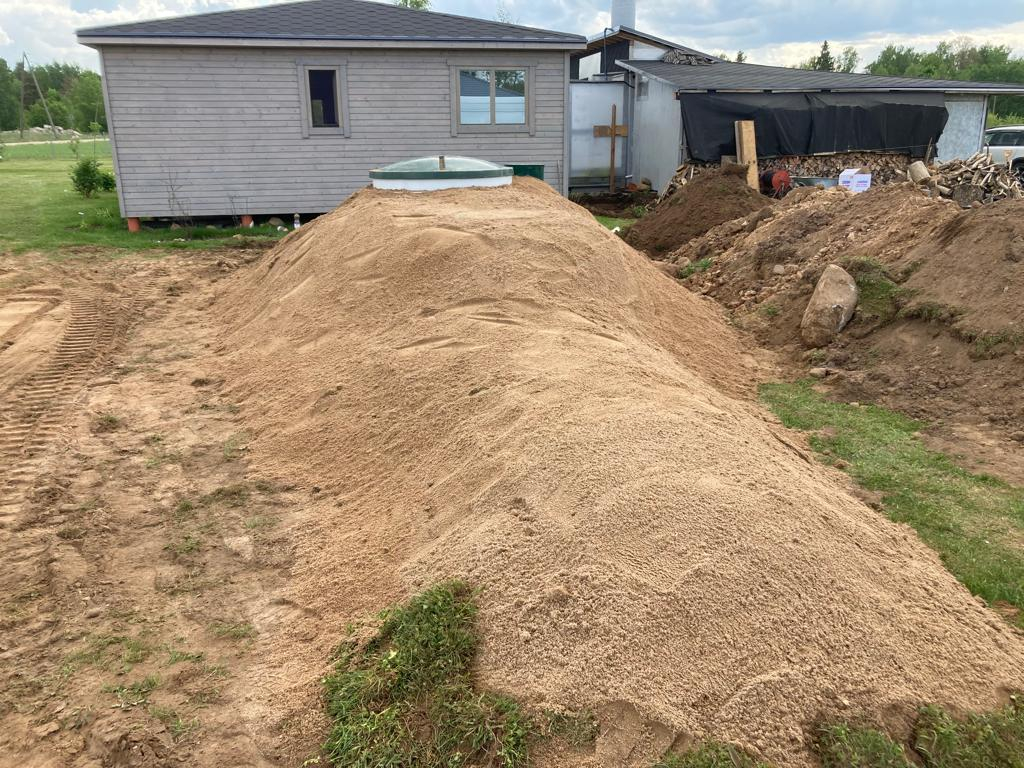
    If the dolomite is close to the surface, infiltration is often solved with a mound and a suitable filtering layer (e.g. sand), so that the water can disperse in the intended zone.

    3) A pumping station / pumped solution (if the terrain requires it)

    If there is no natural fall or the discharge point is higher, pumped solutions are used to ensure a steady flow and correct discharge.

    In practice: dolomite is not a ā€œstop signā€. It simply means choosing the right way to discharge the wastewater.

    A real installation example: dolomite only ~70 cm deep

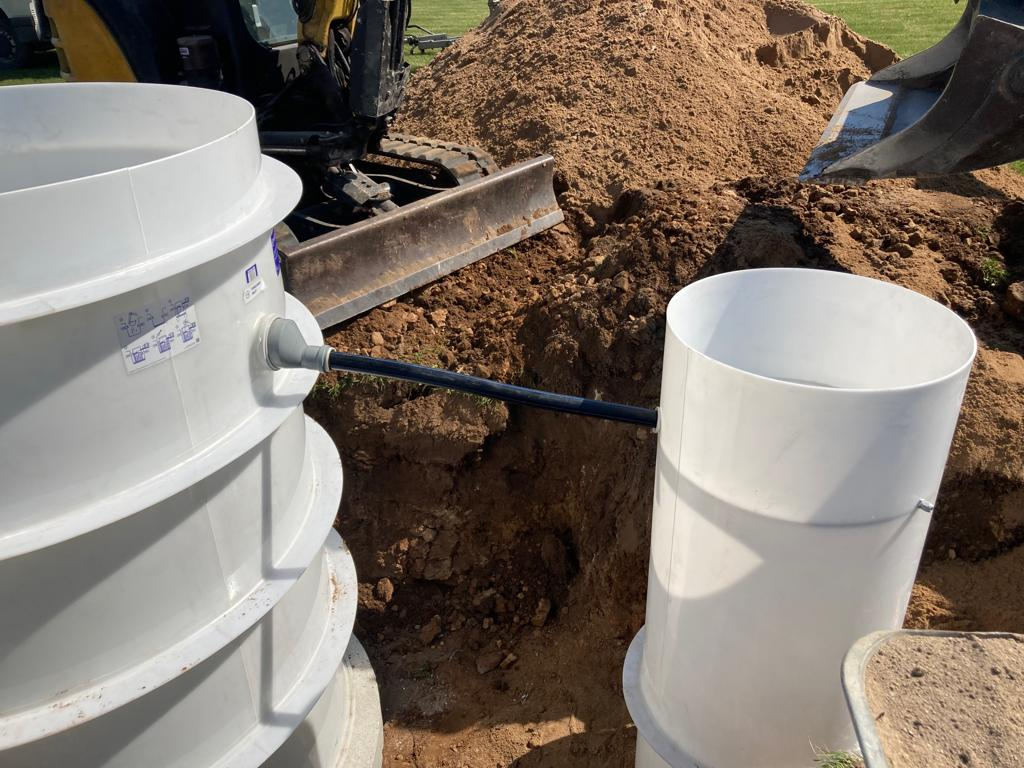
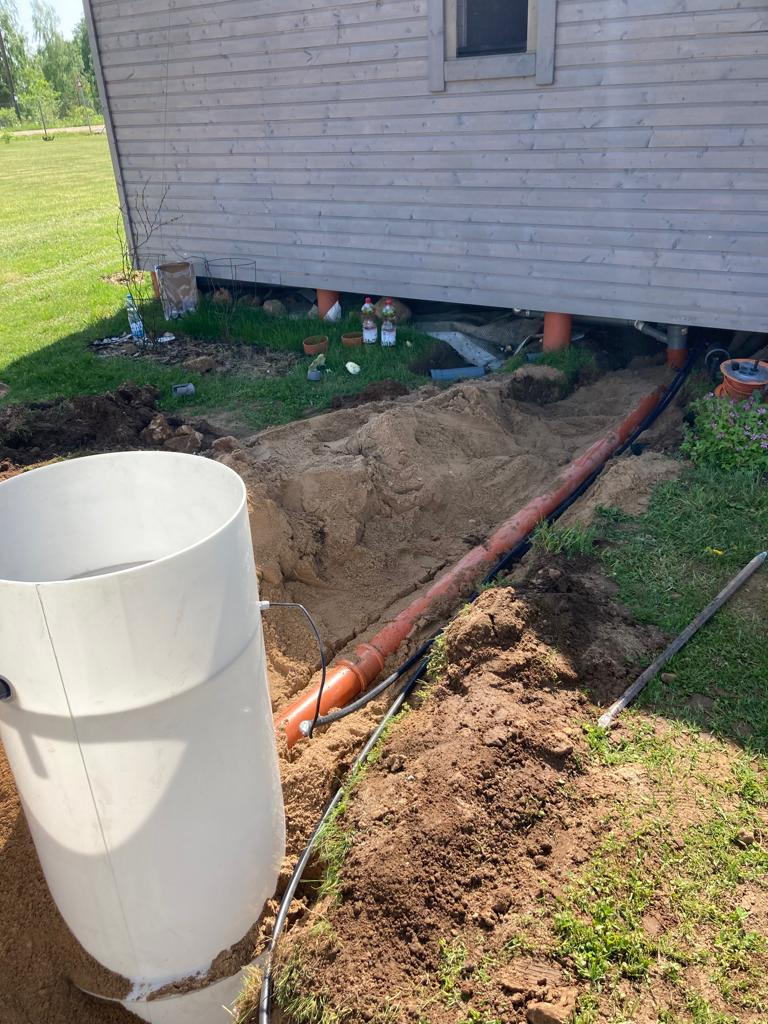
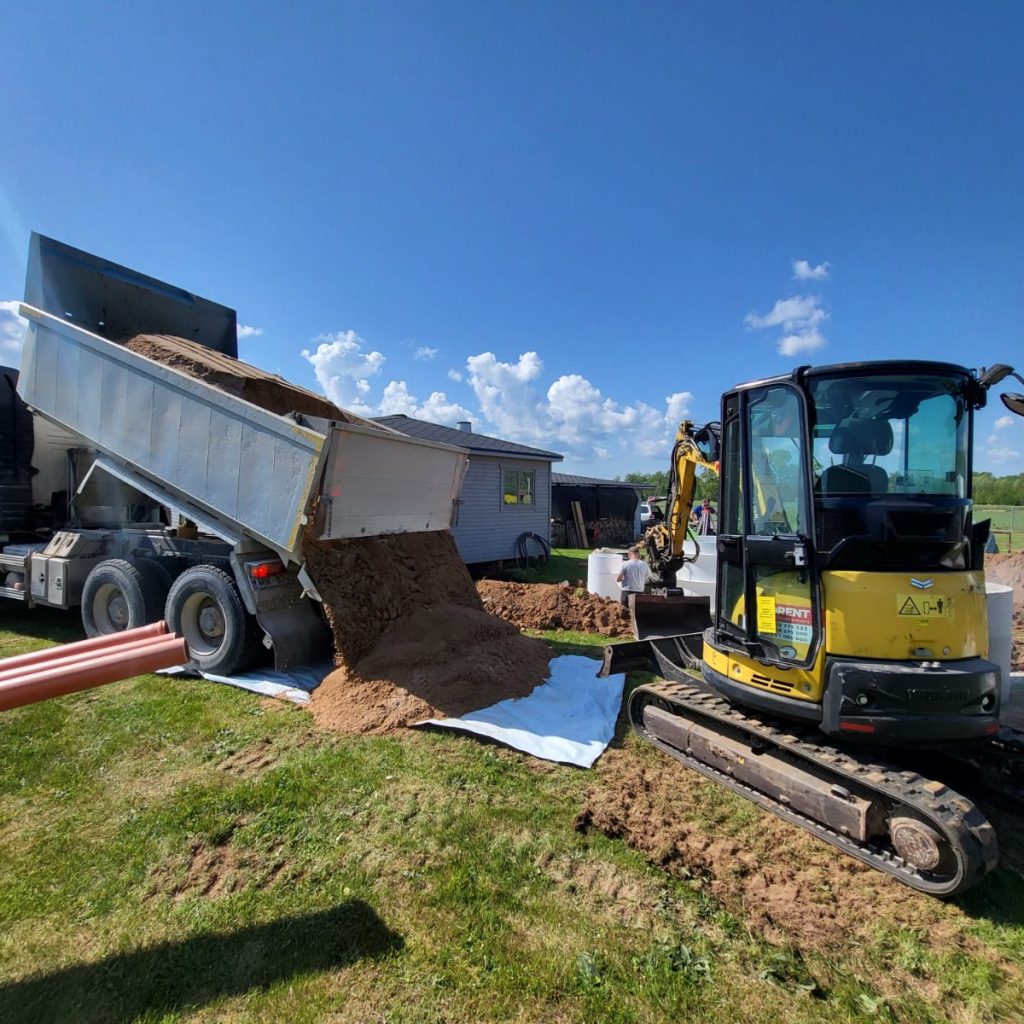
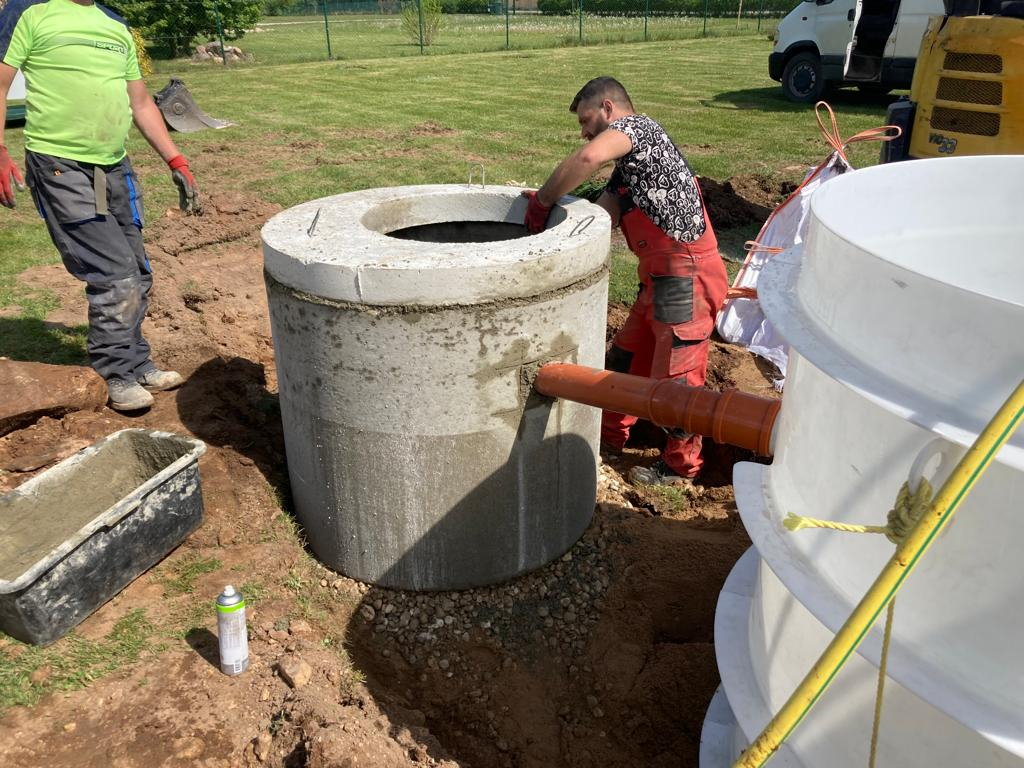
    On one site, the earthworks revealed dolomite at a depth of about 70 cm. We needed to install a biological wastewater treatment plant over dolomite. In such a case a standard infiltration field may not be the safest solution without additional construction, because the filtering layer may be too thin.

    What we did:

    • built a mound to provide a suitable filtering zone;
    • installed a pumping station before the treatment plant to ensure correct flow control and operation in these conditions;
    • backfilled the treatment plant with sand, which helps create a more stable and predictable environment around the plant.

    When choosing a solution, it is important to assess the soil layers and plan the discharge so that the treatment plant over dolomite works reliably after rain and in spring too.

    The 5 most common mistakes on sites over dolomite

    1. Choosing a ā€œstandardā€ infiltration field without assessing the dolomite depth.
    2. Not taking into account the terrain and water movement in spring / after rain.
    3. Not being clear where the treated water ends up in the long term (not just ā€œeverything is fine todayā€).
    4. Saving on construction quality and materials, and then paying twice.
    5. Planning the plant but not the maintenance/service (which later causes odours and erratic operation).

    Frequently asked questions

    Can a biological plant be installed over dolomite?
    Usually yes. The key is the right discharge solution and construction suited to the specific site.
    Does an infiltration field over dolomite never work?
    Not always, but it depends on the depth of the dolomite and the filtering layer. That's why we can't give a ā€œuniversalā€ recommendation without an assessment.
    How can I tell if dolomite is close to the surface on my property?
    It is often noticed when digging trenches or foundations, or from borehole data or neighbours' experience in the area. We also recommend a geotechnical survey.

    If dolomite is close to the surface on your property, that doesn’t mean a biological wastewater treatment plant over dolomite is impossible – the safest start is a short assessment and a discharge plan. We will help you choose the most suitable solution and provide installation and service across Latvia.

  • Biological wastewater treatment plant maintenance

    Biological wastewater treatment plant maintenance

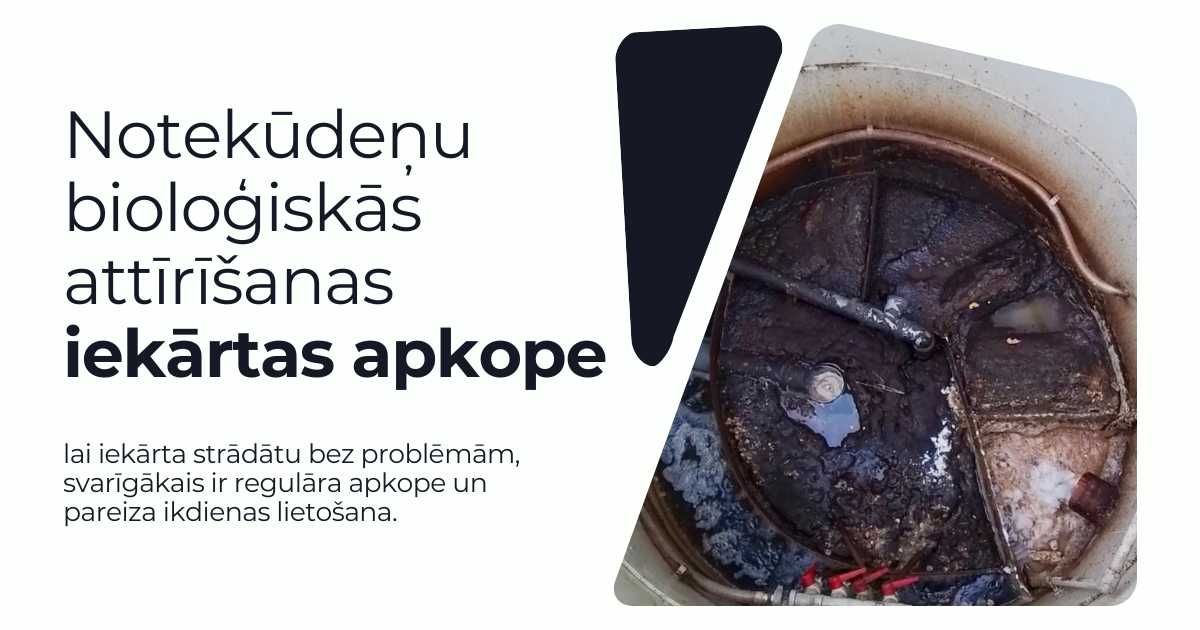
    A biological wastewater treatment plant is a reliable and eco-friendly solution for a private house, but to keep it working smoothly, what matters most is regular maintenance and correct everyday use. In this article we explain briefly and clearly how often a biological wastewater treatment plant needs maintenance, what it includes and what must not go down the drain.

    How often does a biological wastewater treatment plant need maintenance?

    Biological treatment plant maintenance is usually planned once a year. The exact frequency may vary depending on the plant model and its load (how many people live in the house, whether the property is used seasonally, how intensive the use is).

    Tip: if the property has ā€œpeakā€ loads (guests, parties, seasonal living), schedule maintenance in good time to avoid problems.

    What does professional maintenance include?

    To keep the plant working efficiently and extend its life, maintenance usually includes the following work:

    • pumping out and disposing of excess sludge
    • rinsing the plant
    • refilling the plant with water
    • adjusting the plant
    • cleaning the air compressor filter
    • if needed: rinsing the sewage pumping station (if there is one)

    What you can check yourself (quick checklist)

    It’s worth doing a simple visual check from time to time to spot problems early:

    • is there an unpleasant odour (especially near the plant lid)?
    • is water draining slowly in the house / ā€œgurglingā€ in the traps?
    • are there visible signs of clogging?
    • if there is a control unit — are there any warnings or error indications?
    • is the lid secure, with no debris or surface water getting in?

    Signs that maintenance/service is needed sooner

    Contact the service team if you notice any of these signs:

    • a smell appears that wasn’t there before
    • the drains start to empty more slowly or often back up
    • the control unit shows repeated warnings
    • the plant makes unusual noises or its operation visibly changes
    • you suspect clogging or insufficient aeration

    The sooner a problem is spotted, the easier and cheaper it usually is to fix.

    What must not (and should not) go into a biological plant?

    Biological treatment relies on the work of microorganisms, so some substances can disrupt the process and cause odours or faults.

    Do not / avoid discharging:

    • large amounts of aggressive chemicals (solvents, acids, paints, varnishes, etc.)
    • wet wipes, hygiene products, plastic and other items that don’t dissolve in water
    • large amounts of oil and fat, food waste
    • construction waste, sand, dust and the like
    • water used to wash a pet (best not poured into the sewer)

    A simple rule: only household wastewater should go down the drain – not waste or strong chemicals.

    How does correct use reduce the maintenance risks of a biological wastewater treatment plant?

    To keep maintenance a ā€œroutineā€ rather than an emergency, three things are enough:

    1. don’t pour insoluble items or oils down the drain,
    2. don’t overdo aggressive chemicals,
    3. schedule professional maintenance once a year.

    This helps keep the treatment quality stable and extends the life of the plant.

    Frequently asked questions

    How much does biological treatment plant maintenance cost?
    Maintenance costs depend on the plant and the situation on site. Maintenance starts from 180 EUR, and you can save by signing a contract.
    Can I maintain a biological treatment plant myself?
    You can do some simple visual checks yourself, but full maintenance (pumping out sludge, rinsing, adjustment) is best left to specialists.
    Why does a biological treatment plant start to smell?
    Odours most often appear when the plant has not been maintained for a long time, is overloaded, the microorganisms are disrupted by chemicals or the system is clogged. Timely maintenance usually solves this.